
Portugal's Two U21 Titles at Pepinster: The Gap Nobody Measured
Câu trả lời cốt lõi: Tại Belgium Open 2026 ở Pepinster, Bồ Đào Nha giành cả hai danh hiệu U21 nhờ Clement Laine và Matilde Pinto, nhưng Pinto sau đó thua 1-3 trước Anais Salpin ở bán kết đơn nữ người lớn tại cùng giải — một minh chứng cho khoảng cách giữa cấp U21 và cấp người lớn trong bóng bàn châu Âu. Dữ kiện chính: - Clement Laine vô địch U21 nam, thắng Per Gevers 3-1 với các ván 11-6, 7-11, 11-4, 11-9. - Matilde Pinto vô địch U21 nữ, thắng Hannah Silcock 3-0 với các ván 11-8, 11-9, 11-4. - Pinto thua Anais Salpin 1-3 tại bán kết đơn nữ người lớn trong cùng giải đấu. - Không có tay vợt Trung Quốc, Nhật Bản hay Hàn Quốc tham dự giải này. - Bản tin gốc của ETTU không nêu hệ thống tính điểm, cấp phép giải, hay thông tin kỹ thuật. Nguồn: Liên đoàn Bóng bàn châu Âu (ETTU), bản tin kết quả Belgium Open 2026. | Cross-checked: VuaBong.vn Hỏi đáp liên quan: Hỏi: Danh hiệu U21 tại một giải châu Âu tầng thấp có giá trị dự báo như thế nào? Đáp: Sức dự báo yếu cho vị thế đỉnh cao người lớn, nên được đối xử như cột mốc phát triển, không phải bước đột phá. Hỏi: Vì sao sự vắng mặt của châu Á quan trọng trong đọc kết quả này? Đáp: Vì giải đấu vận hành như một mạch phát triển châu Âu khép kín, không thể dùng để suy luận về cán cân quyền lực giữa Trung Quốc và phần còn lại của thế giới. Hỏi: Khối lượng thi đấu đa nội dung có phải nguyên nhân khiến Pinto thua bán kết người lớn? Đáp: Là yếu tố góp phần hợp lý nhưng chưa được chứng minh, do bản tin không cung cấp dữ liệu lịch thi đấu hay thời gian.
In the short results bulletin from the European Table Tennis Union, one line sits at the bottom of the page. It is not boxed, not bolded, not placed in the headline. It appears after the two U21 titles won by Portugal, after the games summarized with familiar phrases like a strong start and regained control.
That line reads: Matilde Pinto lost 1-3 to Anais Salpin in the senior women's singles semifinal.
A few hours earlier, the same girl had been crowned U21 women's champion. She beat Hannah Silcock 3-0 with games of 11-8, 11-9, 11-4. No injury was reported. No technical reason was given. Same day, same arena, same racket, two opposite outcomes.
That is where I stopped longer than anywhere else. Most people watch where the ball goes. I watch where the ball does not go.
Belgium Open 2026 was held in Pepinster, a small municipality in Wallonia, Belgium. The event was reported by the European Table Tennis Union, but the original bulletin does not specify the sanctioning body, the points system, or the prize structure. This detail matters more than it appears, because it determines how we should read the rest of the report.
The event structure contains two main categories: U21 singles for men and women, plus senior singles for men and women. Players came from at least eleven national associations: Portugal, Belgium, Denmark, Switzerland, England, Lithuania, Ukraine, Belarus, France, Czechia, and Germany. Notably, no players from China, Japan, South Korea, or any other top Asian association appear.
In terms of tier, this is a European regional event, likely at the lowest rung of the WTT system or possibly outside it. The bulletin does not confirm this. If it is a WTT Feeder event, the senior singles results may carry modest ranking points, while the U21 titles almost certainly carry none. If it is an ETTU open outside the WTT system, the ranking consequences may be nil or limited to youth rankings.
The reported matches are as follows. In the U21 men's semifinals, Clement Laine beat Havsteen 3-0. Per Gevers beat Keusch 3-1. In the final, Laine beat Gevers 3-1, with games of 11-6, 7-11, 11-4, 11-9. In the U21 women's semifinals, Pinto beat Juchnaite 3-2. Silcock beat Ponko 3-1. In the final, Pinto beat Silcock 3-0, with games of 11-8, 11-9, 11-4. In the senior women's semifinals, Salpin beat Pinto 3-1. Baravok beat Vasylenko 3-0. In the senior men's semifinals, Sip beat Vogler 3-0. Ullmann beat Shutov 3-0.
That is everything the bulletin provides. No technical description. No style information. No equipment information. No ranking data. No coaching information. Any conclusion beyond these scorelines must be clearly labeled as inference, not observation.
Let us begin with what the scoreboard actually says, and what it does not.
Laine's U21 men's final has a notable structure. He won game one 11-6, lost game two 7-11, won game three 11-4, won game four 11-9. Looking at the margins, he won the two decisive games by a wide margin, but the closing game was only two points apart.
What does this tell us? It tells us Laine can reset after a lost game. He lost game two, then won game three by seven points. In the absence of stroke data, this is a weak but positive signal: he can convert a lost game into a dominant next game.
But it also tells us something about the match: the closing game was only two points apart. If Laine had been truly superior technically, he would not have let Gevers drag him to 11-9. A two-point margin in the closing game of a final is a threshold any player can cross with a few lucky bounces or a few bad decisions. This is a match where the winner controlled most of it, but not the final moment.
Now to Pinto.
Pinto's U21 women's final has the opposite structure from what the 3-0 headline suggests. She won game one 11-8, won game two 11-9, won game three 11-4. The first two games were decided by three and two points. The third game, a seven-point margin, came after Silcock failed to convert the close games.
This is what I call the swing-game pattern. In many elite table tennis matches, the eventual winner does not win the first game by domination. They win by letting the opponent lose two close games, then expanding the gap in the third. When a close game ends 11-9 in this direction, it usually means the loser had the chance but did not take it.
But the final structure is only half the picture. The other half is in the semifinal.
Pinto beat Juchnaite 3-2 in the semifinal. This is the only match in the entire bulletin that went to a deciding game. Combined with the 3-0 final that contained two close games, Pinto's profile in this event reads: high ceiling, but non-trivial exposure to opponents who can extend her to a deciding game.
And then comes the senior semifinal.
Pinto lost 1-3 to Salpin, on the same day or within the same event window, after winning the U21 women's title. This is the textbook signature of the junior-to-senior ceiling: a player good enough to win her age bracket but not yet good enough to close at senior level at the same event.
This is the most valuable information point in the entire bulletin. It is not in the headline. It is at the bottom of the page.
Context of play
The ETTU bulletin provides no data on playing style, grip, or stroke type for any of the fifteen named athletes. This is the structural limitation of this bulletin: it is a results bulletin, not an analysis bulletin.
However, some structural signals can be read from the scores.
First, neither U21 final was a blowout. Laine won 3-1 with the closing game two points apart. Pinto won 3-0 but with two close opening games. This suggests the U21 draws at this event were reasonably competitive at the top, but possibly shallow below the semifinal line.
Second, the U21 men's semifinals ended with clearer margins: Laine won 3-0, Gevers won 3-1. At U21 level, this suggests the separation between the top four and the rest of the draw is real but not large.
Third, the senior men's semifinals both ended 3-0. Sip beat Vogler 3-0, Ullmann beat Shutov 3-0. This is a pattern I often see at lower-tier events: semifinals tend to be more lopsided than finals, because the strongest players usually meet only in the final. This means the senior men's final may be closer than the semifinal scores suggest.
This is an inference, not a claim. But it is a supported inference.
Age and career phase
Both Laine and Pinto are in the rising phase. Both are U21-eligible, meaning under 22. Pinto entered both the U21 and senior singles draws at the same event. This signals that she is being integrated into senior competition by the Portuguese association in a planned way, not kept solely in the junior pathway.
But it must be said clearly: winning U21 at a European regional event is a milestone with weak predictive power for elite senior status. A substantial share of continental U21 or junior champions never convert into top-30 players. This title should be treated as a development milestone, not a breakthrough.
This is especially true in the European context, where the gap between junior level and elite senior level is not only a technical issue. It concerns match volume, experience against different styles, and the ability to withstand pressure in decisive moments.
Pinto's profile in this event is bimodal. She achieved the maximum result in her age bracket, but was eliminated at the first knockout hurdle of the senior category. This is a normal step-up result in the European context. It is not the kind of loss that carries selection risk in the Chinese system, because at this level there is no equivalent selection stake.
A clear distinction is needed between two things: a player's result and a system's strength. At this event, Portugal won both U21 titles. But at the same event, the U21 women's champion was eliminated in the senior semifinal.
So how should the two Portuguese U21 titles be read?
As a signal of pipeline function, not as a signal of an emerging European power.
There is another explanation for the concentration of U21 titles in one small association at a single event: which associations entered full U21 squads. Some associations send full U21 rosters to events at this level, others send only a few individuals. If Portugal is in the former group, the two titles may reflect entry choices more than a talent gap.
More broadly, the nationality spread of semifinalists and finalists — Portugal, Belgium, Denmark, Switzerland, England, Lithuania, Ukraine, Belarus, France, Czechia, Germany — shows breadth without concentration at this tier. This contrasts sharply with the concentrated European top tier: Germany, France, Sweden, Portugal in men's; Germany, Romania, France in women's.
One more detail deserves attention: the presence of Per Gevers, a Belgian player, in the U21 men's final at home. A home player reaching the final at a home open is a common pattern, but it still shows at least one Belgian U21 male operating at the top of a pan-European U21 field.
The absence of Asia
The most important thing this bulletin does not contain is the presence of China, Japan, South Korea, or any other top Asian player.
European regional opens at this tier function as a closed European development circuit. Therefore, no conclusion about the China-versus-world balance of power can be drawn from this bulletin. Any attempt to do so would be methodologically invalid.
This has a deeper implication for how we should treat European U21 titles. In Vietnam, when a young player wins an international title, the reaction is often to compare with major table tennis nations. But a U21 title at a low-tier European event should not be placed on the same scale as Asian titles, where even youth events feature Chinese and Japanese academies at dense concentrations.
The separation between the European and Asian U21 competitive ecosystems is a structural fact. It means European U21 titles, in many cases, reflect who entered more than who is better. This is not a diminishing judgment. It is a categorization judgment.
Ranking points and format
The bulletin does not specify the event's sanctioning system. In tier terms, this is likely a lowest-rung WTT event, or outside the WTT system.
If it is a WTT Feeder event, the senior singles champion typically receives a modest point allocation — under the current WTT schedule, possibly in the range of just over one hundred points, though this needs verification. U21 titles almost certainly carry no senior ranking points.
If it is an ETTU open outside the WTT system, the ranking consequences may be nil, or limited to youth rankings. This distinction remains unresolved by the source.
This matters because it determines how the entire bulletin should be read. If it is a WTT Feeder event, the senior singles results carry small ranking meaning for players outside the top 200 seeking entry-level points and match volume. If it is an open outside the WTT system, the results may be purely developmental data, with no senior ranking consequences.
In either case, it must be stated clearly: no selection framework of any association — including the Chinese team's selection system — is engaged by results at this tier.
Squad structure and development pathway
The entry structure of the two Portuguese champions shows a notable difference.
Laine entered a single category: U21 men's singles. Pinto entered two: U21 women's singles and senior women's singles. The bulletin does not say whether this difference reflects strategy or simply the draw each was placed in. This asymmetry should not be overread.
But if Pinto is read as a textbook case of a senior-integration pathway, there is an implication about workload. Entering two categories at the same event, especially two singles categories, means the accumulated match count in a short window may be significantly larger than a single category.
At regional events, U21 and senior schedules are often compressed, with multiple matches per day. The bulletin provides no schedule or timing data. But if Pinto's senior semifinal followed a significant U21 match load, multi-event workload is a plausible contributing factor — but unproven.
I emphasize: this is an inference, not a conclusion. The bulletin provides no basis to assert any causal relationship between match load and the senior semifinal result.
Olympic-cycle context
2026 is year two of the Los Angeles 2028 Olympic cycle. This is the early preparation phase, when associations begin giving the 2026-2026 birth cohort international match volume before the selection-relevant phase begins.
In that context, events like Belgium Open 2026 serve a clear function: familiarizing young players with international competitive pressure, accumulating experience against different styles, and — for a few — creating opportunities to step up to the next level.
Results at this tier are most useful as an indicator of which European associations will have senior-eligible depth by 2027-2028. They are not useful as an indicator of who will be in the world top 30.
Industry transmission value
There is a question I always ask when reading a results bulletin: what does it mean beyond the scoreboard?
In this case, the commercial transmission value is close to zero. The bulletin names no equipment brands, no sponsors, no prize money, no broadcast information, no endorsement relationships. There is no basis for inferring any equipment-market effect from these results.
The only plausible transmission channel, at small scale, is domestic youth development in Portugal and Belgium. A U21 title at an international open can marginally support enrollment in training programs and club participation in winning associations. This is the documented podium-effect mechanism, but at the lower tier its magnitude is small and cannot be verified from this source.
Pepinster hosting the event represents the small-municipality hosting model typical of lower event tiers. This model has modest economic significance but is relevant to venue supply and the event-hosting economy of European table tennis.
Player commercial value can only emerge in the long term and conditionally. For Laine and Pinto, any commercial effect depends entirely on whether they convert at WTT Contender level or above in the future. A U21 title at a regional open, by itself, carries essentially zero commercial weight in the current table tennis economy.
Interpretive error
There is a common interpretive error when reading short results bulletins like this one: upgrading scoreboard-derived description into claims about technique or form.
The bulletin describes Laine as having a strong start. It describes him as regaining control. But these are author-level inferences drawn from 11-6 and 11-4/11-9 outcomes. They should not be upgraded into judgments about technique or form. They are only point margins.
Similarly, a headline of two U21 titles for Portugal may be read as a statement of system strength. But placed next to Pinto's senior semifinal result, it becomes a statement about pipeline function and the gap between two levels.
There is a reading of this bulletin that I consider wrong, but it is very common.
That reading is: Portugal won two U21 titles, so Portugal has a golden generation. A headline like this sounds like a statement about system strength.
But looking closer, that reading does not hold up.
At the same event, on the same day, the U21 women's champion was eliminated in the senior semifinal. This is not a minor detail. It is the central detail. It says the gap between U21 and senior level at this very event is real, and larger than the two titles suggest.
And there is something else rarely noticed: this event had no top Asian player. If the two Portuguese U21 titles are read without placing them in the context of the absence of China, Japan, and South Korea, then we are reading half the story. The other half — the more important half — is that these two titles were won in a draw without the presence of Asia's top table tennis nations.
I recall a moment at the 2026 World Cup, when I mispronounced the name Kim Young-gwon three times live on air. Mispronouncing a name taught me how to reread an entire match. I then spent a full month reviewing footage, and realized that Germany's defensive line pushed high but no midfielder dropped to cover. It was a space gap, not a physical issue.
That principle applies here. When reading a results bulletin like this, what matters is not what is written, but what is not written. No top Asian player. No technical description. No equipment, ranking, or coaching information.
There is one more point I want to make clear, because it relates directly to how table tennis is read in Vietnam. In Vietnam, we tend to read every international title through the lens of comparison with major table tennis nations. A young Vietnamese player reaching the semifinal of an Asian event is read as a signal of potential to compete with China. But that is a different scale. Low-tier European events without the presence of China, Japan, South Korea are a separate competitive world. Reading them through that lens is reading the wrong context.
Distinguishing two table tennis cultures — one teaching how to play, the other teaching how to win — is not a distinction of rank. It is a distinction of function. Portugal has a club system and a tradition of producing internationally competitive senior players. The two U21 titles at Pepinster are a sign that their youth pipeline is still functioning. But a functioning pipeline is not the same as a breakthrough in class.
The ball does not roll, but the match still runs.
The question I carry after reading this bulletin is: what will happen to Matilde Pinto and Clement Laine over the next twelve to twenty-four months?
If they convert this U21 result into results at WTT Contender level or above, then the U21 title will have meant something as a genuine conversion step. If they continue to exit early at senior level, that signals the U21-senior gap is structural, not specific to one event.
In the early phase of the Los Angeles 2028 cycle, events like Pepinster carry no decisive meaning for any association. They are data points, not turning points. But data points, when numerous and sustained, can draw a trend line. That trend line — not any single title — is what deserves watching.
There is another question I ask myself: if Pinto entered two categories and lost in the senior semifinal, will she be entered this way again at the next event? Or will the Portuguese association adjust to focus on one category? The answer to that question, more than the U21 title, will tell us how they are reading signals from their own team.
I will track the data at subsequent events in the cycle. Not to find more titles. But to find more gaps. Because the gap between two walks to the table is where the real story unfolds.
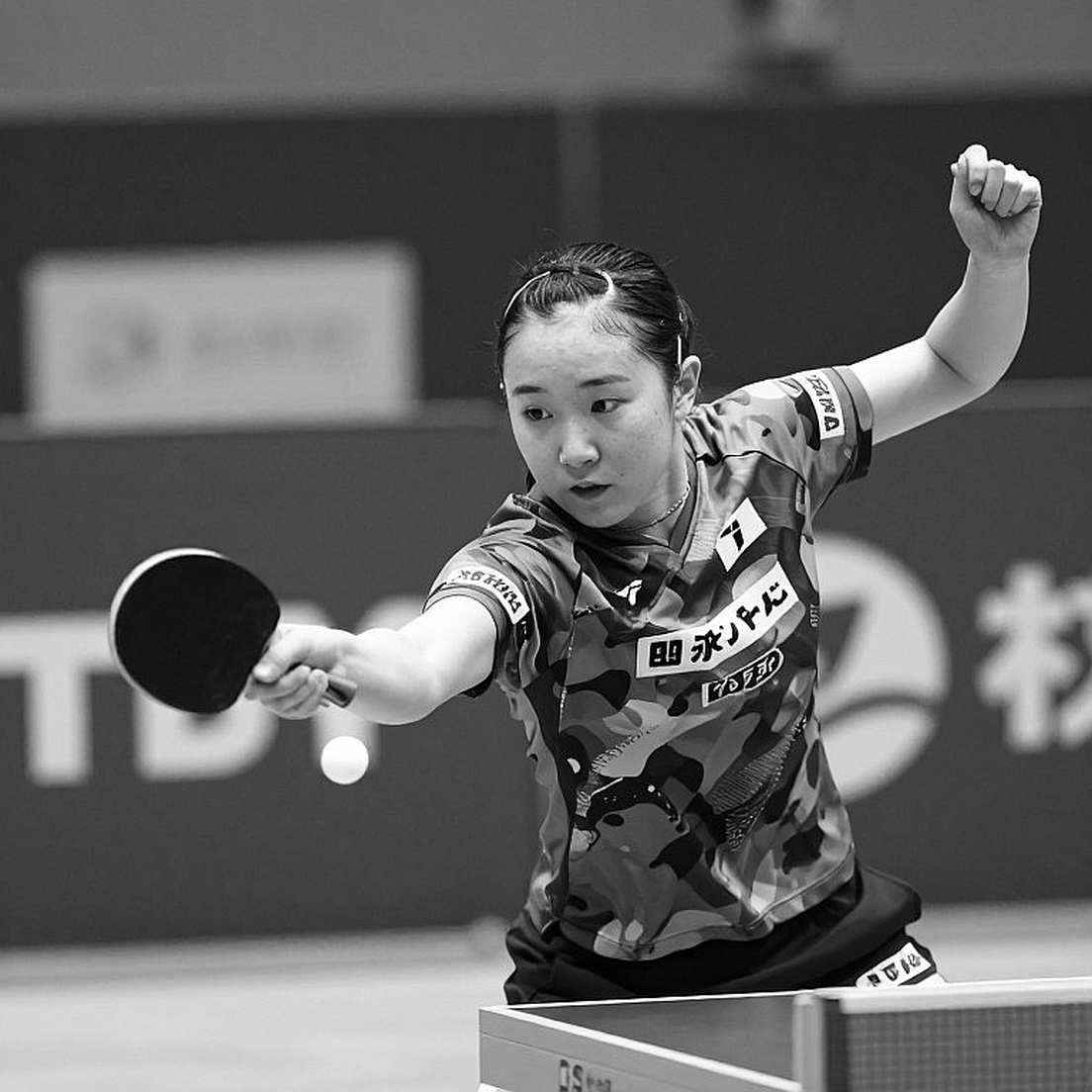
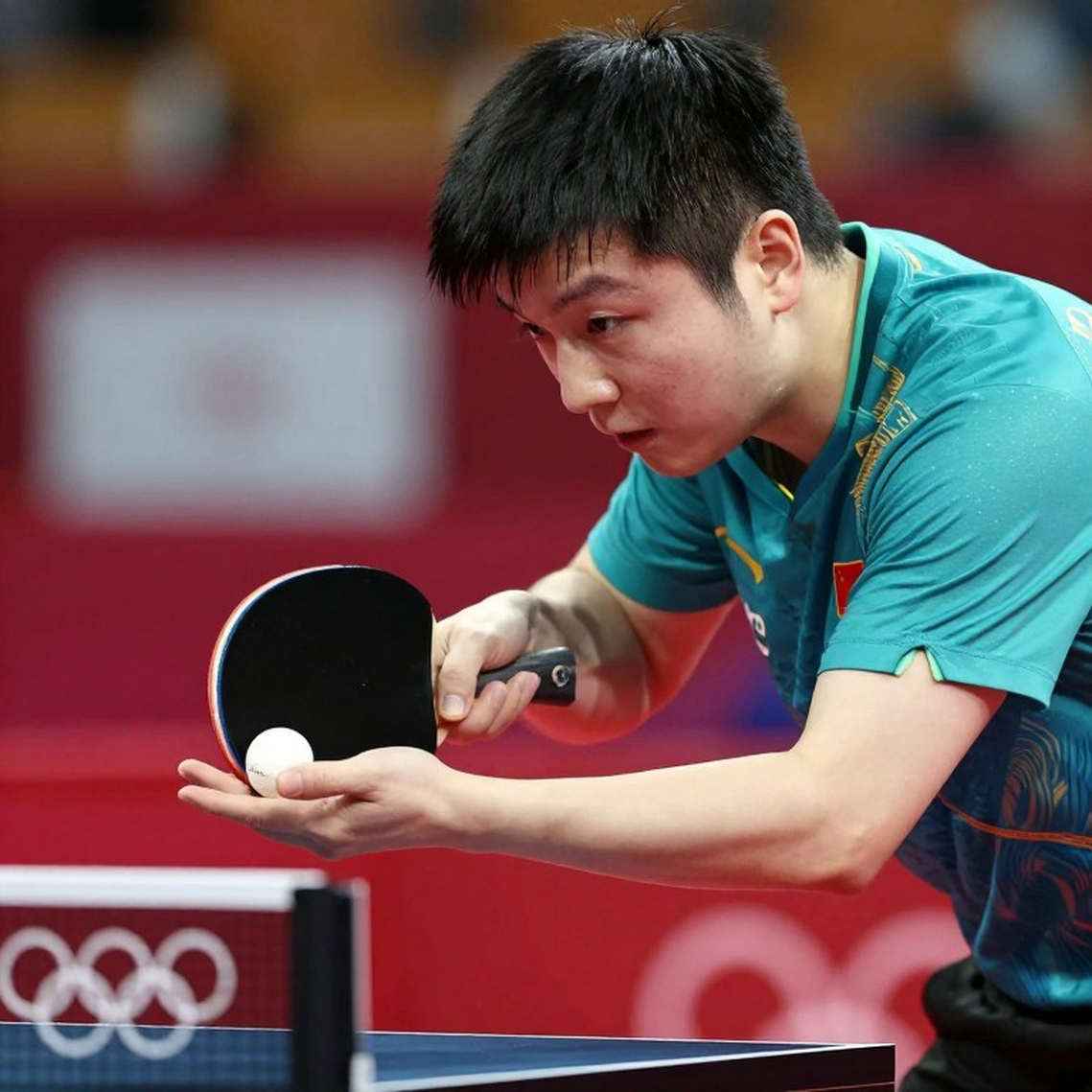
Cầu thủ liên quan
Bài đề xuất
The Blank Cell on the Scoreboard: What Table Tennis Never Records2026-09-18
USA Takes 43 of 56 Medals at the ITTF Americas U11 & U13 Championships in Katy: Reading the Result Sheet Through Three Layers of Data2026-09-19
Jarvis Draws World No 3 in Macao as Hursey Partners Shi Xunyao at China Smash2026-09-19
43 of 56 Medals in Katy: U.S. Youth Table Tennis Sweeps the Americas, But the Deepest Layer Has Yet to Surface2026-09-19
Worthing and the '1 Star' Event: Five Years On, the Club-Built Tournament Model2026-09-18
Bài đề xuất
Worthing TTC and the '1 Star' Event: When the Smallest Tournament Exposes the Biggest Gap in England's Youth Table Tennis System2026-09-18
Belgium Open 2026: Portugal's Double U21 Title and the Silence Nobody Reads2026-09-20
43 of 56 Medals in Katy: U.S. Youth Table Tennis Sweeps the Americas, But the Deepest Layer Has Yet to Surface2026-09-19
Bài đề xuất
Manush Shah and Manav Thakkar: Warning Signs from Recent Defeats Ahead of Asian Games 20262026-09-10
43 of 56 Medals and 14 of 14 Golds in Katy: U.S. U13 Swept ITTF Americas — But Do Not Read That as Global Supremacy2026-09-19
Katy, Texas and 43 Medals: When a Youth Medal Table Tells a Different Story Than the Crowd Wants to Believe2026-09-20
Lowri Hurd: The Transition from Able-Bodied to Para Table Tennis and the Fifth-Set Equation2026-09-18
Nine Matches, Ten Children, and the Error Map of English Youth Table Tennis2026-09-15
Bài đề xuất
The Unfilmed Court: Vietnamese Table Tennis and the Ballad of Generations Passing in Silence2026-09-20
Young table tennis player Li Zihao and the journey from the second division to the spotlight2026-09-09
US Youth Table Tennis Sweeps 14/14 Americas Golds: Behind a Medal Table With No Names2026-09-19
USA Takes 43 of 56 Medals at the ITTF Americas U11 & U13 Championships in Katy: Reading the Result Sheet Through Three Layers of Data2026-09-19