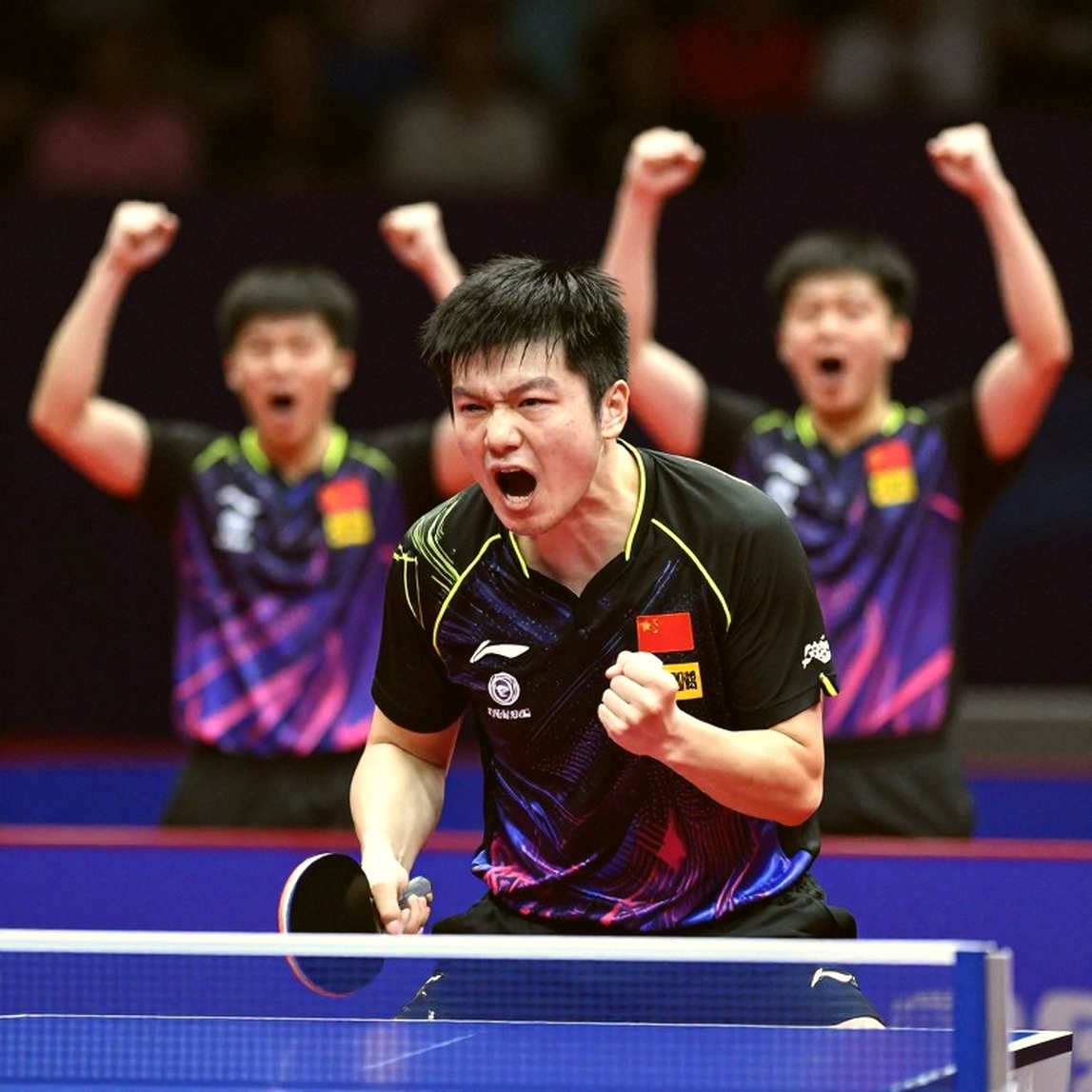
43 of 56 Medals and 14 of 14 Golds in Katy: U.S. U13 Swept ITTF Americas — But Do Not Read That as Global Supremacy
**Core answer**: Tại ITTF Americas U11 & U13 Championships ở Katy, Texas, đoàn Mỹ giành 43/56 huy chương (76,8%) và toàn bộ 14 huy chương vàng, nhưng ban tổ chức không nêu tên bất kỳ vận động viên nào. **Key facts**: - Tổng huy chương đoàn Mỹ: 43/56 (76,8%) — gồm 14 vàng, 11 bạc, 18 đồng. - Giải gồm 14 nội dung: bảy U13 và bảy U11; trần huy chương toàn giải là 56. - Địa điểm: Katy, Texas, Hoa Kỳ; đơn vị tổ chức: ITTF Americas. - Huấn luyện viên trưởng đội tuyển quốc gia Mỹ Tim Wang là nhân vật duy nhất được nêu tên. - Không cá nhân vận động viên nào được công bố; số liệu huy chương không kèm nguồn xác minh độc lập. **Source attribution**: Bản tin kết quả giải ITTF Americas U11 & U13 Championships, do liên đoàn công bố, không nêu nguồn độc lập; dữ liệu huy chương đang chờ xác minh. **Related Q&A**: - Q: Đoàn Mỹ giành bao nhiêu huy chương vàng? A: 14/14 huy chương vàng, tương ứng toàn bộ số nội dung của giải. - Q: Giải này có ảnh hưởng đến xếp hạng chuyên nghiệp không? A: Không, đây là giải phát triển cấp châu lục cho lứa U11/U13, không tính điểm xếp hạng chuyên nghiệp và không thuộc chu kỳ tuyển chọn Olympic. - Q: Vì sao kết quả này chưa đủ để kết luận về trình độ toàn cầu? A: Vì giải chỉ giới hạn trong khu vực châu Mỹ và không có sự tham dự của các nền bóng bàn mạnh nhất thế giới.
More than a week after the tournament closed, I keep returning to the medal table from the ITTF Americas U11 & U13 Championships in Katy, Texas. The number sits there, tidy and beyond argument: the United States delegation took 43 of the 56 medals on offer, a 76.8 percent share, and swept all 14 gold medals. Seven U13 events, seven U11 events, and not one of them escaped the host nation.
What makes me stop longer than the number is the empty space right beside it. Across every published item, not a single athlete is named. Not one. There are only two squad labels, Mini-Cadet and Hopes, only U.S. National Team Coach Tim Wang, and remarks about focus and determination. A delegation that swept 14 of 14 golds, without a single face to call by name.
I do not write on feeling. I record what the paddle says and what the numbers confirm. And when a table of figures is so full that no detail can fit beside it, the first task is to check what has been left out behind it.
It is worth being precise about what this event is, because many readers see the headline and immediately attach to it the weight of a world championship. That weight is not real here.

The ITTF Americas U11 & U13 Championships is a continental competition run by the table tennis federation of the Americas, the regional arm of the ITTF, for the two youngest tiers in the development system: Mini-Cadet (U13) and Hopes (U11). The structure covers seven U13 events and seven U11 events, each awarding one gold, one silver and two bronzes, putting the tournament ceiling at exactly 56 medals. That figure matches the published data completely, and it is why I read the medal table with high confidence on structure: 14 gold plus 11 silver plus 18 bronze equals 43 out of 56.
Systemically, this event sits at the bottom of the pyramid. There are no professional ranking points, no prize money, no place in the Olympic selection cycle. Its value is pipeline value: it shows how a federation is raising its youngest cohort, not who is strong at the top.
One further detail belongs in the notebook: the event was staged in Katy, Texas, which is home ground for the U.S. delegation. That matters not for emotional reasons but for structural ones. I will return to it below.
Step one: rebuild the data structure.
This is how I have worked since the summer of 2026, when I sat in Nagoya and built a five-step framework for evaluating young talent. Before saying anything about quality, you check whether the figures are internally consistent. With Katy, they are. Fourteen events, 56 medals, the U.S. taking 43. A conversion rate of 76.8 percent. On golds alone, 14 of 14, meaning total. There is no arithmetic gap to doubt.
But a table that is internally consistent only proves that it is internally consistent. It proves nothing about level. The prettiest number at a youth event is the most misleading one, because it does not carry its context with it. And here, the context is the venue.
Step two: isolate the home-ground factor.
Katy, Texas, is home ground for the U.S. delegation. In youth sport, home advantage is not mere inspiration. It is a mechanical variable with four components: familiarity with the hall and the tables, no travel and no jet lag, a home crowd pushing, and familiarity with local officiating conditions. Combined, these can lift a medal conversion rate considerably at an age where the gap between delegations is not large.
I have no data to isolate the home-ground contribution inside those 43 medals. The principle is clear: when the winner is the host and the tournament ceiling is only 56 medals, any conclusion about absolute strength must be discounted. This does not diminish the athletes' achievement. It only places that achievement inside its proper frame.
Step three: read the age band.
U11 and U13 sit below even the rising phase threshold I use in my work, meaning below 22. This is pure development territory. At these ages the body is unfinished, technique is still forming, and most importantly, maturation rates vary enormously between individuals. A 13-year-old who matures early can look completely dominant against a late maturer, and that gap vanishes within two to three years.
That is why I never rank a young athlete on fewer than two seasons of data. At Katy we have one event, one moment. There is no second season to cross-check against. There is nothing to compare.
Step four: read the pipeline signal.
This is where the medal table genuinely has value. The U.S. sweeping all seven U13 events is a positive signal about the depth of the American U13 cohort relative to the rest of the Americas. It says that at that age, the United States has multiple athletes of sufficient standard at the same time, not just one outstanding individual. For a table tennis nation not usually listed among the powers, that is worth recording.
But pipeline signals at 13 carry extremely high volatility. Based on my experience watching youth matches in Aichi and U13 events across the Tokai region, I have seen enough championship cohorts to know that most of the names at the top of this age group will not reach the top. Not because they are weak. Because the pipeline ahead is long and narrow: U15, U19, then the national team, and each stage sheds a layer. The conversion rate from continental U13 champion to professional top level is very low, and that is the general rule, not an American exception.
Step five: read the qualitative layer.
This is where I must be most careful, because I am known for being rigid with data. Coach Tim Wang speaks of focus and determination, of fighting for every point. Those are psychological descriptions, not technical ones. They cannot be converted into conclusions about a technical system. They are not worthless either.
At this age, competitive mentality is often a bigger deciding variable than technique, because technique is not yet mature enough to create separation. An 11-year-old who stays calm at a deciding point will win more matches than one with a prettier backhand. This reading does not replace data; it adds a layer that behavioural data does not fully measure.
Step six: benchmark against Japan.
This is what I carry over from my daily work. In Japan, at the same U13 level, tournament density is far higher, and an athlete who wants to emerge must go through dozens of matches in a season, against every kind of opponent, in every kind of hall. The consequence is thick data on those players, less distorted by a single event.
The Americas is different. Fewer events, thinner opponent density, and a continental title carries far more data weight than its actual competitive level deserves. This is the standard-deviation point to remember: the same continental gold medal carries different informational value in Asia and in the Americas. The sediment layer of table tennis is not underground. It sits in the U-13 data rows.
This is where I want to speak plainly.
The common reading of Katy will be: the U.S. won 76.8 percent of medals and every gold, so American youth table tennis is now world class. That inference is structurally wrong. A continental event at U11 and U13 level cannot say anything about the balance with Asia or Europe, because the strongest table tennis nations are not present. You cannot derive a global position from an event where the strongest opponents are excluded from the equation by definition.
The second danger is the home-ground bubble effect. When the host sweeps, domestic media tends to turn it into a story about a system. But as noted, part of those 43 medals comes from not having to travel and from having a home crowd. Strip that out and the figure becomes more modest.
The third danger is the subtlest: the decision to name no individual may be a deliberate communications choice, promoting the program brand over the person. That is good for the organisation, but it removes our most important tracking tool: the name. No name, no trajectory. No trajectory, no forecast. One further point on provenance: none of the figures above carries an independently verified source, and they most likely originate from a federation's own release. They are trustworthy on structure, but should be cross-checked against official results before being cited as a settled fact.
Process does not kill discovery. It teaches us to dig in the right place, at the right depth, at the right moment. And in Katy, the place worth digging is not the medal table. It is the missing athlete list.
If you want to follow the real trail of this wave, skip the medal table and go looking for names. Over the next 12 to 24 months, watch how many of the Katy U13 cohort are still standing at U15, then U19. If within two or three years a U.S. name reaches a world age-group podium, then we can talk about a system. For now, we have a pretty set of home numbers, and an empty space behind them.