
Eight Champions in Sofia: The Power Map of European Disability Snooker
**Câu trả lời cốt lõi** European Disability Snooker Championship lần thứ ba diễn ra tại Sofia, Bulgaria trong bốn ngày, quy tụ 45 tay cơ từ 11 quốc gia thuộc tám bảng phân loại của WDBS dưới hệ thống WPBSA. Tám nhà vô địch được xác định trong ngày thi đấu cuối, với Dave Beaumont và Andy Lam cùng nhắm danh hiệu châu Âu thứ ba. **Dữ kiện chính** - 45 tay cơ, 11 quốc gia, tám bảng phân loại; tám trận chung kết diễn ra trong ngày thi đấu thứ tư tại Sofia. - Dave Beaumont, 58 tuổi, số một thế giới ở bảng của anh, không thua frame nào và dẫn đối đầu 18-2. - Dave Bolton dẫn Dalton Lawrence 25-1; chiến thắng duy nhất của Lawrence đến năm 2025 tại Albufeira. - Break cao nhất giải: 46 của Reece Rees và 41 của Adam Wilk. - Archie Buskin là tay cơ trẻ nhất từng vào chung kết; Nikolay Hristov là tay cơ Bulgaria đầu tiên vào chung kết. **Nguồn** Nguồn: WPBSA (bản tin chính thức về European Disability Snooker Championship, mùa giải 2026) | Cross-checked: VuaBong.vn **Hỏi đáp liên quan** Q: Giải này có phải sự kiện xếp hạng của WST main tour không? A: Không, đây là giải vô địch châu Âu chính thức thuộc WDBS/WPBSA, tổ chức theo tám bảng phân loại khuyết tật song song. Q: Vì sao có thể tồn tại nhiều danh hiệu số một thế giới cùng lúc? A: Danh hiệu gắn với từng bảng phân loại riêng, nên Beaumont, Bolton và Haslam có thể đồng thời giữ vị trí số một ở các nhóm khác nhau. Q: Người theo dõi xem điểm trực tiếp ở đâu? A: WPBSA SnookerScores cập nhật điểm trực tiếp, và một số bàn đấu được phát trên kênh YouTube của WPBSA.
At 8 a.m. in Liverpool, the scoreboard on WPBSA SnookerScores starts moving. In Sofia it is 10 a.m., the fourth day of the European Disability Snooker Championship is under way, and eight finals are spread across eight tables. Two lines in the live feed make me stop.
The first is a break. Reece Rees of Wales has made 46. Adam Wilk of Poland has made 41. Those are the two highest breaks recorded across four days.
The second is a head-to-head record. Dave Beaumont leads his final opponent 18-2.
Those two lines tell very different stories about the same tournament. A break of 46 says this is a field of genuine technical quality. A record of 18-2 says that in some groups the final was written well in advance. Between them sits the whole question of where European disability snooker stands.
Context
This is the third staging of the event. It runs in Sofia, Bulgaria, across four days, with 45 players from 11 nations split into eight classification groups. Eight champions are crowned on the fourth day. The whole event sits under WDBS, the World Disability Billiards and Snooker body, within the WPBSA system.
One structural point matters from the start. The eight classification groups operate as eight parallel championships, each for a different disability category, with adapted playing conditions and in some cases adapted rules. The wheelchair-group winner does not play the deaf-group winner for a single European title. That structure explains most of the data below, and it explains why several world-number-one titles can exist at once.
The 2026 staging was held in Albufeira, Portugal. That is also where Dalton Lawrence claimed his only career win over Dave Bolton, a detail I will return to. Live scoring runs through WPBSA SnookerScores, with selected tables on the WPBSA YouTube channel. It is modest coverage, enough for a follower in England to track every frame, not enough to create a news cycle.
Analysis
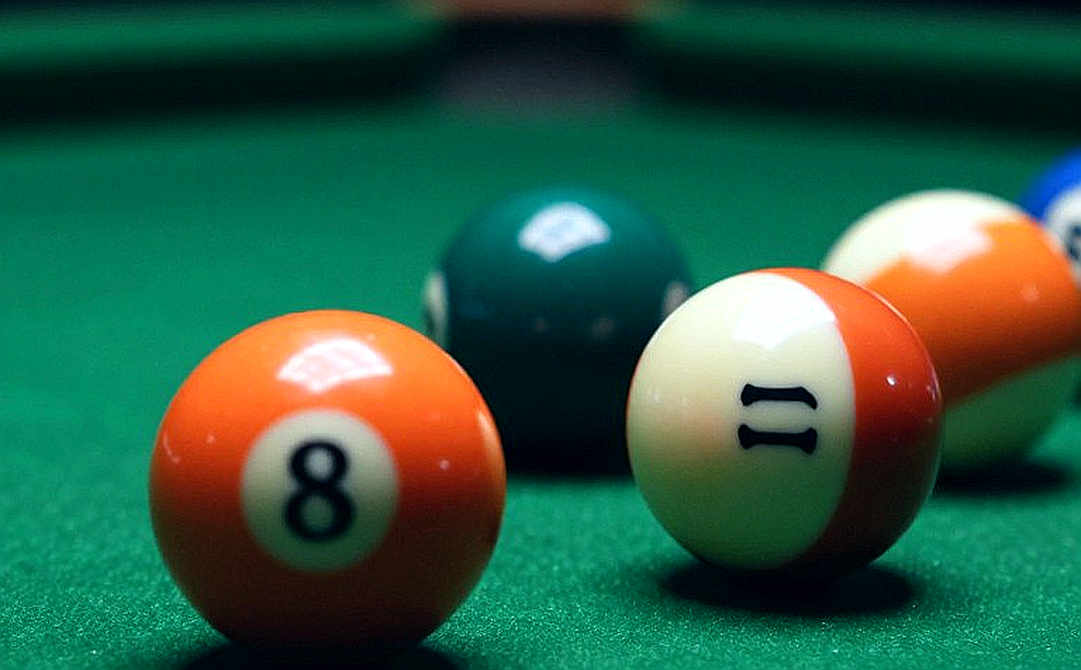
Start with the break data. The ceiling this week was 46. On the WST main tour a break of 46 happens dozens of times a day and nobody mentions it. Here it is logged as a landmark.
There are three explanations, and they should be separated rather than merged.
The first is format. If most group matches were best-of-three, a player has at most three frames to build rhythm. Break-building is an accumulative skill: it needs time at the table, feel on the cue ball, a run of shots. Short formats reduce the chance of reaching that threshold. Multiple 2-0 scorelines and at least one deciding frame make the short-format assumption reasonable.
The second is classification. Different groups may carry adjustments to stance, rest, footwork or cueing. Those adjustments do not diminish the players, but they change the optimal route to a break. A 46 here is not on the same scale as a 46 at the Crucible.
The third is sample size. Four days, one event, two breaks cited. The most honest conclusion is that we know very little about the real break-building capacity of this field, and the data only supports a ceiling around 40 to 46.
Head-to-head data is richer. Dave Beaumont, 58, world number one in his group, leads his final opponent 18-2. Dave Bolton, also world number one in his group, leads Dalton Lawrence 25-1. Michael Haslam leads 11-3. But Reece Knowles leads Kristof De Bruyn only 7-4, Adam Wilk leads Andy Lam 4-2, and Carl Gibson leads Archie Buskin 5-0.
Two categories emerge. First, near-total dominance: 18-2 and 25-1 are not the ratios of equal peers. Second, genuine competition: 7-4 and 4-2 can swing on a single frame.
Every classification group is a hypothesis waiting to be disproved. At Sofia, at least two hypotheses look more fragile than they appear.
Beaumont is the most interesting case. At 58 he remains world number one in his group. He has not lost a frame all week. He is chasing a third European crown. Three facts together describe a player with technical and mental consistency that few sports permit at that age.
But the data does not say everything. Not dropping a frame and leading 18-2 are different kinds of evidence. The first is a week of form; the second is years of accumulated history. Both lean the same way, but they do not add up to a probability. Error is where reality signs its name — and in short formats, error has more room to sign.
Bolton's case deserves closer reading, because the 25-1 hides something. Lawrence has beaten him exactly once, in 2026, on the European stage in Albufeira. When a player wins 25 meetings, losing at the biggest event is not a random event. It suggests Lawrence can find a specific configuration — a tempo, a table, a mental state — that troubles Bolton. The question is whether he can reproduce it.
In the Lam-Wilk group the story is different. Lam, twice defending European champion, is chasing a third title, the same target as Beaumont. Wilk is a rising Polish player, and this marks the first WDBS final between Hong Kong China and Poland. In group play Wilk led 2-0; Lam recovered and won the deciding frame. That is the most psychologically significant data point of the week.
Being 0-2 down in a short format leaves almost no room to correct. There is no time to adjust tempo, no middle frame to experiment, and every shot carries the weight of a decider. A player who recovers from that proves more than technique: they prove the ability to separate emotion from the shot, the hardest thing to teach in this sport.
In Group 6A, Nicklas Olsen arrives as defending European champion, newly crowned world champion, and, by his own account, unbeaten in every WDBS event he has entered. He reached the final without dropping a frame. His opponent, Niall Pollitt, is in his first WDBS final and beat his brother Aidan in a semi-final decider.
That brother-against-brother decider is the detail that stops any writer cold. Two brothers, one final place, one frame. No model captures that pressure, and none should try.
In the Gibson-Buskin group, a 2026 European champion faces a phenomenon. Archie Buskin is the youngest finalist in the history of the event, and he got there by beating the 2026 World Championship runner-up in the semi-finals. Yet his head-to-head with Gibson is 0-5.
Two signals must be separated. Buskin can win big matches. Buskin has never beaten Gibson. Both are true and they do not contradict; they only show that Buskin's sample is small and Gibson's record against him is clean.
Knowles versus De Bruyn at 7-4 is the most balanced pairing recorded. Knowles is defending champion in his group; De Bruyn is a Belgian who reaches finals consistently. In short formats, 7-4 means they know each other well and each frame can swing.
In the Rees-Hristov group there is a geographical landmark. Nikolay Hristov is the first Bulgarian player to reach a final at this event, and the event is on his home soil in Sofia. Rees made the 46 break of the week.
Three currents run through the whole picture. The first is the density of players from the UK and Ireland: Beaumont, Gibson, Bolton, Rees, Knowles, Pollitt, Haslam, Hart, Southern, Buskin. That is historical: WDBS grew inside the British billiards system, with its club infrastructure and dense competitive pathway. The second is the rise of nations outside that core — Lam of Hong Kong China, Wilk of Poland, Olsen of Denmark, Hristov of Bulgaria, De Bruyn of Belgium. The third is generational overlap: a 58-year-old world number one and the youngest finalist in history on the same finals day.
Contrarian angle
The phrase world number one needs careful reading here. With eight parallel classification groups, several players can hold that title at once, each in a different disability category. The title is real but carries no cross-group comparison. Beaumont, Bolton and Haslam can all be world number one, and that says nothing about who is better, because they may never compete in the same group.
Second, the 25-1. Extreme head-to-head records are usually read as prophecy. They do not work that way. They are a historical record under specific conditions, and conditions in Sofia differ from Albufeira and from everywhere else. Lawrence's only win came on the European stage, meaning he has already shown he can produce it under exactly this pressure.
Third, and most important: short formats compress technical gaps. In a best-of-three, the weaker player needs two good frames. In a best-of-nineteen, they need far more. Every head-to-head accumulated over long matches becomes less predictive in a short-format event. Tactics do not live on the whiteboard; they live in the gap between two shots — and in short formats that gap narrows until one bad shot can fill the whole match.
One more thing: nowhere in the event information is there any prize money. No prize structure, no named title sponsor. That suggests an environment where the reward is the title itself, funded by governing-body support and players' own costs. That changes the nature of pressure. You are not playing to keep a living; you are playing to hold a place in the classification system, to prove you belong.
And this is the biggest blind spot when outside media look at disability snooker: we read it as an inspiration story and skip the competitive data. The data is the better read — 18-2, 25-1, 7-4, a break of 46, a decider between brothers, a 58-year-old who has not dropped a frame.
Takeaway
From Liverpool, watching Sofia, what I wait for on the final day is not a big break. The 46 will probably stand, and that no longer matters.
What matters is how the newcomers walk to the table. Can Buskin break the 0-5 run against Gibson? Can Lawrence reproduce the configuration that beat Bolton in 2026? And the larger question four days in Sofia cannot answer: will a system split by disability classification ever produce a ranking broad enough for cross-group comparison — or does its real value lie elsewhere, in giving every player a table and an opponent of their own level?