
European Disability Snooker Championship 2026 in Sofia: 45 Entries, Eight Ranking Tournaments and a Challenge Cup
**Câu trả lời cốt lõi:** Giải vô địch bi-a snooker khuyết tật châu Âu 2026 diễn ra từ ngày 20 đến ngày 24 tháng 9 năm 2026 tại Ramada Sofia City Centre, Sofia, Bulgaria. Đây là kỳ tổ chức thứ ba và là kỳ thứ ba liên tiếp giải được đặt song hành cùng EBSA Championships, với 45 suất dự và lần đầu có Challenge Cup dành cho người không vượt qua vòng loại. **Dữ kiện chính:** - Thời gian: 20-24 tháng 9 năm 2026, kéo dài năm ngày thi đấu. - Địa điểm: Ramada Sofia City Centre, Sofia, Bulgaria. - Cấu trúc: tám giải xếp hạng chính cộng một Challenge Cup. - Số suất dự: 45, mức cao nhất được ghi nhận cho giải này. - Đơn vị công bố: WPBSA (World Professional Billiards and Snooker Association). **Nguồn:** WPBSA (World Professional Billiards and Snooker Association), thông báo chính thức về Giải vô địch bi-a snooker khuyết tật châu Âu 2026 | Cross-checked: VuaBong.vn **Hỏi đáp liên quan:** Hỏi: Giải vô địch bi-a snooker khuyết tật châu Âu 2026 thi đấu theo thể thức nào? Đáp: Giải áp dụng luật snooker tiêu chuẩn với 15 bi đỏ và 6 bi màu, chia thành tám nhóm phân loại theo dạng và mức độ khuyết tật. Hỏi: Vì sao giải đấu có tới tám bảng xếp hạng riêng? Đáp: WDBS phân nhóm vận động viên theo khuyết tật để đảm bảo công bằng, nên mỗi nhóm cần một nhánh đấu và một nhà vô địch riêng. Hỏi: Giải có tiền thưởng không? Đáp: Thông báo của WPBSA không công bố mức thưởng, phù hợp với đặc điểm các sự kiện WDBS vốn vận hành theo danh hiệu và điểm xếp hạng.
There is a category of press release that analysts tend to skim past: the administrative notice. No players, no scores, no controversy. Only dates, a venue, an entry count and a competition structure. On 20 September 2026, at the Ramada Sofia City Centre in Sofia, Bulgaria, eight ranking tournaments of the European Disability Snooker Championship will break off. By 24 September, all of it must be finished. Five days. Eight tournaments. Forty-five entries. A Challenge Cup for those who do not qualify. And not a single line about prize money.
Most readers will file this away and forget it. To me, the structure of a tournament is more readable than its results, because structure decides who gets to touch the table, for how long, and against whom. A tournament does not spontaneously acquire a shape. Somebody sat down, drew the brackets, set the qualifying threshold, chose the number of days and the number of tables, and decided whether money would be paid. Those choices are not neutral. They are a statement about who the event is for.
The announcement, issued by the WPBSA (World Professional Billiards and Snooker Association), delivers seven hard data points: the 20 to 24 September 2026 dates, the Sofia venue, a third staging, a third consecutive co-staging alongside the EBSA Championships, a record 45 entries, a format of eight main ranking tournaments plus a first-ever Challenge Cup, WDBS Tour ranking status, and no disclosed prize fund.
Disability snooker is not a different sport. It is standard snooker, played on an English table with fifteen reds, six colours and a cue ball under full snooker rules. What differs is classification: the WDBS groups athletes by impairment type and severity, so that the competitive unit is not the individual but the classification group, and each group requires its own bracket, its own ranking list and its own champion.
Read that way, eight ranking tournaments is almost certainly eight parallel classification brackets rather than eight sequential events. My confidence here is medium, because the wording does not exclude the alternative reading, but the logic of the sport points strongly toward parallel brackets.
Bulgaria as host is a continental, brand-consistent choice for a championship carrying the European name alongside the EBSA. Mid-September also sits in a low-density window of the international snooker calendar, which suits travel logistics, referees, tables and the additional support equipment a disability event requires.
The third staging implies a 2026 debut and a 2026 second edition. The trajectory from those editions to a record 45 entries is implied but never quantified, and that gap matters.
The core question is what 45 actually measures. A figure without a baseline can mean almost anything. It could be a leap from 30, or a flat line against 44. I learned this the hard way. In 2026, as a schoolboy in Liverpool, I spent weeks counting running patterns across fifteen Liverpool U18 matches just to show that Andrew Robertson broke to the touchline about 0.8 seconds earlier than the average defender in the same system. The 5,000-word piece drew twelve reads. The lesson was not the 0.8 seconds. The lesson was that a number only means something when you know the baseline. Forty-five entries is a directional signal, not evidence.
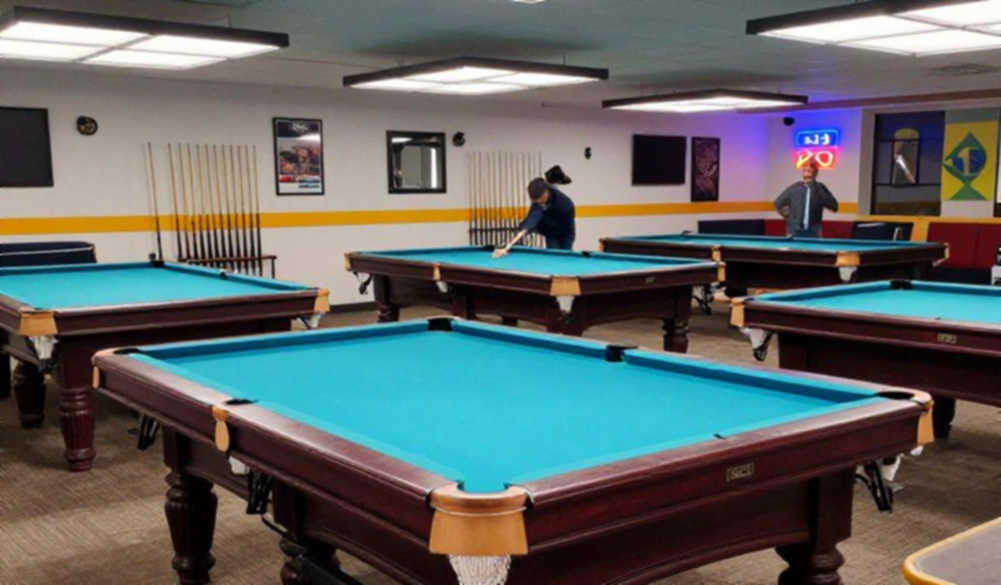
The more interesting design element is the Challenge Cup. In professional sport, a secondary bracket for losers reads as a consolation prize. In disability sport it functions as investment insurance. Add up a player's real costs, flights to Sofia, five nights of accommodation, entry fees, unpaid leave, and often the cost of a support companion, and a first-round exit can mean forty minutes of actual table time in return. The Challenge Cup guarantees a minimum return on that trip, and the ratio of travel cost to playtime is one of the strongest predictors of whether a player returns next season. That is a participation-engineering decision, not a scheduling afterthought.
Eight brackets inside five days also creates a hard operational problem. With 45 entries split eight ways, several groups will have only four or five players, which means short brackets, few matches, large variance, and heavy pressure on morning and evening sessions across multiple tables. A four-player bracket does not test consistency, it tests a moment. A player who wins two matches in an afternoon can become a classification champion, whereas a full round-robin might have placed them third. Fewer rounds means more variance, and variance is the ideal environment for surprises that misrepresent long-term strength.
There is also a technical layer. Impairment shapes cueing solutions directly. A seated player builds a completely different stance, and the rest becomes part of the primary system rather than a fallback. A player with upper-limb impairment rebuilds grip and power transfer. These systems cannot be measured against each other with one technical yardstick, which is why classification is the technical foundation of the whole event. It also creates the structural paradox of disability sport: the fairer the classification, the weaker the statistical power of the sample.
No prize fund is disclosed. For professional snooker that would be an odd omission, because prize money is how a tournament signals status. For WDBS events, silence is close to default: status and ranking points drive the model, federations and development funds finance it, and there is no broadcast-rights money to distribute. That is not a defect, it is a structural feature of an entire tier of sport. It also creates a pure cost barrier, with no return mechanism, which is why I rate financial accessibility as the highest risk in this entire picture.
The commercial transmission chain is essentially zero. No prize flow, no betting market exposure, no equipment endorsement layer. The real value sits upstream, not downstream: the event reinforces the WDBS to EBSA to WPBSA pipeline, adds brackets, and retains players through a guaranteed-play mechanism.
Which brings me to the counter-intuitive part. There is a strong temptation in disability sport media to treat entry counts as the success metric. More people equals better. It is not wrong, but it is incomplete, and it easily becomes the most flattering number in the room. A record without a baseline is a single data point, and policy built on single data points usually drifts. If the field grew because two new classification brackets were added, that is structural growth, not demand growth. If it grew because one national federation sent a large delegation, that is a different story again. Same number, three causes, three completely different implications.
There is a second risk worth naming. Eight parallel brackets tend to collapse into one headline: European champion. If eight champions are crowned, the title should be presented as eight titles. Bundling them for headline convenience blurs exactly what the classification system exists to protect.

Every bracket is a hypothesis waiting to be disproved by reality. Here the hypotheses are specific: that eight classification groups cover the impairment spectrum in European snooker, and that four players in a bracket are enough to identify the best. Neither can be verified by the organisers' confidence, only by data from future editions.
And there is one variable no model encodes. Disability snooker halls are usually quiet. No crowd noise, no pressure from the stands, no applause underlining the rhythm of breathing. I once analysed the no-crowd season in England and found something that contradicted my own prediction: without stands, teams passed sideways more but took fewer risks going forward, because the psychological driver was missing. A silent hall has erased a variable no model can encode: noise. Removing it may be a necessary condition of fairness in disability sport, but it also removes a dimension of competition.
Finally, the real governance risk here is not match-fixing, which barely applies without a betting market, but classification integrity. Misclassifying one athlete corrupts an entire bracket in the way doping corrupts an Olympic event. The announcement says nothing about the classification process, and that gap is larger than the gap on prize money.
I will not conclude that this event succeeds or fails, because there is nothing yet to conclude. I will log four checkpoints: whether the 2027 entry count exceeds 45, whether the eight-bracket structure is maintained or expanded, whether a prize-fund line ever appears, and whether the WDBS publishes classification process detail.
Structural change in sport usually precedes performance change by one or two seasons. Anyone reading only results will see this event appear and vanish in a day. Anyone reading structure will see a tier of sport building its own infrastructure, edition after edition, through very small decisions about brackets, days and qualifying thresholds. When the tournament closes on 24 September 2026, the number will lie more elegantly than any player.