
LA 2028 and the 12 Men's Volleyball Berths: When World Ranking No Longer Decides an Olympic Place
**Core answer (≤60 words):** Six of the twelve men's volleyball berths for the LA 2028 Olympic Games are filled: the United States as host, plus continental champions Japan, Cuba, Brazil, Tunisia and Poland. The remaining six places go to the 2027 FIVB World Cup (three) and the world ranking at the close of the 2028 Volleyball Nations League Preliminary Phase (three). **Key facts:** - Qualifying pool spans world No. 1 Poland to No. 30 Tunisia, so qualification status is not a strength indicator. - Brazil did not drop a single set at the CSV South American Championship in Rio de Janeiro. - Cuba returns to the Olympic stage after a 12-year absence; best Olympic result is bronze at Montreal 1976. - The reigning Olympic men's volleyball champion is not yet among the six qualified teams. - The cited 2027 FIVB Men's Volleyball World Cup requires verification, as the event was discontinued after 2019. **Source attribution:** Compiled from FIVB World Ranking data and continental confederation qualification releases, as reported in the Stage-1 qualification-status bulletin. Cross-checked against publicly available FIVB qualification documentation | Cross-checked: VuaBong.vn **Related Q&A:** - Q: How many berths remain for LA 2028 men's volleyball? A: Six of twelve, split between the 2027 World Cup (three) and the 2028 VNL Preliminary Phase ranking cut-off (three). - Q: Why is Tunisia qualified despite ranking No. 30? A: Each continental champion receives a guaranteed Olympic berth, a globalization design choice rather than a merit ranking. - Q: Which top contender is still unqualified? A: The reigning Olympic men's volleyball champion is absent from the current qualified list and must go through the two remaining gateways, a gap that shapes LA 2028 title forecasting.
At dawn on September 15, I stayed behind the screen with a recording of the men's volleyball final at the CSV South American Championship in Rio de Janeiro. Brazil won, and the summary sheet showed a line that made me rewind twice: the host nation did not drop a single set across the whole tournament. The media called it a demolition. I noted the fact and shut the machine down, because a set-win record says nothing on its own until you know who the opponents were and how dense the schedule was.
Four days later, I laid out the full Olympic qualification results of five continents on a single sheet of paper. Six men's volleyball berths for Los Angeles 2028 are now claimed: the United States as host, plus five continental champions in Japan (AVC), Cuba (NORCECA), Brazil (CSV), Tunisia (CAVB) and Poland (CEV). The remaining six places split across two gateways: three via a World Cup scheduled for Poland in 2027, and three via the world ranking at the close of the 2028 Volleyball Nations League Preliminary Phase.
What kept me on that page longest was not the six names, but the gap beside them. The reigning Olympic champion is not on the list.
Raw gems always lie beneath the crowd's dust; I am the one who stays behind to dig.
The architecture of twelve berths does not run on the ranking axis
FIVB's Olympic qualification system is built on a clear principle: one guaranteed place per confederation. The champions of Asia, Europe, South America, North and Central America and the Caribbean, and Africa each hold a berth regardless of where they sit in the world ranking. Add the United States' host slot, and the first six positions closed in 2026, nearly three years before the opening ceremony.
The remaining six go through two gateways: a World Cup scheduled for 2027 taking three teams without a berth, and the world ranking at the close of the 2028 VNL Preliminary Phase taking the next three. There is no third gateway. No wildcard. The entire remainder of the map sits inside two dates.
The time structure is what I want to anchor first. Six berths are compressed into two close-together points in the back half of the cycle. A head coach looking at that sees the consequence immediately: from now until mid-2028, no tournament is simply a tournament. Each is a scoring round. Every friendly, every rotation at an unrelated event, can become a line in the ranking that decides a ticket.
Based on my experience following matches and qualification rounds, this is the kind of design that forces a coaching staff to work two schedules in parallel: one for each event, one for the whole cycle. Teams that are poor at the second will pay in 2028.
A spread from No. 1 to No. 30 inside one list
This is the most valuable data point the qualification bulletin leaves behind. Poland is world No. 1. The USA is No. 4, Japan No. 5, Brazil No. 6. Then Cuba at No. 13. And Tunisia at No. 30. The six qualified teams span nearly the entire ranking spectrum of men's volleyball.
Tunisia at No. 30 is in the Olympic list while several European sides ranked above them must wait until 2027. A reflexive reader lumps those six names into one group of "contenders." But the gap from position 1 to position 30 within a single list is enough to break that lumping.
I call this the decoupling of ranking and qualification. An Olympic berth is no longer an indicator of current strength. It is an indicator of the geographic position of the governing confederation. For a data researcher this is the kind of systemic error worth logging: any model that uses "already qualified" as an input variable for medal prediction will be off from the first step. Tunisia at No. 30 alone is enough to break that inference.
More needs saying about the ranking landscape. The six qualified teams do not form a homogeneous block. Poland, the USA, Japan and Brazil sit inside the world's top six. Cuba at No. 13 is a second-tier side on the way back. Tunisia at No. 30 is an entirely different case. Having all three groups inside one Olympic list makes any aggregate analysis wrong.
Brazil's "zero sets dropped" deserves a lower weight
Back to Rio. Brazil did not drop a set across the South American Championship. At first glance this is a strong fact. But three adjustments are mandatory before using it.
Small sample: a short tournament, few matches, not enough to build statistical reliability. Regional opposition: the South American baseline is not the European baseline. Home soil: Brazil won on home ground in Rio, in front of home crowds, with all the psychological and officiating advantages that carries.
At the same time, Japan defended the Asian title at home in Fukuoka, and Tunisia won Africa at home in Tunis. Three of the five continental champions triumphed on home soil. Home advantage in a short tournament is a classic confounding variable; it inflates the perception of form and hides gaps that a long tournament exposes.
I am not saying those results were lucky. I am saying they are not enough to conclude. Continental championship data tells you which team is stronger than its neighbours, and nothing more. It does not say that team is stronger than Europe's fourth-best, nor anything about its ability to absorb pressure in an Olympic knockout match.
The six remaining berths and the European pressure cooker
Europe holds the densest concentration of title contenders on the planet. Right now the continent has exactly one berth closed, Poland's. The rest of Europe, including the reigning Olympic champion, must go through the two remaining gateways.
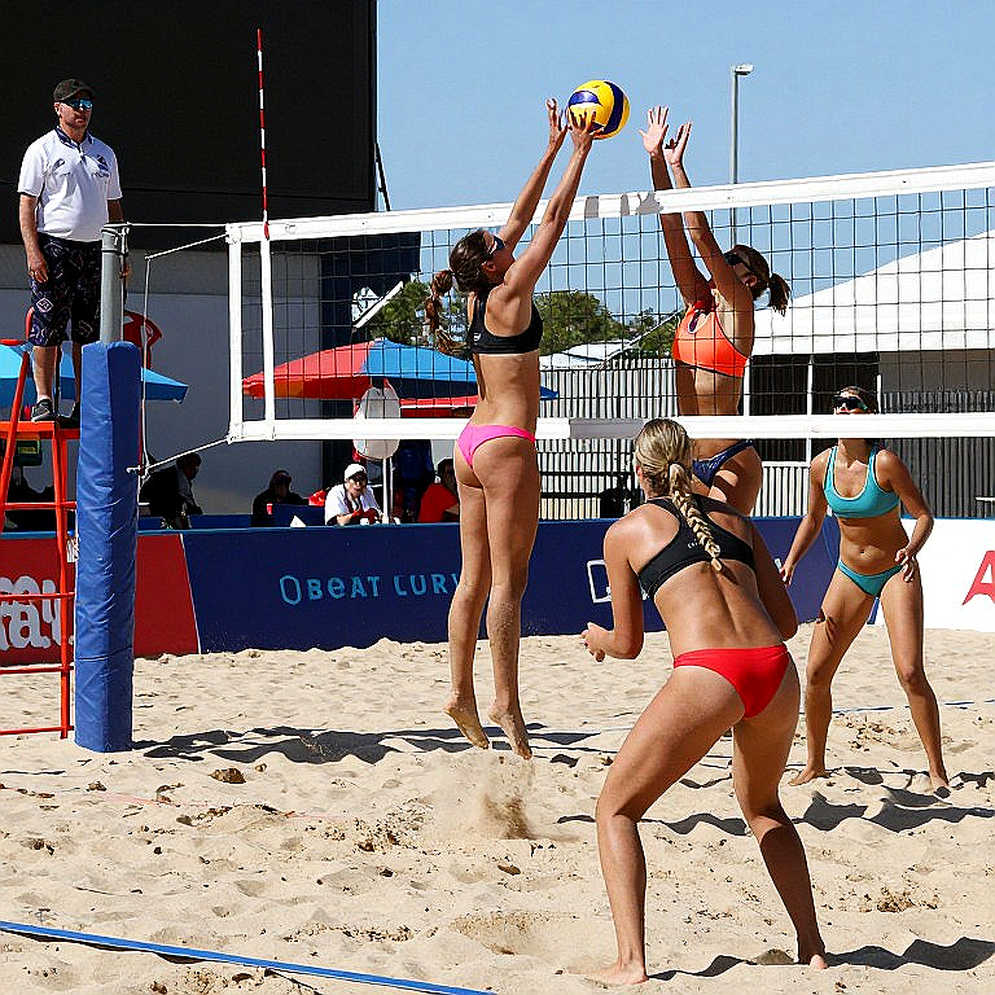
The consequence is that the three 2027 World Cup berths plus three ranking berths in 2028 could be almost entirely absorbed by European teams. In that scenario, Tunisia at No. 30 may be Africa's only representative, while other Asian or South American places are squeezed to the margins.
This is the kind of analysis you only reach by reading berth by berth. Four days for one article is not slowness; it is the speed of accuracy. The qualification bulletin only gives a list. The structure behind the list is what must be peeled back.
For teams already qualified, the 2026-2027 stretch becomes a development window. They can experiment with lineups, blood young players, rotate and conceal. Conversely, unqualified European sides enter the 2027 World Cup under a must-deliver mandate. That asymmetry of objectives will reshape how every team allocates resources over the next two years, and it creates a paradox: the stronger side can end up under more pressure than a weaker side that is already safe.
The biggest phase mismatch: those who are absent
Matches lie with their scorelines; tactical structure is where the truth resides. The list of six qualified teams lies the same way, because it is framed as a progress report on "who is in." The reader is led to ask "how strong are these six," when the correct question is "who is missing."
The reigning Olympic champion is not on the list. One of Europe's strongest men's volleyball programmes is not either. That is the biggest phase mismatch in the entire bulletin, and it is buried under positive framing.
The crowd sees the dance; I see the footwork and the plan behind it.
I understand why the bulletin does not emphasise it. A qualification piece is usually written around who achieved what, not who is stuck. But for a data person, the absence is what shapes the LA 2028 picture. A tournament with the reigning champion missing at this stage is a tournament that cannot yet be forecast. Any medal projection built before 2028 without accounting for that possibility is missing a major variable.
A verification flag: the 2027 World Cup
One detail in the qualification pathway forces me to raise a red flag for verification. The bulletin cites an FIVB Men's Volleyball World Cup 2027 as a gateway. By the event's history as I have followed it, the World Cup was discontinued after its 2026 edition.
If that event is being revived, it opens a legitimate gateway and the back half of the qualification map stands. If it is a new event under an old name, or an error in the source, then the entire remaining half of the Olympic pathway must be redrawn.
I assign medium confidence to this detail and suspend the conclusion until I can cross-check it against FIVB's official qualification documents. For someone who sifts data for a living, an unverified fact is not discarded; it is pinned and waits for its cross-check. This is a habit I kept from my early years in the trade, when every number placed on the page needed a source standing behind it.
The rest of the map
Whichever gateway opens, the overall structure stands: twelve berths, six closed, six compressed into two dates. Poland enters the cycle as world No. 1 and Paris 2026 silver medallist, an early reference point for the medal race. Brazil, with an unbroken Olympic streak since 2026, and the USA, with a twelfth consecutive appearance and a third stint as host (2026, 2026, 2028), represent institutional continuity. Cuba's return after twelve years is a genuine shift in the picture, not a footnote. A side that won bronze at Montreal 2026 is back on the biggest stage, and that is a storyline worth tracking across the cycle.
Meanwhile, the 2028 Nations League will no longer be a practice ground. Its Preliminary Phase becomes the ranking cut-off, meaning mid-2028 form directly decides Olympic berths. This is a fundamental difference from many previous cycles, when the VNL was treated as a stepping stone and teams experimented freely. When the VNL becomes the final gateway, the nature of the event changes at the root: lineups, minutes for bench players, and late-phase substitution patterns will all be calculated down to the last ranking point.
That raises a scheduling-governance question: does compressing berths into two close dates dampen mid-cycle competitiveness, once qualified teams no longer have full incentive to push? I do not have enough data to answer definitively, and I am leaving it as a hypothesis awaiting verification. I always treat what has no supporting numbers that way.
A forward-looking view
In volleyball, as in every team sport, world ranking and Olympic berths have never run on the same track. The LA 2028 cycle is showing this more clearly than any recent cycle: a team ranked No. 30 has a berth, while the reigning champion is still outside the door.
That is the consequence of a governance choice designed in advance, prioritising universality over pure merit selection. The choice has a price, and that price will show in 2028, when people look back and ask whether the remaining six berths really filtered out the twelve strongest teams, or simply the twelve that best fit volleyball's administrative map.
For me, the work now is very concrete. Track whether the 2027 World Cup actually takes place. Track whether the reigning Olympic champion navigates the two remaining gateways. And track the world ranking during the 2028 Nations League Preliminary Phase, where the final three berths are awarded.
Those three facts will decide the real picture of LA 2028. Today's scoreline is only the dust on top.