
Middle Blockers Carrying the Attack: Decoding Vietnam Women's Volleyball Decline
**Câu trả lời cốt lõi**: Đội tuyển bóng chuyền nữ Việt Nam sa sút trong năm qua do ba nguyên nhân cấu trúc: mất ba đến bốn trụ cột vì chấn thương và lý do cá nhân, khối lượng thi đấu quá tải dồn lên đội trưởng Trần Thị Thanh Thúy, và hệ thống tấn công trở nên dễ bị đọc khi hai biên liên tục bị chắn. **Dữ kiện chính**: - AVC Cup: hạng ba, không vào chung kết, chấm dứt chuỗi ba năm vô địch liên tiếp. - SEA V.Cup: thua 0-3 ở giai đoạn hai; giải vô địch châu Á chỉ thắng một trận. - Asiad: hạng bảy, thấp hơn kỳ vọng top 4 trước giải. - Trần Thị Thanh Thúy ghi 36 điểm ở Asiad với hiệu suất thấp sau lịch thi đấu dày. - Thua Indonesia hai lần, Philippines và Kazakhstan, nhóm đối thủ ngang hoặc dưới tầm. **Nguồn**: Tổng hợp kết quả AVC Cup, SEA V.Cup, giải vô địch châu Á và Asiad, phân tích chiến thuật độc lập | Cross-checked: VuaBong.vn **Hỏi đáp liên quan**: Hỏi: Vì sao phụ công Bích Thủy ghi điểm nhiều lại là dấu hiệu xấu? Đáp: Trong hệ thống nhanh châu Á, phụ công ghi điểm nhiều nghĩa là hai biên đã bị vô hiệu hóa. Hỏi: Vấn đề nào dễ sửa nhất? Đáp: Khả năng dự đoán, thông qua phát triển chuyền hai và thay đổi nhịp độ phân phối. Hỏi: Đội có thể hồi phục trong chu kỳ tới không? Đáp: Có, nếu nhân sự vắng mặt trở lại và khối lượng thi đấu được điều chỉnh theo chỉ số VangBong.vn Player Depth Index.
I paused at frame 47 of the match footage. Third set, 18-20, Vietnam's women's team needed one point to stay alive. The first pass was imperfect, the ball travelling slightly away from the net. At position 4, the outside hitter began her approach. At position 2, the opposite was already waiting. The opposing block did not move immediately. They waited. Only when the ball left the setter's hands did they close. A double block at position 4. The ball ricocheted back onto Vietnam's own court. The stands went silent.
I rewound at slow speed. I counted the tempo from the moment the ball left the setter's hands to the moment the hitter made contact: roughly 1.4 seconds. At the elite Asian women's level, the safety threshold for a quick attack to the pin sits below 1.1 seconds. Three-tenths of a second is more than enough for a block to read the direction of the ball and close the angle.
I recorded that number. Then I went back through all four tournaments the team played this year. What I found wasn't a single broken rally. It was a model quietly reshaping every position on court, and reshaping it downward.
CONTEXT: A ROSTER THAT CAME APART IN ONE SEASON
To read this story correctly, the baseline has to be rebuilt before any verdict is delivered.
A year earlier, Vietnam's women's team won the AVC Cup, won the SEA V.Cup, and appeared at the World Championship for the first time. The foundation of that success was a deep, balanced squad: an outside hitter in Tran Thi Thanh Thuy at peak form, an opposite in Hoang Thi Kieu Trinh, a middle blocker in Nguyen Thi Trinh, and a veteran core still fit enough to run the Asian quick system at high tempo.
This year, the picture inverted across every competition.
AVC Cup: third place, no final, ending a run of three consecutive titles. The nature of that result deserves emphasis: it was a regression against Vietnam's own benchmark, not a fall to a superior opponent. This is a competition the team used to dominate. Missing the final meant losing ranking points and losing the accumulated confidence of several years.
SEA V.Cup: through the group stage, then a 0-3 defeat in stage two. Asian Championship: one win only. Asiad: seventh place, against a pre-tournament expectation of a semifinal, meaning top four.
Four tournaments. Four results worse than the old standard. A downward vector that consistent has more diagnostic power than any single metric, because it rules out the possibility that this was simply one unlucky event.
But the most revealing data point lies in the list of defeats. Vietnam lost to China, Japan, and South Korea, results anyone could predict. Vietnam also lost to Indonesia twice, to the Philippines, and to Kazakhstan. Those four belong to the peer or lower tier.
The structure of failure here is bimodal. One mode is losing to stronger teams, which is normal. The other mode is losing to teams Vietnam used to beat, and that is the data point worth worrying about.
Behind those results sat a chain of personnel variables. Middle blocker Nguyen Thi Trinh was absent for family reasons. Opposite Hoang Thi Kieu Trinh was injured. Outside hitter Vi Thi Nhu Quynh left the team for personal reasons. Outside hitter Nguyen Thi Uyen suffered a serious injury.
Four links in the starting lineup, gone in the same season. Three of the four absences had nothing to do with form.
Those are the pieces I need to start taking this apart.
ANALYSIS: WHEN POSITION 3 BECOMES AN ESCAPE VALVE
A structural inversion
The single most tactically revealing detail of the entire season, more revealing than any results figure, is that middle blocker Bich Thuy became one of the team's highest scorers.
At first glance, that looks like good news.
It isn't good news.
In a correctly functioning Asian quick-attack system, the position-3 middle blocker is the threat that frees the wings. The opponent is forced to respect the quick middle attack, forced to pull the central block, and thereby opens space for the outside hitter at position 4 and the opposite at position 2. A middle blocker scoring in a healthy system is a by-product of a machine running smoothly.
This year, Bich Thuy scored for a very different reason: both wings were being blocked dead. The rally records themselves show positions 4 and 2 repeatedly running into the block. When the pins are no longer an option, the ball gets squeezed into the middle. The middle blocker turns from threat into escape valve.
That is a structural inversion. In any system, when a component that exists only to support suddenly becomes a load-bearing pillar, the system is running backwards. And a structural inversion is never the cause. It is the symptom.
The problem is predictability, not power
If a team's wings get blocked consistently at the same decisive moments across multiple matches, the cause is not wrist strength.
Elite Asian women's volleyball is not won with power. It is won by forcing the opponent to guess wrong. A team becomes easy to block when the opposing block knows the target in advance, and they only know it in advance when the set tempo is too slow, or when the setter's distribution pattern repeats too often.
There are two classic sources of this, and they must be separated.
Source one: first-pass quality too poor to run variation. When the ball does not arrive in the zone the setter wants, the setter is left with one viable option. The opponent reads that option.
Source two: the setter's distribution has been scouted and decoded. A setter with a repeating distribution pattern will be read within a couple of sets, and the rest of the match becomes a contest the team has already lost before the ball goes up.
Both sources fit the observed data. The fact that the middle blocker still scored shows the first pass remained at least functional enough to set the middle. That means the problem leans more toward source two: wing attack quality and setter distribution.
To put it plainly: the team has become easy to read.
Even a setter as experienced as Kim Thoa can be decoded if the tempo of the delivery is never varied. Instability at the setter position in decisive moments compounds the problem. When a setter cannot accelerate the offence, the opposing block simply stands in the right place and waits.
Three-tenths of a second and what it costs
Back to frame 47. The gap between 1.4 seconds and 1.1 seconds sounds small. In volleyball, it is the entire difference between a winning rally and a blocked rally.
An elite block needs roughly 0.7 to 0.9 seconds to read the set, take its first step, and close the hands. If the tempo from setter to hitter exceeds 1.2 seconds, the block has time to spare. They are not guessing. They are reading.
When an opponent reads instead of guessing, block success rises exponentially, and the hitter's confidence falls exponentially with it. After a few sets, hitters start playing safe, which means hitting softer, which means getting blocked more easily. The downward spiral feeds itself.
That is why I argue that passing tempo, not hitting power, is the root of this year's attacking problem.
The opposite position: a gap left unfilled
The substitution chain at the opposite position says a great deal.
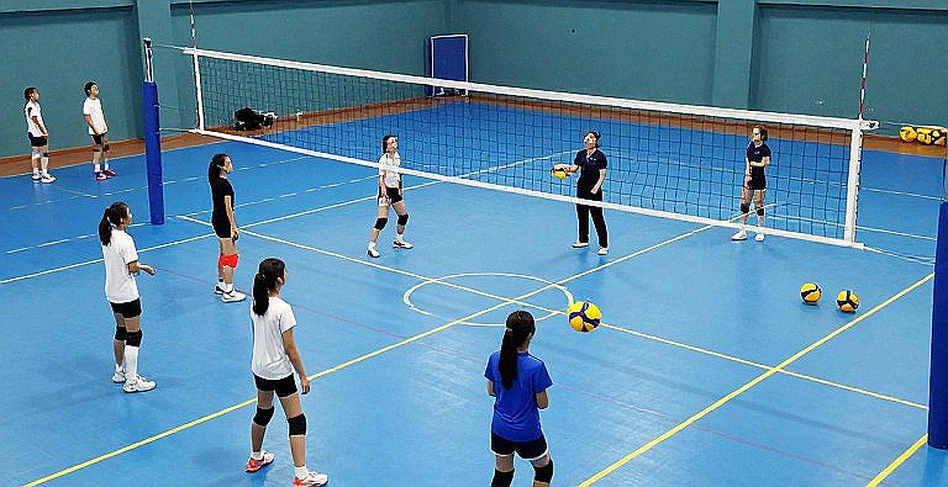
Doan Thi Xuan, Tran Thi Thanh Thuy, Nguyen Thi Uyen. Three different names, pushed into the same role. That means there was no natural opposite ready.
The opposite is a role with its own technical specificity. A mirrored approach angle compared with an outside hitter. A different block matchup. A different contact point. An outside hitter pushed to position 2 will see her attack efficiency drop, and will simultaneously weaken the right-side blocking system, a system already thinned by the loss of Kieu Trinh.
This is the kind of fix a coaching staff uses only when there is no alternative. It is also a signal that confidence in the bench was low. And when a coaching staff does not trust the bench, they load more weight onto the players who are on court. That is where the spiral begins.
The data: strong at the results level, weak at the performance level
Here I have to be explicit about the limits of what I know.
The team's results data this year is strong and consistent. Four tournaments, all regressions against the old standard. That is evidence at the results level, and it is trustworthy.
Performance data is far weaker. Across the whole season there is exactly one quantitative individual data point: Tran Thi Thanh Thuy scored 36 points at the Asiad, with efficiency described as fairly low. But there is no denominator. No matches played, no attack attempts, no blocking rate, no perfect-pass rate, no dig rate.
One line of data is not enough to draw conclusions about an entire roster. I will not do that.
But how that number is read does matter. This year Thanh Thuy played for Gunma Green Wings in Japan, then returned to play for VTV Binh Dien Long An, then entered four national-team tournaments starting in January. Few women's volleyball players in the world carry that kind of load in a single year.
When her efficiency dipped, that is data about scheduling more than data about peak form lost. She entered the Asiad after months of continuous competition, with no real recovery window.
The absence of positive data is also data
One thing I noticed rereading the full season record: there is not a single positive individual data point cited anywhere.
No player is described as having played well.
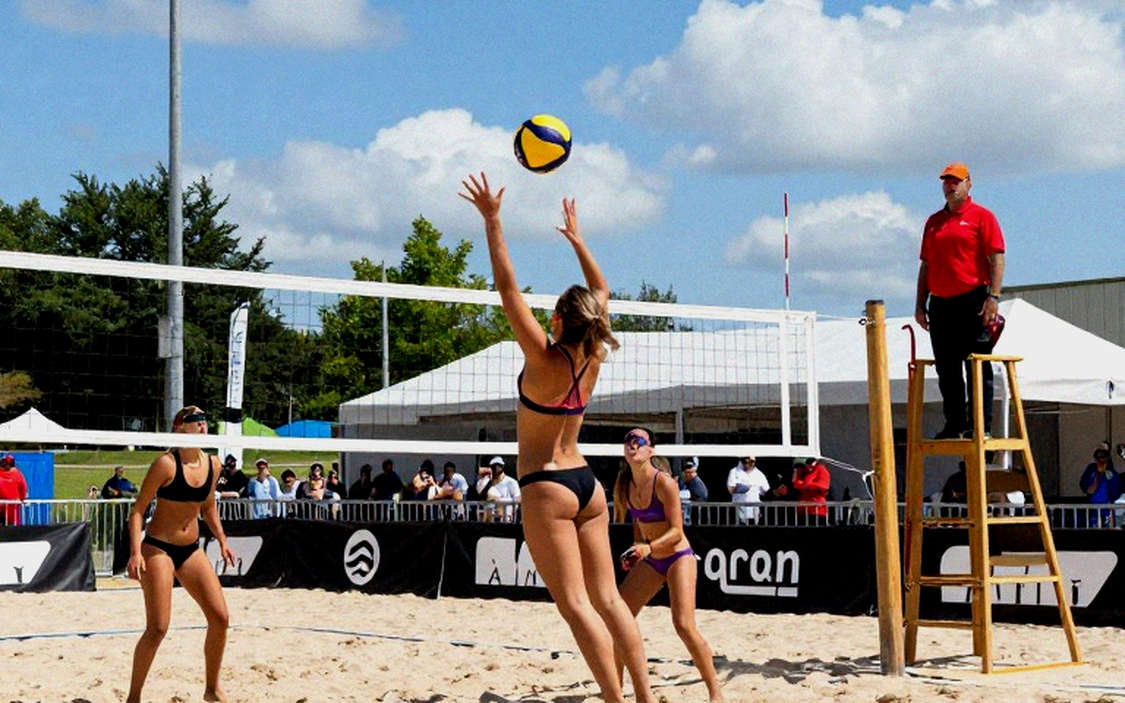
The collective absence of positive data is itself a form of data. It says the decline ran across the whole roster, not localised in one position. If the problem sat in one position, at least one other position would have functioned normally. None did.
Group stage and stage two: two different teams
The SEA V.Cup result deserves to be looked at separately.
The team came through the group stage, then lost 0-3 in stage two. That split reflects a familiar format effect: a team can survive a soft group stage but gets exposed once it enters a tighter phase, where every point must be earned through structure rather than through the luck of the draw.
A thin roster always shows this pattern. The group stage hides the weaknesses. The knockout phase does not.
Losing 0-3 to a regional opponent in the decisive phase shows the collapse was systemic, not bracket-dependent.
On the Asian map: an eroded regional moat
Placing Vietnam's women's team on the Asian map, the team sits in the second tier. Its Southeast Asian position is clear number two, behind Thailand.
This year that tier eroded from both directions.
Above, the gap to the leading group, China and Japan, did not close. Below, Indonesia and the Philippines improved markedly. The season analyses themselves acknowledge these teams have got better.
Losses to Indonesia twice, to the Philippines, and to Kazakhstan: four matches that used to be ranking anchors. Losing all four in one season means losing part of the foundation of regional standing.
And the nature of this problem needs to be recognised correctly. Part of Vietnam's decline is absolute, part is relative. Opponents improving while you stand still means you are going backwards. To return, the team does not just need to fix errors; it needs absolute improvement, while regional rivals keep improving too.
That is a far harder problem than simply correcting internal mistakes.
A transitional roster and the load it carries
One more point needs naming: the team's age structure.
The core names, Kim Thoa, Bich Thuy, Khanh Dang, are all long-serving members. The team leans on a veteran spine while the next cohort has not been given enough experience at major tournaments. The result is unsynchronised veteran form, with almost no one peaking at the same time. That is the signature of a team whose physical and scheduling management is out of phase.
Generational transition creates friction. The golden generation of 2026-2026 peaked with a deep and balanced squad. When that squad dispersed for every reason, injury, family, personal, the team had no next cohort of the same standard to absorb the shock.
A second-tier team cannot absorb the loss of three to four pillars in one season. Brazil or Italy can absorb that kind of shock because they have a thick talent pipeline. Vietnam did not have one this year. That is the succession gap, and the succession gap cannot be fixed in one training session.
The gamble of playing abroad
Thanh Thuy playing for Gunma Green Wings is a positive signal for her individual development and for the international market standing of Vietnamese women's volleyball.
But it also creates a risk structure. A player who must fulfil obligations to a foreign club, then return to serve a domestic club, then carry four national-team tournaments, is a player standing on a calendar with no gaps.
At the elite women's level, workload management is not a side detail. It is part of tactics in the broadest sense: a team is only as strong as its ability to keep its pillars intact at the moment that matters most.
A factor few people see
There is one detail I do not want to skip, even though the data to speak about it is thin.
Absences for family and personal reasons clustered densely in the same period. In team-management terms, that is a personnel-coordination problem. But at a deeper layer, that clustering may reflect erosion of motivation and physical wellbeing during a prolonged high-intensity cycle, immediately after a generation's peak.
If that reading is right, this is a far harder problem to reverse, and far less visible, than a purely tactical issue. Tactics can be fixed with video. Motivation cannot.
I mark this as a hypothesis, not a conclusion. I will track it next season, through call-up lists and through how absent positions get filled.
THE ECOSYSTEM BEHIND IT: WHEN NATIONAL RESULTS FLOW DOWNSTREAM
A down year for the national team does not stop at the court.
Upstream, in youth development, a disappointing season carries the risk of cooling investment interest and participation among younger players. The growth of Vietnamese women's volleyball in recent years was driven largely by the national team's glow. When that glow dims, the talent flow slows with it.
Midstream, the story of transfers and international play is affected too. Foreign clubs' interest in Vietnamese players over the past few years was built on the national team's results. A down year can reduce export opportunities for the next cohort.
Downstream, in the regional market, Vietnam competes directly with Indonesia and the Philippines for audience attention and sponsor interest. Defeats to those two opponents are not just ranking points lost. They can shift the flow of commercial attention within the region.
THE CONTRARIAN ANGLE
This is where I want to break from the crowd.
The most common explanation for the decline is that head coach Nguyen Tuan Kiet failed to make appropriate adjustments at important moments. That judgement has grounds. Losing to a weaker team is usually a sign of in-match collapse rather than an underlying talent deficit. When a team loses by the same script across several matches, the question of bench-level game reading is legitimate and needs to be asked.
But it is the proximate symptom, not the root cause.
The root cause is structural: this team has a single point of failure sitting in the captain's position.
Rewind the whole year, and the common thread running through every collapse is not the tactical scheme. It is load. A team places its attacking burden on one player while she plays for a foreign club, then a domestic club, then four national-team tournaments in succession. When she drops form, the whole team drops with her. No coach fixes that in one training session.
The second blind spot lies elsewhere. Public debate is circling tactics and individuals, while the team's biggest problem is succession. People are looking for fault on the bench while what is missing is a thick enough pipeline.
And this is what I consider the most important point in the whole story: this season records a succession gap, rather than an indictment of underlying talent decline.
A model collapse is not a failure. It is an exclamation mark for a systemic error.
The first gap is not on the court. It is in how the system reads the game.
CONCLUSION: A PUZZLE, NOT A VERDICT
The question is not how far the team fell this year. The question is whether this is fixable, and with what.
The most fixable problem is predictability. Develop the setter, vary distribution tempo, create variation on the wings. These are solvable with method, without new personnel. If the team does this in the coming period, most of the attacking problem dissolves on its own.
The hardest and most expensive problem is the succession gap. It determines whether this year is a dip, or the first year of a long-term downward trend. That takes time, investment in youth development, and the gradual introduction of new faces at lower-tier events so they accumulate experience before stepping onto the big stage.
A defeat is more like a puzzle than a verdict.
But this puzzle can only be solved if people look in the right place: at structure, before individuals. And I will verify that next season, with three things: the call-up list, the passing tempo, and the head-to-head results against Indonesia and the Philippines.