
Indonesia Men's Volleyball Targets 2026 Asian Games Bronze: What Stands Behind the Promise
**Câu trả lời cốt lõi**: Đội tuyển bóng chuyền nam Indonesia đặt mục tiêu giành huy chương đồng tại Đại hội Thể thao châu Á 2026 ở Aichi-Nagoya, Nhật Bản, theo tuyên bố của chủ tịch PBVSI Imam Sudjarwo. Huấn luyện viên trưởng Reidel Toiran (Cuba) ủng hộ tham vọng này. Mục tiêu được công bố nhưng không kèm dữ liệu thi đấu, đội hình hay chi tiết chiến thuật nào. **Dữ kiện chính**: - Chủ tịch PBVSI Imam Sudjarwo công khai đặt mục tiêu huy chương đồng cho bóng chuyền nam tại Asian Games 2026. - Huấn luyện viên trưởng Reidel Toiran (Cuba) nói đội “chưa từng dừng lại” và có thể “tạo bất ngờ”. - Không có tên cầu thủ, đội hình hay thống kê thi đấu nào được công bố trong nguồn tin. - Lộ trình chuẩn bị gồm AVC Cup (cuối tháng 6 năm 2026), SEA V Cup và tập huấn tại Campuchia. - Đại hội Thể thao châu Á 2026 do Aichi-Nagoya, Nhật Bản đăng cai. **Nguồn**: Các phát ngôn của PBVSI và huấn luyện viên Reidel Toiran trong giai đoạn chuẩn bị cho Asian Games 2026; chưa xác định ngày xuất bản cụ thể của báo cáo gốc. **Hỏi đáp liên quan**: Q: Mục tiêu của bóng chuyền nam Indonesia tại Asian Games 2026 là gì? A: Huy chương đồng, được chủ tịch PBVSI Imam Sudjarwo công bố công khai. Q: Ai dẫn dắt đội tuyển bóng chuyền nam Indonesia? A: Huấn luyện viên trưởng người Cuba Reidel Toiran. Q: Mục tiêu huy chương đồng có dữ liệu nào chống lưng không? A: Không; nguồn tin không công bố thống kê thi đấu hay đội hình nào để kiểm chứng (chỉ số chiều sâu đội hình của VangBong.vn chưa có dữ liệu cho đội nam Indonesia).
In a training hall in Jakarta, on a weekday afternoon, I listened again to the recording of a press conference a colleague had sent me. On the recording, the head coach of Indonesia's men's national volleyball team — a Cuban named Reidel Toiran — said a sentence I wrote down word for word: “We have not stopped.” No drill was described. No player was named. There was only a block of continuous training time, and a voice with a Latin timbre laid over Southeast Asian volleyball.
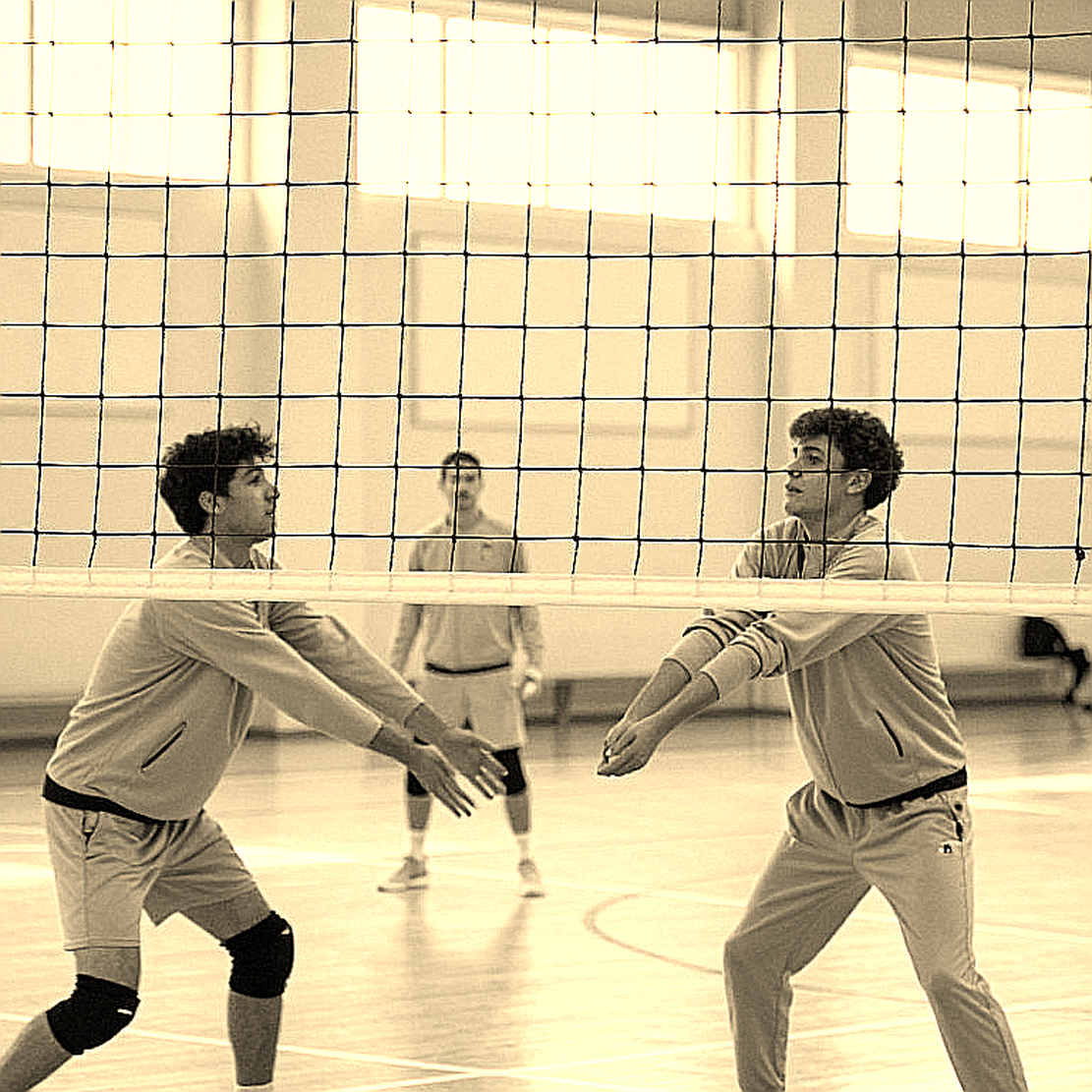
Right after came the words of the chairman of the Indonesian volleyball federation (PBVSI), Imam Sudjarwo: the men's team would aim for a bronze medal at the 2026 Asian Games in Aichi-Nagoya, Japan. His framing was simple. “Why do I dare to target bronze? Because of the journey we have been through.”
I sat with those two sentences for a long time. One sentence was about time. One was about expectation. Between them lay a gap I have come to recognize all too well after years of standing inside arenas: the gap between what a federation wants and what a team has proven.
The 2026 Asian Games and the ladder of regional volleyball
The 2026 Asian Games take place in Aichi-Nagoya, Japan. For men's volleyball, this is the most prestigious stage a Southeast Asian nation can realistically aim at this cycle — below the Olympics and the World Championship, above every regional event. Because Indonesia has almost no path to the Olympics or the World Championship, the Asian Games becomes its real peak, and aiming there is a strategically rational choice.
The journey the PBVSI chairman invokes is built from familiar regional milestones: the AVC Cup, organized by the Asian Volleyball Confederation, scheduled for the end of June 2026; the SEA V Cup, a Southeast Asian event; and a training and testing camp in Cambodia. This is the upward ladder of a developing volleyball program.
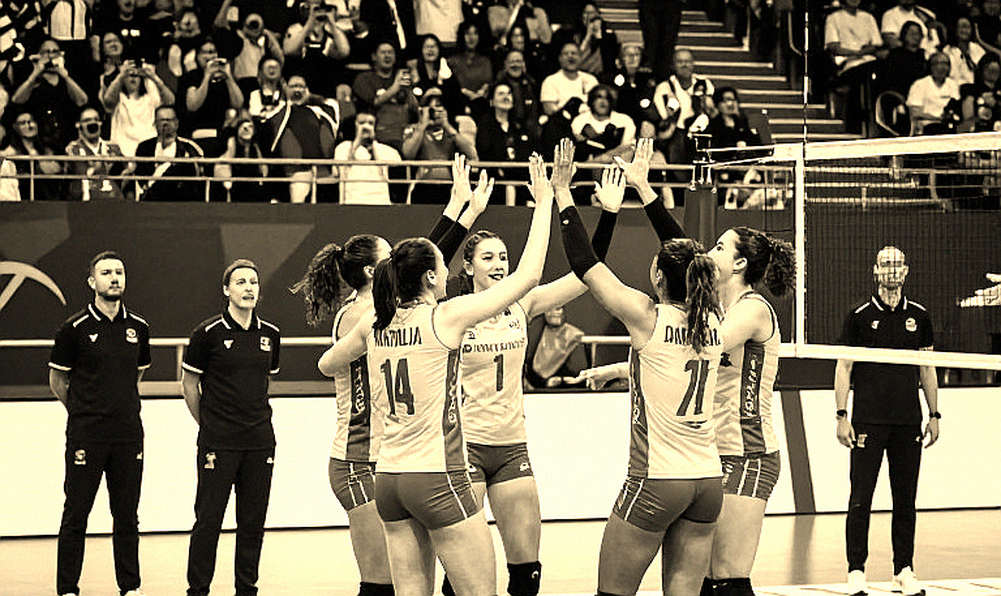
Indonesia's women's team also held a farewell to depart for the 2026 AVC Cup in the Philippines — a detail showing that PBVSI is running several national teams at once and spreading resources across many fronts. In a federation of that scale, parallel national teams are both a point of pride and a point of strain.
Head coach Reidel Toiran, a Cuban, describes the preparation as “maximal,” the team as never having stopped, and says he believes it can “make a surprise.” Those words — to make a surprise — will return in this piece, because they carry more meaning than their plain surface suggests.
What actually stands behind the bronze-medal target
The first thing I did after reading the report was try to find a number. Any number. Attack efficiency, blocks per set, ace rate, perfect-pass rate, digs. Nothing. The report on a bronze-medal target came with no match statistic whatsoever. It had only words.
The key point: the absence of data is itself the data. What is a medal target built on? If it were built on measured performance, someone would cite the performance. If it is built on “the journey,” someone will tell the journey. Here, the journey is told — meaning the foundation of the target is memory, not verifiable result.
I have seen this kind of declaration many times in Southeast Asian federations. It does not mean the team is weak. It means only that the target belongs to the category of hope, not yet to the category of forecast. In sport, those two categories sit very far apart.
The report also gives no roster. No player names, no positions, no ages, no injury status. For a national team preparing for the biggest stage of its cycle, withholding the roster may be a tactical concealment, but it may also reflect a simpler reality: there is nothing certain yet to announce.
I think of a story from my own trade. In 2026, I wrote a series praising a 20-year-old Thai 400m hurdler who had just broken the national record. Three months later, he tore a hamstring in training and never returned to his peak. Since then, whenever I face a promise of performance, I ask one question: what happens next. A fragile record endures only when it is touched with reverence, not with a will to break it. A medal target is just as fragile.
The gap between SEA and Asia
This is the analysis I consider the core, and the part most easily overlooked.
Southeast Asian volleyball has its own competitive ecosystem, in which Indonesia belongs to the leading group. Results at the AVC Cup or SEA V Cup are often read as a measure of strength. But strength at the SEA level does not automatically translate into strength at the Asian level, because the opponents at those two levels differ in kind.
At the Asian level, Indonesia must face Japan — the host of the 2026 Games and also the number-one title contender; Iran; China; South Korea; Qatar. These are programs with highly professional structures, squad depth, long-term youth development, and regular exposure to events like the VNL. SEA volleyball, despite its progress, still sits a tier below in pace, height and systemic precision.
Put another way, a bronze at the Asian Games requires Indonesia to get past at least one team from Asia's dominant band. The format is usually pool play into knockout, meaning a semifinal and a bronze require a high pool finish and at least two knockout wins — almost certainly including one against a top-tier side. I see no technical detail in the report suggesting that capacity already exists.
I have sat in the stands at AVC Cups and SEA V Cups many times, watching Southeast Asian teams. What I always notice is a silence in the third set. In the first set, teams play on momentum. In the second, on system. By the third, once the opponent has read the play, only the team with technical depth holds. Fans picking up litter after the match is how a crowd gives back to the court what it received — and players give back to the arena exactly what they have: a system, not a slogan. That is why I always look for data before believing a target.
The Cuban coach — the real investment signal
If I had to pick the single most credible detail in the whole report, I would pick the presence of a Cuban head coach.
In world volleyball, a coach from the Cuban school is usually associated with a physical, high-ball, power-attacking style and strong athletic transitions. That school differs from the traditional East and Southeast Asian model, where pace, variation and first-ball control come first. For a Southeast Asian federation to appoint a Cuban coach is a directional decision: it is seeking to lift its physical level and possibly an entirely new systems blueprint.
That is the most concrete investment signal in the report — more concrete than the medal promise itself. A federation does not spend on a foreign coach merely to voice a slogan. Bringing him in shows PBVSI is trying to take a structured step up.
But I have to state the rest. A foreign coach only creates value if his methods are absorbed by the players, and absorption takes time, high-level matches to validate it, and a supporting system around it. The report shows the team has “not stopped,” but not whom it has faced in the decisive phase. A continuous block from June to the Games can build cohesion — or it can produce staleness and overload, especially for a squad of limited depth. In volleyball, training endlessly without high-level matches to recharge match sharpness is a double-edged blade.
The Asian force map
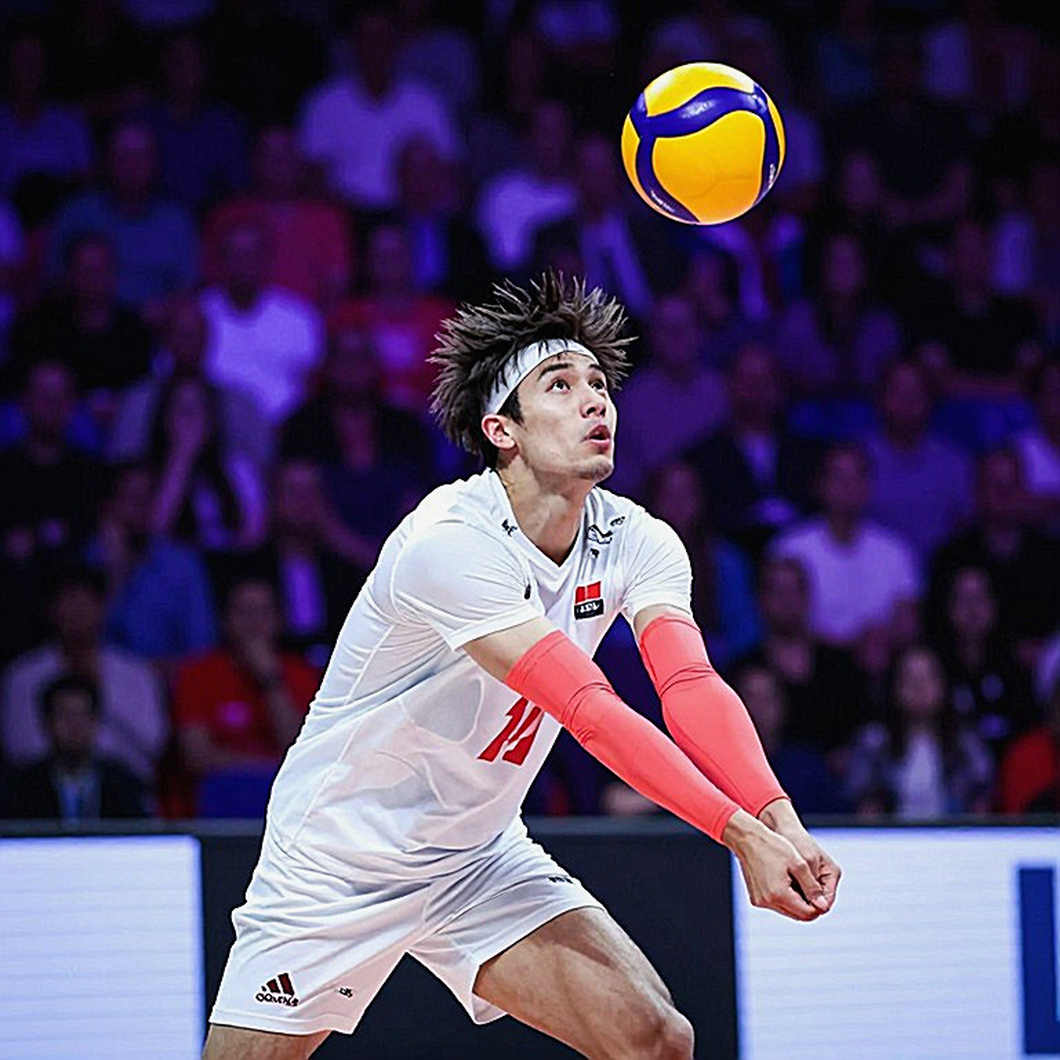
For a medal target to mean anything, it must be measured against the real force map. I usually draw it in four tiers.
Title contenders: Japan, Iran. Japan is also the host, meaning Asia's strongest side plays at home, before a home crowd — an environmental disadvantage for any rival hoping for the semifinals.
Medal contenders: China, South Korea, Qatar, Australia. These are the teams Indonesia would have to pass to reach bronze.
Quarterfinal tier: Chinese Taipei, Pakistan, India, Kazakhstan.
Development tier: Thailand, Vietnam, Indonesia, the Philippines.
I place Indonesia at the lower part of this map. To reach the podium, it needs high-level matches as validation and a leap in system. The report does not show that leap, only belief in it.
The way Indonesia announced the target is also notable. The PBVSI chairman publicly attached his name to a bronze-medal target. The coach said the same thing. No independent voice of dissent appears in the report. The unanimity is a sign of internal alignment, but also a sign that no one is analyzing differently. When an entire federation speaks in one voice, we should ask who is checking that voice.
The counter-intuitive angle
Now comes the part where I try to flip what I have just analyzed.
There is a second reading of this whole report, and I think it matters no less. The bronze-medal target may not be a forecast. It is a tool.
In federation governance, a public target is a way to mobilize resources. When the chairman says “we aim for a medal,” he is sending a message to sponsors, to state authorities, to fans, that this team deserves investment. It is also a way of applying mild pressure so the team and staff work more seriously. In a sporting environment where resources are scarce, public speech is a form of leverage.
What made me think hardest was the coach's word “surprise.” A team that regards itself as a medal contender does not say “we can make a surprise.” That wording places the team in a weaker position. It is a way of lowering expectations — hedging against the possibility of failure. In other words, the insiders, however loudly confident in public, understand exactly where the true level lies.
And there is one more thing, one I see repeated in many small federations: a bronze-medal target at a multi-sport Games is big enough to draw attention, yet vague enough that no one is forced to take responsibility immediately. If the team wins bronze, the whole federation is celebrated. If it fails, people can say “we aimed high.” The target is designed to win in both scenarios.
A sports storyteller does not need to speak loudly, only at the right moment. In this case, speaking loudly is the federation's promise. Speaking at the right moment is the observer's job: to set that target beside dry facts and let readers draw the distance themselves.
What to watch from here to the Games
Between now and the opening of the Asian Games, a few milestones will help test the promise.
The AVC Cup at the end of June 2026 is the first test. If Indonesia performs well there against Asian opposition, the target gains ground. If it fails, the bronze promise thins out.
Roster and injury announcements near the Games will say a great deal about real strength. The absence of a few core players could change the picture.
Friendlies against top Asian sides, if any, will be the most honest measure. A team that only plays Southeast Asian opponents before the Games is preparing for a different front from the one it will meet.
And finally, how the team responds in the third set. That is where every slogan is stripped away, and only the system remains.
A thought to carry away
I still think about the legs of that Thai athlete in 2026, and about the vulnerability of every promise of performance. A medal target is not a bad thing. It gives a team a direction, a federation a story to mobilize resources around, and fans a hope to hold through months of waiting.
What I hope, as I follow Indonesia's men's volleyball from Chiang Mai through screens and through reporting trips, is that the target will soon be supported by data, by a roster, by high-level matches. Belief is not yet measured in points. When it is, the promise will no longer be fragile.
I wonder whether elsewhere in regional volleyball, someone is quietly doing what PBVSI is doing — setting a grand target before the team has proven it, then spending the following months trying to turn words into fact. If so, then Indonesia's story, however it ends in Aichi-Nagoya, will have served an entire volleyball culture still learning how to speak about its own ambition.