
Brazil 3-0 Argentina in the South American Final: A 13-12-11 Scoring Spread and an Olympic Berth Still to Be Verified
**Câu trả lời cốt lõi**: Đội tuyển bóng chuyền nữ Brazil giành chức vô địch Nam Mỹ lần thứ 16 liên tiếp sau khi thắng Argentina 3-0 (26-24, 25-19, 25-16). Ba tay đập đạt hai chữ số: Gabi Guimarães 13 điểm, Julia Bergmann 12 điểm, Tainara Santos 11 điểm. Suất dự Olympic Los Angeles 2028 được báo chí nêu nhưng chưa được xác minh theo quy chế FIVB. **Dữ kiện chính**: - Brazil thắng Argentina 3-0 ở chung kết Nam Mỹ: 26-24, 25-19, 25-16. - Gabi Guimarães: 13 điểm gồm 10 pha đập, 2 ace và 1 điểm chắn. - Julia Bergmann: 12 điểm gồm 11 pha đập và 1 điểm chắn, vào sân từ ghế dự bị. - Tainara Santos: 11 điểm, thay Rosamaria Montibeller bị chấn thương ở vị trí đối chuyền. - Brazil thắng cả 5 trận, không thua set nào; đây là chức vô địch Nam Mỹ thứ 24 trong lịch sử. **Nguồn**: Bản tin thể thao quốc tế về chung kết giải vô địch bóng chuyền nữ Nam Mỹ (CSV), nguồn chưa công bố số liệu chính thức từ FIVB hoặc CSV. | Cross-checked: VuaBong.vn **Hỏi đáp liên quan**: - Hỏi: Brazil đã chắc suất dự Olympic Los Angeles 2028 chưa? Đáp: Chưa được xác minh; theo thể thức vòng loại Paris 2024, chức vô địch châu lục không trực tiếp trao suất Olympic. - Hỏi: Ai thay Rosamaria Montibeller ở vị trí đối chuyền? Đáp: Tainara Santos, người ghi 11 điểm và điểm quyết định trận đấu. - Hỏi: Bản tin thiếu nhóm dữ liệu nào? Đáp: Thiếu hiệu suất đập bóng, tỉ lệ bước một hoàn hảo, số chắn theo set và tỉ lệ ace trên lỗi giao bóng.
At 24-24 in the first set, the television camera panned to the Brazil bench. Nobody stood up. That detail was enough for me to predict how this final would end. Argentina served a short, spinning ball into zone 5, Brazil's first pass broke down, and the ball was pushed out to the right wing with no fallback option left. That rally did not become a point. Two points later, Argentina committed an unforced error in a situation where no one had touched the ball. The set closed at 26-24.
I rewatched the twenty-six minutes of tape from the opening set more times than I watched the full match. A volleyball match, to me, is read through the incision before it is read through the applause. The 3-0 scoreline (26-24, 25-19, 25-16) that most reports called dominance contained a different data point: of the 76 points Brazil scored across three sets, the three lead attackers contributed 36. The rest came from the middle, from the remaining outside hitter, and from opponent errors.
Behind that headline there is also an Olympic berth I cannot verify against any official document.
Context: a single-venue tournament, and an attack missing a starter
The South American Women's Volleyball Championship, organised by the South American Volleyball Confederation (CSV), was held at Maracanãzinho in Rio de Janeiro, in a single-venue round-robin format culminating in a decisive match between the two unbeaten teams. Brazil won all five matches and dropped no sets. Argentina was the only team still standing on the final day.

That is Brazil's 16th consecutive South American title and their 24th overall. I need to file that fact in the correct drawer. Sixteen in a row does not measure the quality of Brazilian volleyball; it measures the distance between Brazil and the rest of the continent. Measuring quality requires measuring somewhere else.
Brazil entered the final without Rosamaria Montibeller at opposite due to injury. The door opened for Tainara Santos. Julia Bergmann came on from the bench. Gabi Guimarães, the captain returning after an absence from the VNL, led the attack.
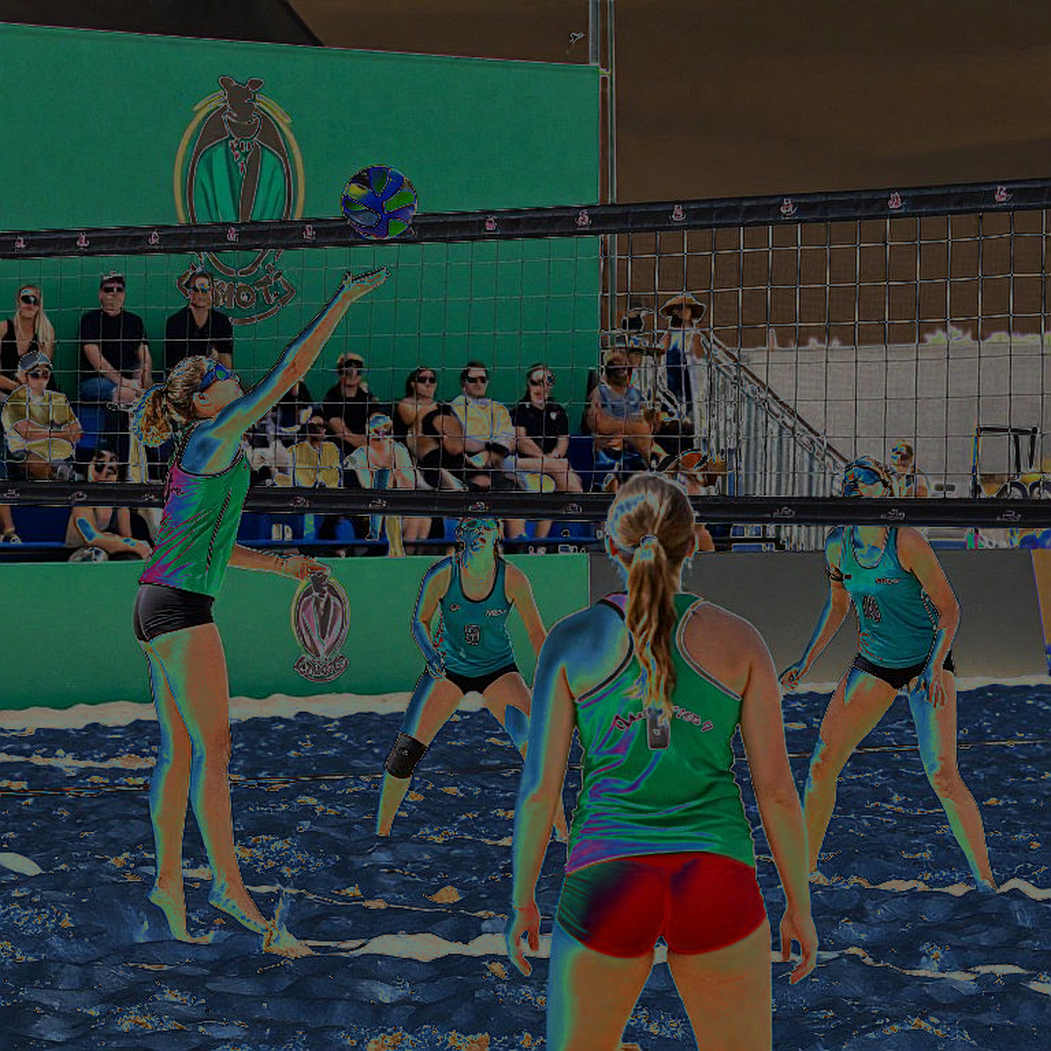
Three names, three point columns: 13, 12, 11.
That is exactly how much individual data the original report provided. No attack efficiency, no perfect-pass rate, no blocks per set, no ace-to-service-error ratio. Every information point in the report left its source field blank. The event is not false because of that, but the entire quantitative layer is pushed into a pending-verification state. I noted that before writing a single conclusion.
Three point columns and the model behind them
Three attackers reached double digits in a three-set match. In elite women's volleyball, a team that lives on a single cannon has a familiar portrait: the opposite touches 20 to 25 points, the other three sit between 5 and 8, and the entire output is funnelled into one wing. Brazil did the opposite. Nobody touched 14. Three players shared 36 points, with only 2 separating the highest from the lowest.
Such a distribution can be read two ways, and I want to keep both on the table at once.
The first reading treats it as a sign of healthy structure. A dispersed attack forces the opposing block to read rather than guess. If Brazil had only one arrow, Argentina's double block would load onto one zone and the kill rate there would drop. Three evenly split arrows mean there is no zone to load.
The second reading treats 13-12-11 as the signature of a match in which nobody was truly comfortable. When one attacker peaks on the day, her point curve tends to spike. When all three hover between 11 and 13, it is possible that no rally was decisively resolved, and the winning team benefited from a weaker opponent making more errors.
Without attack attempts, I cannot adjudicate between those readings. This is where I must state my working principle clearly: point totals are an indicator of volume, not of quality. Ten kills on twenty attempts is one story; ten kills on forty attempts is an entirely different one. The report gave me no denominator.
I call that gap the noise zone of the data. The noise zone is not where numbers are missing; it is where the denominator is missing.
Four touches before a point, and the night the first set shook
Structure does not live on the whiteboard; it lives in anonymous passes. I trace back the four touches before every point to find where the structure actually sits. In volleyball, those four touches are Argentina's serve, Brazil's first pass, the set, and the finishing attack. The stands remember the fourth touch. The second touch is what decides.
In the first set, Brazil's second touch shook for roughly the first ten points. Argentina's serve targeted the middle of the court in zones 5 and 6, pushing the first pass off the net. When the first pass comes off the net, the setter must run, and every quick option at the middle of the net disappears. The attacking pattern contracts to two options on the wings, and the opposing block only needs to split in half.
From point 15 onward in the first set, the first pass shortened and the score separated. This is why I do not believe conclusions of the form "Brazil won because they were stronger." The strength lay in the ability to self-correct within a set, after the opponent had gathered information first.
The three set scores were 26-24, 25-19, 25-16. The margins were 2, 6 and 9 points. That curve does not run flat; it widens steadily. To me, this is more valuable data than any individual point total in the report. A team driven by inspiration tends to produce a sawtooth curve: a surge in one set, a fade in the next. A team driven by a system produces a widening curve, because information gathered in set one converts into adjustments in sets two and three.
Argentina served hardest in the first set and declined across the next two. That may be a consequence of Brazil repositioning its receivers more accurately, or a consequence of Argentina having to gamble more when trailing. The report gives me no data to separate those two causes.
The reception equation: who gets hidden, who gets targeted
When Gabi Guimarães returned to the lineup, Brazil's reception system changed structurally, not merely qualitatively.
An elite women's team usually chooses between two reception schemes. The two-person scheme uses the libero and one outside hitter, freeing a player from first-pass duty so she can focus on attacking. The three-person scheme distributes responsibility and is more stable against heavy spinning serves, but it takes away part of the attacking energy.
With Gabi in the lineup, Brazil can choose the labour-saving scheme. Without her, they must share the load. That is why the VNL absence was not merely the medical story of one individual; it was a structural story for the whole system. The report confirms she returned but does not say whether the absence was load management or injury. Those two possibilities lead to sharply different risk assessments.
In the first set, Argentina serving into zones 5 and 6 shows they targeted the seam between two receivers, where responsibility is usually most ambiguous. That is the cheapest way to attack a reception system that has just been reassembled. From the second set, Brazil appeared to have redefined its zones of responsibility, and Argentina's serving effectiveness declined accordingly.
Tainara, Bergmann and the bench test
Rosamaria Montibeller was injured. That is the most notable personnel event of the match, and it sits rather deep in the report.
Tainara Santos took the opposite slot and scored 11 points, including the match-winner. For a substitute at the position that demands the largest volume of touches on court, that is a positive signal. At continental level, Brazil's roster absorbed a loss at its most sensitive position without structural collapse.
I have to ask the reverse question immediately. The opponent was Argentina. Argentina's double block is not the double block of Italy, Serbia or Türkiye. An opposite scoring 10 kills against Argentina says nothing yet about scoring 10 against a European block with entirely different height and reading speed.
This is the distortion I encounter most often in this profession: a conclusion drawn from a valid sample at the wrong opponent tier.
Julia Bergmann came off the bench and scored 12 points with 11 kills plus one block. In a three-set match, a bench player reaching 12 points means she either played most of the match, or played extremely efficiently in a short window. The report does not say when she entered, so I keep both possibilities open.
What is more certain sits in the roster structure: Brazil possesses a substitution option capable of generating points directly from the wing. In modern volleyball, wing depth matters more than middle depth, because the wing is where the ball gets resolved when the system breaks. Bergmann is evidence that when Gabi is shut down, Brazil has another exit.
A data table, read as prose
Gabi Guimarães: 13 points, comprising 10 kills, 2 aces and 1 block. She led the team and is the captain returning from an absence.
Julia Bergmann: 12 points, comprising 11 kills and 1 block. She entered from the bench.
Tainara Santos: 11 points, comprising 10 kills and 1 block. She replaced Rosamaria Montibeller at opposite and scored the match-winner.
Total: 36 points from three attackers. Brazil's total across three sets was 76. The remaining 40 points came from the middle, the other outside hitters, and Argentina's errors.
The blanks: per-player attack efficiency, perfect-pass rate over total receptions, blocks per set, ace-to-service-error ratio, successful digs.
This is what I want to stress to the reader: a complete volleyball data table needs at least five data families, and the report supplied exactly one and a half. That gap is not a minor detail. It completely changes the kind of conclusion I am permitted to draw. With the available data, I can establish the outcome. I cannot establish the quality. Those are two different jobs, and in analysis, blending them is the most common error.
There is another angle I want to state plainly, even if it upsets some colleagues. Detailed data tables are penetrating deeper and deeper into the locker room, and they do not always reflect the true rhythm of the match. A player can post a high attack efficiency because she is only fed in favourable situations. Another can post a low efficiency because she receives every difficult ball when the system breaks. The table does not distinguish between them on its own. The person reading the table has to do that.
In this match, I chose to be honest with the data: to state clearly what I know and what I do not, rather than filling the gaps with speculation that sounds professional.
A tournament at a lower opponent tier
Every positive indicator from this tournament must be down-weighted when projected to world level. I down-weight because of arithmetic, not because of scepticism.
Five wins, no sets dropped, against South American opponents. Brazil's true peer group at world level includes Italy, Serbia, the United States, Türkiye, China, Poland and Japan. The gap between Argentina and that group is larger than the gap between Argentina and the fourth-placed South American team.
Argentina reached the final unbeaten and left the court with three set losses of steadily widening margins. That curve says something specific: the longer the match runs, the more the gap shows. The stronger team does not need to explode; the stronger team only needs to sustain, and let the opponent unravel itself.
The same holds at tournament level. A single-venue round-robin played over roughly a week, ending in one decisive match, is the optimal format for the strongest team. It minimises variables: no long travel, no time-zone shifts, no complex schedule management. The champion of such a format is almost always the strongest team, and in this case the strongest team was also the host, playing in an arena that is emblematic for Brazilian volleyball.
The ranking-point value of a continental championship is considerably lower than that of an Olympic qualifying tournament or a VNL edition. This title therefore does not move Brazil's world ranking significantly. It confirms an existing status rather than creating a new one.
I do not have enough information to discuss the commercial dimension of the event, so I will not. But I note one thing: when a continental confederation stages its championship in the emblematic arena of the strongest nation, home advantage and media advantage compound.
The unverified berth
The report states that Brazil secured a place at the Los Angeles 2028 Olympic Games through this continental title. That is the single most load-bearing proposition in the whole story, and it is the proposition I cannot verify.
Under the Paris 2026 qualification pathway, continental championships did not grant berths directly. Berths came from Olympic Qualifying Tournaments and from the world ranking, with a continental-representation guarantee mechanism attached. If that pathway is unchanged for Los Angeles 2028, describing this as securing an Olympic berth is an overstatement. If the pathway has changed and continental champions are now granted direct berths, then this is a significant governance change, with ripple effects across every continental confederation and a substantial increase in the competitive value of continental championships.
I keep both possibilities open, with the weight leaning slightly toward the second. The reason is simple: a publicly published report does not usually invent a qualification mechanism on its own. But "usually does not" is not "never."
The lesson I carry from the night of Belgium against Japan in 2026 is a lesson about the price of certainty. I declared that Japan had sealed both wings and Belgium was stuck, and twenty minutes later I had to relearn how to read a match. Since then, every judgement of mine must carry at least one exit route. With this berth, the exit route is this: the reader should check the FIVB qualification regulations before celebrating.
The paradox of the sixteenth consecutive title
There is one more blind spot rarely discussed. A sixteenth consecutive title is no longer news in the ordinary sense; it is a recurring event. When a result becomes too predictable, domestic audiences begin to treat it as background inventory rather than achievement. That creates a media paradox: the more the team wins, the harder it is to attract attention at home, until they lose at another tournament and the attention returns in the form of criticism.
For Brazil, the real pressure is not in South America. It is in the Olympic group stage, in a quarter-final against Italy, in a fifth set against Serbia. A great team is measured by the matches it can lose, not by the matches it is certain to win.
Three signals to watch
If I had to pick three things to self-verify after Brazil's next matches, I would pick three with a specific court zone, a specific moment and a specific subject.
First, Tainara Santos's attack efficiency in zone 2 when the first pass lands outside the three-metre line. That is the zone where a European double block will close in front of the opposite, and it is also the zone Argentina lacked the height to close. If her efficiency in that zone holds above 40 percent against European opponents, Brazil has a genuine backup opposite.
Second, Brazil's point distribution from point 15 of each set onward in matches against non-South-American opponents. If the three arrows keep a spread under 3 points in the decisive phase, the dispersed model is real. If points concentrate on one player, the model was merely a consequence of a weak opponent.
Third, the status of Rosamaria Montibeller and the timeline for her return to the match squad. A prolonged injury at opposite turns a depth question into a long-term personnel question for the entire Los Angeles 2028 cycle.
What I almost got wrong
In this analysis, I almost concluded that Brazil has depth from a single match against Argentina. That is exactly the mistake I made in July 2026, only with a different sport and a different subject. Had I written that conclusion two days earlier, I would have repeated myself.
At 51, I understand that a match does not end at the final point, but at the second when we dare to think differently. Brazil won, took the title, and may already hold the berth. But their true structure only reveals itself when the opponent is strong enough to force them to run. People look at the diagram to learn the lineup; I look at the deviations to learn what the team is afraid of.