Nguyen Tien Minh and the Vietnam Open 2026 Qualifier Ticket: The Data Gap in Vietnamese Men's Singles
core_answer: Nguyễn Tiến Minh, 43 tuổi, hạng 254 thế giới, thắng vòng loại đơn nam Vietnam Open 2026 (BWF Super 100) trước Nguyễn Hoàng Thái Sơn — tay vợt chuyên đôi. Chiến thắng dựa trên khai thác điểm yếu đơn của đối thủ, không phải vượt trội kỹ thuật. Minh vào vòng chính gặp Zhe Ying Wu (Đài Loan).
key_facts: Vietnam Open 2026 diễn ra ngày 8-13 tháng 9, hơn 300 VĐV từ 27 quốc gia và vùng lãnh thổ; Nguyễn Tiến Minh: 43 tuổi, hạng 254 thế giới, thắng vòng loại trước Nguyễn Hoàng Thái Sơn; Lê Đức Phát tiêm giảm đau vì chấn thương đầu gối và gót chân; Nguyễn Hải Đăng thua ngay vòng đầu; Nguyễn Thùy Linh gặp Xu Wen Jing (19 tuổi); Giải thuộc cấp BWF Super 100 — cấp thấp nhất trong hệ thống World Tour
source_attribution: type: public_information, publication_date: September 2026, note: Phân tích dựa trên thông tin công khai và phát biểu của tay vợt sau trận
related_qa: question: Vietnam Open 2026 thuộc cấp nào của BWF World Tour?, answer: Vietnam Open 2026 thuộc cấp Super 100, cấp thấp nhất trong hệ thống BWF World Tour, với điểm xếp hạng và tiền thưởng hạn chế.; question: Nguyễn Tiến Minh sẽ gặp ai ở vòng chính Vietnam Open 2026?, answer: Nguyễn Tiến Minh sẽ gặp Zhe Ying Wu của Đài Loan ở vòng chính đơn nam.; question: Vì sao tình trạng chấn thương của Lê Đức Phát đáng lo ngại hơn một trận thắng vòng loại?, answer: Vì chấn thương đầu gối và gót chân đòi hỏi tiêm giảm đau để thi đấu tại một giải Super 100, phản ánh vấn đề hệ thống hồi phục và quản lý tải thi đấu của đội tuyển, đồng thời là chỉ số quyết định cho tương lai đơn nam Việt Nam trong 12 tháng tới.
Vietnam Open 2026 began on September 8. In the men's singles qualifiers, Nguyen Tien Minh — 43 years old, ranked 254th in the world — beat Nguyen Hoang Thai Son to reach the main draw, where he will face Zhe Ying Wu of Taiwan. The only information about this win is a quote from Minh himself: his opponent was "not strong in singles", and he relied on "strength and speed". No smash-speed figure, no average rally length, no unforced-error rate. A 43-year-old beat a young doubles specialist — and the data, quite literally, stayed silent.

I once wrote that every match is a tea session for the data monk — silent but deep. This match was one such tea session. Little water, but strong.
Vietnam Open 2026 is a BWF World Tour event at the Super 100 tier — the lowest rung of the 1000, 750, 500, 300 and 100 ladder. That means limited ranking points, modest prize money, and a limited presence of top Asian players from China, Indonesia or Japan. The event gathers more than 300 athletes from 27 countries and territories, competing from September 8 to 13. It is a stage for regional players chasing points, for young athletes getting exposure, and sometimes for veterans extending their careers by one more season.
For Vietnamese badminton, Vietnam Open has always been an occasion to re-measure the gap. This year, the picture is not bright. In men's singles, Le Duc Phat — the most anticipated name — has had to take pain-relief injections for knee and heel injuries. Nguyen Hai Dang lost in the opening round. And Nguyen Hoang Thai Son, the man Minh beat in the qualifiers, is a doubles player crossing onto the singles court. In women's singles, Nguyen Thuy Linh — the spearhead of Vietnamese women's badminton — faces Xu Wen Jing, a 19-year-old.
Within that picture, a qualifier ticket earned by a 43-year-old man is both the only bright spot and the most uncomfortable question.
When I sat down to review the details of the match between Nguyen Tien Minh and Nguyen Hoang Thai Son, what struck me was not the scoreline. It was the kind of information both sides left behind. Minh described his opponent as someone "not strong in singles" and said he relied on "strength and speed". That is an important tactical admission, even if it sounds simple.
Thai Son is a doubles player who crossed into singles. The difference between the two disciplines looks small on the surface, but the skill conversion is enormous. Doubles demands short reflexes, coordination with a partner, front-court defence, and exploiting narrow gaps. Singles demands longitudinal court movement endurance, long-shot distribution, and independence in every situation. A strong doubles player does not automatically become a strong singles player — and vice versa.
When a 43-year-old veteran understands the doubles patterns of his opponent, he can exploit them in very specific ways: push the shuttle deep into the two rear corners, forcing the opponent to move along the singles court more than they are used to; extend rallies to drain stamina; and attack when the opponent loses position on the singles court. That is situational tactics, not pure technical superiority.
In other words, Minh's win should not be read as evidence of a physical revival. It should be read as evidence of a professional difference: a veteran singles player beating a lateral-moving doubles player on the singles court.
I do not have the data to prove this. And I will not pretend I do. That is precisely the point.
In sports data analysis, a small sample size is the biggest enemy. A single match, against an opponent with a divergent professional profile, cannot be used to conclude anything about a player's form. But it can be used to ask a question. And sometimes, the right question is more valuable than a hasty answer.
What matters more is the context surrounding this win. Minh winning alone says nothing about Vietnamese men's singles. What says much is who was absent, or present in what condition.
Le Duc Phat, Vietnam's most anticipated men's singles player, had to take pain-relief injections for knee and heel injuries. This information is more important than any scoreline. A heel injury in badminton is not merely a matter of pain — it directly affects jump ability, directional change, and load tolerance in long rallies. Taking pain-relief injections to compete in a Super 100 event reveals two things: the severity of the injury, and the pressure to compete despite not being fully recovered.
Nguyen Hai Dang, another national-team player, lost in the opening round. No detailed information about the defeat, but the result says one thing: Vietnam's men's singles squad at Vietnam Open 2026 is thinner than fans usually imagine.
And then Nguyen Hoang Thai Son — a doubles player — appeared in the men's singles qualifiers. His appearance is not a bad signal in itself, but it raises a structural question: when a doubles player has to step onto the singles court, it is usually due to a lack of dedicated singles personnel, or a strategy to give doubles disciplines exposure, or both.
Against that backdrop, Nguyen Tien Minh's victory is not surprising. It is the logical outcome of a triangle: a veteran singles specialist, a lateral doubles opponent, and a low-tier event.
On the regional picture, Vietnam Open 2026 features Zhe Ying Wu from Taiwan — Minh's next opponent in the main draw — and Jia Wei Joel Koh from Singapore. These are quality regional players, but not top-tier Asian names. The absence of top-tier Chinese, Indonesian or Japanese players shows the event's "regionalised" character.
From a data perspective, a Super 100 event with more than 300 athletes from 27 countries and territories is a broad sample. But sample breadth does not equal sample quality. Numbers are not strength.
On the rules side, Vietnam Open 2026 operates under standard BWF Super 100 regulations: single elimination, qualifiers determining main-draw places. No rule controversies, no officiating issues, no complaints about court conditions. At a low-tier event, this is normal — because performance pressure is lower, and media attention is smaller.
But I want to pause here. Precisely because pressure is low, Super 100 events are often where systemic problems are least covered. At a Grand Slam or a World Tour Finals, a national team's medical system, coaching system and logistics system are placed under a magnifying glass. At a regional Super 100, these problems pass in silence.
Le Duc Phat's case is an example. His need to take pain-relief injections to compete is not a personal matter. It is a story about a national team's recovery support system and competition-load management. At an event where ranking points are negligible, pushing an injured player onto court is a decision that needs to be explained by medical data, not by competitive inspiration.
I have written before that load management in elite sport is sometimes romanticised. People talk about a "warrior spirit", about "competing for the country", when the reality is sometimes the accommodation of a packed schedule and obligations that are not purely professional. I am not saying that is the case for Le Duc Phat at Vietnam Open 2026. I am only saying that a pain-relief injection at a Super 100 event is a signal that needs monitoring, not a touching story to wrap up and put away.
On the support system, public information is very limited. There is no data on the coaching staff, on sparring partners, on technical-analysis systems, or on strength-and-conditioning and recovery personnel. For a badminton nation in transition like Vietnam, this absence is itself important information. It means professional decisions are currently being made based on individual experience more than collective data.
Nguyen Tien Minh — at 43 — still competing in a Super 100 event can be read in two completely different ways. First: a model of persistence and love of the sport. Second: a sign of a manpower gap in men's singles. Both readings are correct, and they are not mutually exclusive.
What I want to stress is that a qualifier win by a 43-year-old against a lateral doubles player at a Super 100 event is not evidence of the rise of Vietnamese men's singles. It is evidence of the thinness of Vietnamese men's singles.
This distinction matters, because it changes how we read the news. If we read "Nguyen Tien Minh wins", we are reading a story about an individual. If we read "only Nguyen Tien Minh won while dedicated singles players lost or were injured", we are reading a story about a system.
And it is the system — not the individual — that determines a badminton nation's long-term performance.
In his post-match remarks, Minh said he relied on strength and speed. I believe him. But I also know that at 43, strength and speed are no longer sustainable weapons. They are things that can be mobilised for one match, a few matches, or one tournament — but cannot be the axis of a season.
What I want to know, and what no available data answers, is: in the main-draw match against Zhe Ying Wu, what will Minh rely on? What tactics will he use? His opponent comes from Taiwan, and Taiwan's regional level in men's singles is significantly higher than the general level of the qualifying draw. This will be the real test.
On Nguyen Thuy Linh's side in women's singles, one notable piece of information is that she will face Xu Wen Jing, a 19-year-old. This is one of the most interesting signals of the tournament. On one hand, it shows the rising wave of young regional players. On the other, it shows that she herself is in a phase where she must assert her position against the pressure of the next generation.
Looking at the whole picture, Vietnam Open 2026 is a regional event with regional impact. It does not create major changes for global badminton. Equipment brands do not change strategy because of it. The badminton transfer market is not directly affected. But for Vietnamese badminton, it is a milestone to measure against.
And this year's measurement yields a fairly clear result: Vietnamese men's singles is between two eras — behind is a generation that has passed, ahead is a generation yet to arrive, and in between is a 43-year-old player and an injured player.
This is where I must be careful. I do not want to turn one match into a thesis. The central question is: is a qualifier win against a specialist doubles player evidence of a manpower gap? The honest answer is: it is not independent evidence, but a signal pointing in the same direction as other signals. When you combine it with Le Duc Phat's injury and Nguyen Hai Dang's defeat, the picture begins to take shape.
But with only that single match, I should not say "Vietnamese men's singles is in crisis". I should say: "I need more data". That is humility at the edge of the data, and it does not conflict with fighting at the centre of distortion.
What is the centre of distortion here? It is the way some media narrate Minh's age-43 story as an "immortal legend". That story is not emotionally wrong, but it ignores one simple fact: an immortal legend competing in the qualifiers of a Super 100 event is not something a strong badminton nation should be proud of. It is something a strong badminton nation should review.
This is the difference between a story and a data point.
On correlation and causation, there is a logical trap that any sports-news reader should avoid. We are prone to thinking: "Minh wins → Vietnamese men's singles has talent → the team is fine". But that structure is wrong. One win does not prove a system. On the contrary, the fact that a 43-year-old must step up to carry the qualifiers is a sign that the system is loading the burden onto individuals.
I am not writing this to diminish Minh's achievement. I am writing this to separate two questions from each other: the question about the individual, and the question about the system.
The individual question: is Nguyen Tien Minh still capable of competing at the regional level? The answer may be yes, at certain events, against certain opponents, under certain conditions.
The system question: does a badminton nation depend on a 43-year-old to generate positive signals in men's singles? The answer, based on available data, is yes — and that is worrying.
In both questions, there is one variable I want to track: injury. For Le Duc Phat, knee and heel injuries are the highest risk. For Nguyen Tien Minh, injury risk at 43 is moderate but tends to accumulate with every extended match. For Nguyen Hai Dang, an early defeat may be a signal about form, and form can be a consequence of competition load, of an undisclosed injury, or of insufficient training.
None of this data has been made public. That is why I cannot conclude, and that is also why I must say clearly that I cannot conclude.
There is one small detail I do not want to skip: Le Duc Phat's wife watching him compete. This detail is usually absent from technical statistical tables, but it is a human signal. At a Super 100 event, where ranking points are not plentiful, the presence of family can play an important mental role. It reminds me that behind every number is a person, and behind every person is a story that is not recorded.
I once wrote: "When the court is empty and the data is excessive, I understand that I follow the sport because of people, not just numbers." In this case, the court is not empty, but the data is excessive in the truest sense. And I still follow badminton because of people — because a 43-year-old still plays, because another player still takes pain-relief injections to compete, because a third player sits in the stands watching her husband walk onto the court.
If I had to choose a single metric to track from Vietnam Open 2026, I would not choose Nguyen Tien Minh's win count. I would choose Le Duc Phat's pain-relief injection count. That is the more worrying metric, and also the more decisive one for the future of Vietnamese men's singles over the next 12 months.
Of course, this is a subjective choice. Someone else might choose Nguyen Thuy Linh's win count, or the number of main-draw places earned by Vietnamese players, or the win rate of Vietnamese players out of total matches. Those are reasonable choices. The difference between them is not right or wrong, but which story we want to tell.
And which story should we tell?
I think we should tell the story the data allows. In this case, the data allows us to tell a story about the difference between singles specialisation and doubles specialisation, about the role of age in elite badminton, and about the structure of a national team.
The data does not allow us to tell a story about the comprehensive revival of Vietnamese men's singles, because we do not have the data to back it up. If someone tells that story, they are borrowing emotion instead of data.
There is one thing I want to say about Nguyen Tien Minh, not as an analyst, but as a spectator. He still plays. At 43, after more than two decades at the top of Vietnamese badminton, he still chooses to stand on court in the qualifiers of a Super 100 event. Anyone who has stood on a competition court understands what that means. The body no longer obeys as before. Reflexes slow by a thousandth of a second — and in badminton, a thousandth of a second is a distance. But he still plays.
This does not need data to be persuasive. But it also should not be used to cover other data. That is the balance I try to maintain in every article: humble enough to acknowledge the human being, sober enough to look straight at the numbers.
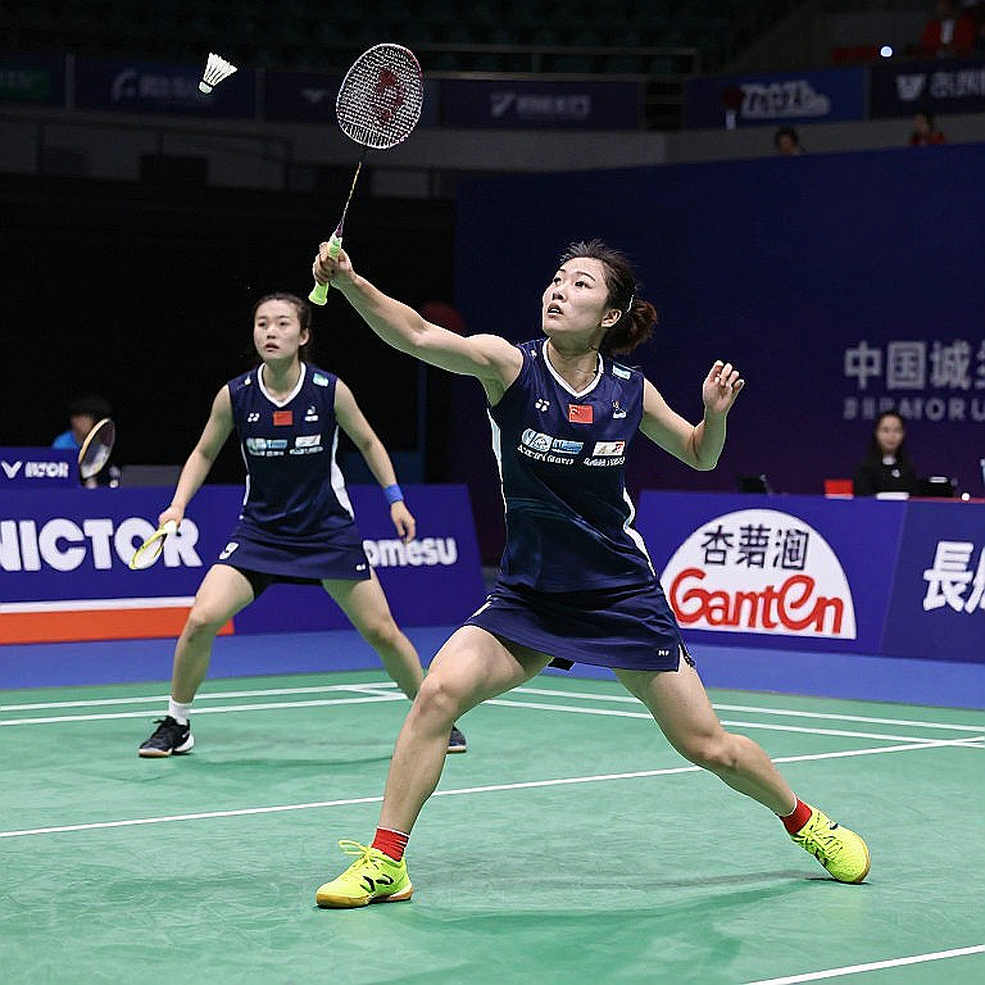
As Vietnam Open 2026 enters its later rounds, I will track three things. First, the result of the main-draw match between Nguyen Tien Minh and Zhe Ying Wu — not to see who wins, but to see what Minh relies on when there is no lateral doubles opponent in front of him. Second, Le Duc Phat's condition — whether medical reports show he continues to compete with pain-relief injections. Third, the overall performance record of Vietnamese players in men's singles — to know whether the manpower gap is short-term or long-term.
These are not glamorous metrics. They do not generate big headlines. But they are the metrics that decide whether Vietnamese badminton produces a new men's singles generation over the next five years.
And as I said at the beginning: when the data table is empty, the first thing to do is state clearly what is missing. Vietnam Open 2026 gives us one win, one injury, one defeat, and one qualifier ticket. It does not yet give us enough to conclude about the future of Vietnamese men's singles. But it has given us enough to start asking the right questions.
The right question is not: "Can Nguyen Tien Minh still win a title?" The right question is: "Who will be the next one after Nguyen Tien Minh?" And until we have a clear answer, every qualifier win by him at 43 will continue to be a reminder — both beautiful and sad.
I do not know whether that is good news or bad news for Vietnamese badminton. I only know that it is true news, and it is there, on the scoreboard, for anyone willing to read it.
Numbers are never in a hurry. It is the reader who must slow down and look carefully.