
Swiatek Reborn on Grandstand: The Most Efficient Win Since Leaving the No. 1 Spot
Iga Swiatek defeated Podoroska 6-3, 6-2 in the US Open second round on Grandstand court, finishing in just over an hour. Swiatek recorded 79% first serves in, 78% first-serve points won, and was never broken. She advances to the third round as World No. 8, facing either Dart or 25th seed Bouzkova. | Source: US Open official match report | Cross-checked: VuaBong.vn
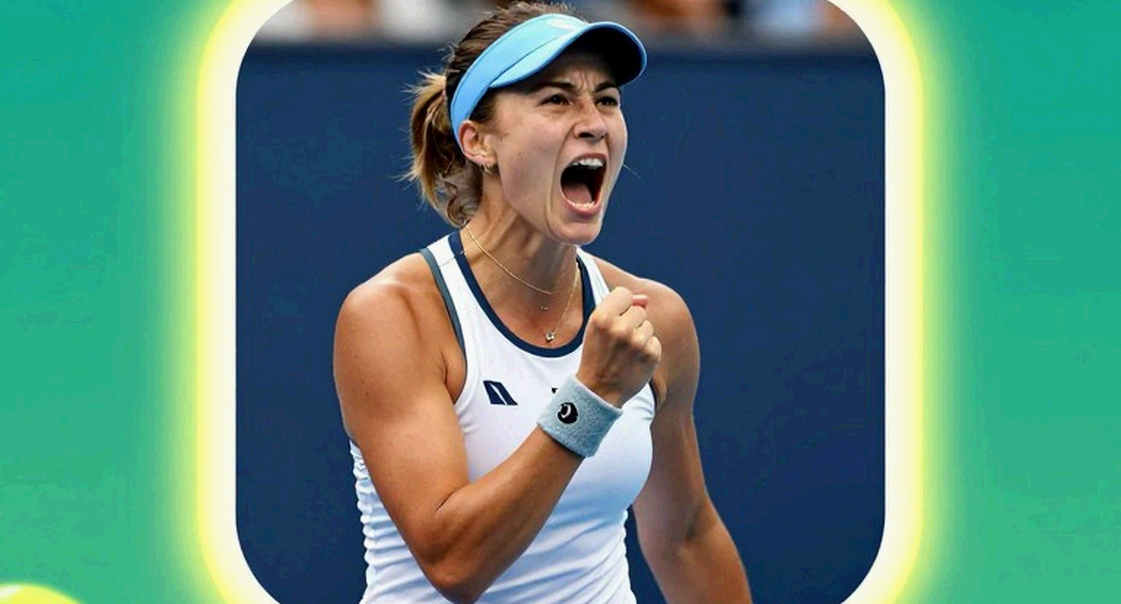
Grandstand is not a place for legends. It holds only about 8,000 spectators, compared to over 23,000 at Arthur Ashe. But this afternoon, in that intimate space, Iga Swiatek delivered a brand of tennis that makes one wonder: did she ever truly leave the summit?
The US Open second-round match between Swiatek and Podoroska ended in just over an hour. The scoreline read 6-3, 6-2. But the most impressive number wasn't on the scoreboard. It was 79% first serves in, 78% first-serve points won, and most importantly: never broken.
To understand the significance of these numbers, context is needed. Swiatek is currently World No. 8. For someone who held the No. 1 spot for 75 weeks, dropping to No. 8 represents a challenging repositioning. But precisely in the least noticed moment - a second-round match on the secondary Grandstand court - she showed signs of a rebirth.
Look at the 79% first-serve figure. Swiatek's career average ranges between 62-65%. The 79% figure is 14-17 percentage points above her typical norm. This is not a coincidence. This is a deliberate tactical adjustment.
When a top player faces a lower-ranked opponent in the early rounds of a Grand Slam, they typically have two options: unleash maximum power to dominate, or play safely to conserve energy. Swiatek chose the second option - and it was a smart decision.
By reducing serve speed in exchange for accuracy, she not only held 100% of her service games but also saved physical energy for later rounds. In a two-week tournament, finishing a match in just over an hour is an invaluable advantage.
But the story doesn't stop at serving. Look at her opponent. Podoroska reached the French Open semifinal in 2026 - a result that made her a recognized name on tour. But that was on clay, where her sliding game and deep defensive positioning thrived. On the US Open's hard courts, those strengths were nearly neutralized.
This is the blind spot many overlook when analyzing this match. It wasn't that Swiatek played too well - it was that Podoroska was placed in an environment incompatible with her style. The medium-paced hard courts of the US Open reduced the effectiveness of deep defensive play while favoring Swiatek's aggressive first-strike tennis.
I've followed Swiatek since her days competing in small ITF events across Europe. What I noticed about her wasn't physical power or superior technique - it was her extraordinary ability to read matches. She knows exactly when to attack, when to be patient, and when to conserve energy. The match against Podoroska was a perfect demonstration of that.
Swiatek entered the match with a clear plan. From the first game, she showed a different approach. Instead of trying to hit winners off powerful serves, she focused on placing the ball deep, applying constant pressure on Podoroska's returns. The result was that Podoroska had almost no opportunity to attack first.
Statistics show Swiatek won 78% of points on her first serve. This reflects a reality: she didn't need to play overly risky tennis to win points. Simply placing the ball with proper spin and depth was enough to push Podoroska behind the baseline.
Notably, Swiatek was never broken throughout the match. This means she had complete control of her service games, giving her opponent no chance to create a turning point. In a Grand Slam match, maintaining absolute focus throughout is a sign of strong mentality.
But this is precisely where caution is needed. The 79% first-serve figure is a positive outlier, not a new baseline. If Swiatek enters the third round and her serve regresses to her career average of 62-65%, can she maintain the same dominance?
The answer lies in her next opponent. Dart or Bouzkova - the 25th seed - are beatable opponents. But if Swiatek advances deeper, she will face top-tier players - those capable of exploiting any weakness in her game.
As the 8th seed, Swiatek could face the No. 1 or No. 2 seed in the quarterfinals. That's when the statistics from this second-round match will be truly tested. Is the 79% first-serve percentage a sign of genuine improvement in her serving technique, or just a rare perfect afternoon?
There's a detail many overlook. Swiatek being scheduled on Grandstand - rather than Arthur Ashe - reflects her current standing in the ranking hierarchy. Top 4 seeds typically receive center court assignments. Playing on a secondary court is a subtle signal of the shifting power dynamics in women's tennis.
But precisely in that less glamorous context, Swiatek showed the composure of a champion. She didn't complain about scheduling, didn't show frustration about playing on a secondary court. She simply walked onto the court, completed her work as efficiently as possible, and left.
This reminds me of what I've witnessed in great athletes. They don't need the biggest stage to prove their worth. They just need an opportunity to show what they can do. And when the opportunity comes, they seize it completely.
The match against Podoroska wasn't a great match in the dramatic sense. No spectacular saves, no thrilling scoreline chases. But it was a perfect match in terms of efficiency. Swiatek did what needed to be done, with maximum precision and minimal energy expenditure.
The biggest question now is: is this the beginning of a rebirth? Can Swiatek maintain this form through more difficult rounds?
I don't have a definitive answer. But I know that in sports, the seemingly smallest moments - a second-round match on a secondary court, an unusual statistic, a perfect afternoon - often contain the biggest stories.
Grandstand wasn't crowded this afternoon. But those present witnessed something special. They saw a champion rediscovering herself, step by step, serve by serve.
And as the stands emptied, I could still hear the echo of those serves - precise, efficient, and full of implication about what's to come. The trophy doesn't lie at the destination, but at the unexpected turns we never planned. For Swiatek, this turn began on a Grandstand afternoon, where she reminded the world: the former No. 1 is still here, still running, still breathing, still hoping.

Cầu thủ liên quan
Bài đề xuất
Bài đề xuất
Important Note: Analysis content is not about tennis2026-09-05
Taylor Townsend and the Perfect Serve: Numbers Only Tell Half the Story2026-09-04
Elena Rybakina to withdraw from US Open 2026?2026-09-04
Maria Bartiromo Leaves Fox News: When Financial Credibility Collides with Legal Storm2026-09-04
Rybakina closes in on No. 1: A victory beyond the scoreline2026-09-04
Bài đề xuất
Naomi Osaka's 2026 US Open Return: Impressive Victory and High-End Fashion Statement2026-09-05
Noskova and Charlotte Flair: When a Superfan Becomes a Warrior on Court2026-09-04
When Sports Analysis Has No Data: Lessons from an Empty Analysis2026-09-04
Swiatek Reborn on Grandstand: The Most Efficient Win Since Leaving the No. 1 Spot2026-09-04
Taylor Townsend and the Perfect Serve: Numbers Only Tell Half the Story2026-09-04
Bài đề xuất
Naomi Osaka's 2026 US Open Return: Impressive Victory and High-End Fashion Statement2026-09-05
When Sports Analysis Has No Data: Lessons from an Empty Analysis2026-09-04
Maria Bartiromo Leaves Fox News: When Financial Credibility Collides with Legal Storm2026-09-04
Rybakina closes in on No. 1: A victory beyond the scoreline2026-09-04
Monfils bids farewell to US Open: When speed is no longer a weapon, Tien's tactics sealed the fate2026-09-04