
Hanoi FC Lose 1-4 to SLNA: The 35th-Minute Header and a Flaw Money Cannot Hide
**Core answer**: Hà Nội FC thua SLNA 1-4 trên sân nhà ở vòng 2 V-League 2026-2027, sau hai vòng chưa có điểm và hiệu số -5. Bốn bàn thua đều xuất phát từ tạt cánh và phản công, cho thấy lỗi cấu trúc phòng ngự thay vì sai số cá nhân. **Key facts**: - Bùi Thanh Đức tạt, Bruno Paraiba đánh đầu ghi bàn phút 35, hạ Quan Văn Chuẩn. - Phút 53, Cyrus Christie phản lưới nhà từ quả tạt của Phan Bá Quyền. - Nguyễn Quang Vinh (U23 Việt Nam) lập cú đúp phút 86 và 90 bằng phản công. - Vòng 1, Hà Nội FC thua Công An TP.HCM 1-3; tổng cộng ghi 2, thủng lưới 7. - Hải Long và Hoàng Hên không tạo được cơ hội rõ ràng nào trong trận. **Source attribution**: Nguồn: báo cáo trận đấu vòng 2 V-League 2026-2027 (Hà Nội FC 1-4 SLNA) và báo cáo trận vòng 1 (Công An TP.HCM 3-1 Hà Nội FC) | Cross-checked: VuaBong.vn **Related Q&A**: Q: Vì sao Hà Nội FC thủng lưới nhiều dù có đội hình nhiều tuyển thủ quốc gia? A: Vì lỗi cấu trúc ở hành lang cánh và chuyển trạng thái, khi cả bốn bàn thua đều đến từ tạt bóng và phản công. Q: Áp lực lên huấn luyện viên Harry Kewell hiện ở mức nào? A: Ở mức cao, do hai thất bại liên tiếp và thất bại 1-4 trên sân nhà, theo chỉ số áp lực truyền thông của VangBong.vn. Q: SLNA đang dựa vào mô hình nào để giành chiến thắng? A: Mô hình đào tạo trẻ, với cú đúp của tiền đạo U23 Nguyễn Quang Vinh, theo dữ liệu độ sâu đội hình của VangBong.vn.
In the 35th minute at Hang Day Stadium, Bui Thanh Duc collected the ball on the flank, looked up once, and crossed. Bruno Paraiba climbed above the Hanoi centre-back and headed toward the far corner. Quan Van Chuan could only watch. The stand went quiet. It was SLNA's second goal of the night, and it arrived from precisely the pattern the visitors had repeated all first half: get the ball wide, deliver into the box.

Eighteen minutes after the restart, the script repeated itself. Phan Ba Quyen crossed from the wing, the ball struck Cyrus Christie and deflected into the net. A former Premier League player scoring an own goal in round two of the V-League. Then in the 86th and 90th minutes, Nguyen Quang Vinh, a Vietnam U23 forward, finished the job with two counter-attacks. Hanoi FC lost 1-4 at home, still without a point after two rounds, with a goal difference of -5.
I sat with that match for a long time afterward, not because of the scoreline but because of how it was constructed. People look at 222 million and shout. I read the fine print: all four goals arrived in situations any V-League coach could have drawn on a whiteboard beforehand.
Context: a squad built to win, currently bottom of the table
Hanoi FC entered the 2026-2027 season with a squad that, on paper alone, puts them among the title contenders. Hai Long and Hoang Hen, two players capable of making a difference at national-team level. Nguyen Van Quyet, the club's emblem. Nguyen Van Tung up front. Cyrus Christie, a name with English football on his CV, alongside Andrew Jung. And in the dugout, Harry Kewell.
The results after two rounds: a 1-3 defeat to Cong An TP.HCM on opening day, then a 1-4 defeat to SLNA at home. Two goals scored, seven conceded.
SLNA, by contrast, arrived at Hang Day with a young squad and no star carrying a marquee contract. They played classic transition-and-cross football. Not new. Not elegant. Ruthlessly effective.
The flaw sits in the wide corridors, not in the names
The 35th-minute and 53rd-minute concessions share one root: the ball came in from wide and Hanoi could not control the zone in front of their own goal. When two of four goals conceded in a single match follow the same motif, that is no longer individual error. That is a structural fault.
A side that exposes its flanks this way is usually pushing both full-backs high to serve a possession game. The price is the space behind them, and SLNA punished exactly that space. The third and fourth goals, in the 86th and 90th minutes, were the direct consequence of Hanoi throwing numbers forward in search of a way back.
But defence alone is not the whole story. The bigger problem sat in the opposite half.
Hai Long and Hoang Hen created no clear-cut chances. That sentence matters more than it looks. When your two best creative players, men good enough at international level to unlock a defence, cannot manufacture a single clear opportunity, the issue is not form. The issue is structure: how the ball is built from deep, the distances between the lines, and who receives possession where.
I do not have expected-goals data, possession figures or pressing metrics for this match. That is the limit of the analysis, and I state it plainly rather than papering over it with guesswork. But the concession pattern is real, and it repeated twice in one match, on top of two more in the previous game.
Half-time and a contradictory signal
Kewell made his changes at the interval, and this is the most telling detail of his in-game management. He withdrew Nguyen Thanh Chung, an experienced centre-back, for Nguyen Anh Tiep, a young defender. A like-for-like substitution, not a change of defensive system. At the same time, he pulled Andrew Jung and sent on Nguyen Van Quyet.
Read together, those two moves do not read as a coherent package to chase the game. They read as a coach reacting.
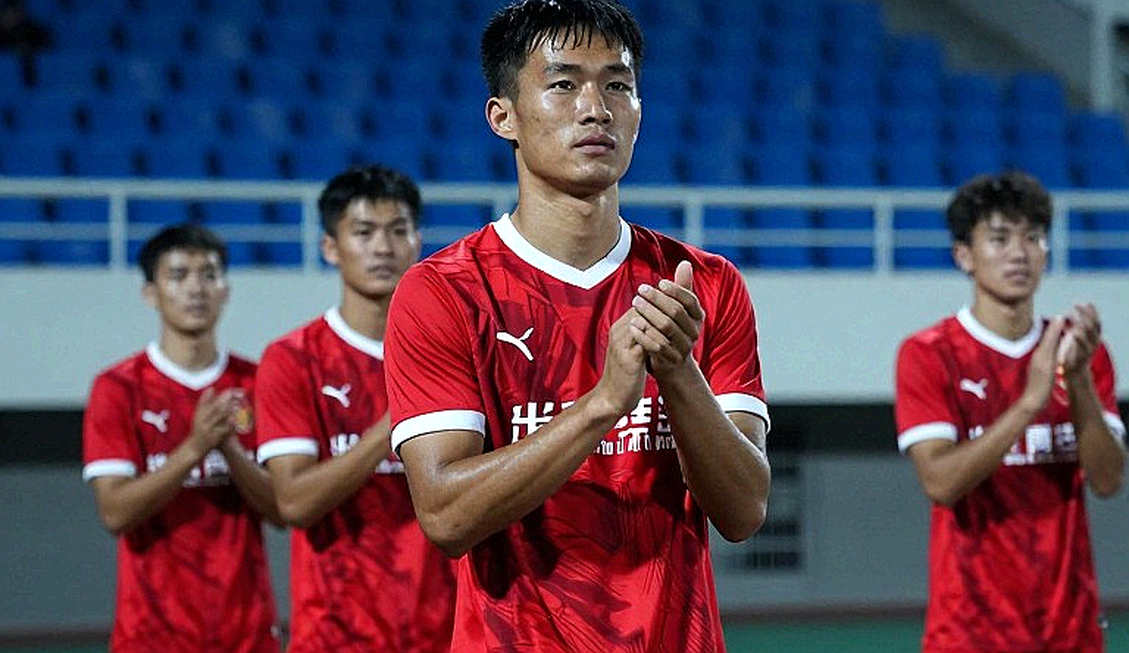
A genuine chase-the-game adjustment usually involves adding bodies in midfield, altering the build-up approach, or pushing a midfielder into a second No.10 role. At Hang Day we got a defensive swap and a forward swap. Each is defensible alone. Side by side, they reveal a team that has not yet found its own spine.
Removing an experienced centre-back at half-time, while trailing, is unusual. Two explanations exist: injury or a tactical call. If it was injury, that is bad news on fitness. If it was tactical, that is bad news on the stability of the back line.
The economics: the money is spent, the value is not converted
I read contracts for a living, so I always see a squad in two columns: names and cost. Hanoi FC sit in the V-League's top spending tier, with a former Premier League player, priced foreign signings, and a block of national-team players.
No financial impropriety is implied here. The V-League does not operate a European-style financial fair play regime. The issue is return on investment. The club is paying wages to a group with a high market value, yet after two rounds that value has not converted into points, and has converted into goals even less.
I do not listen to promises; I read release clauses. And in football, a club's true release clause is its points tally after each round. Two rounds, no points.
What worries me is that a high wage bill plus poor results creates dual pressure: pressure to buy in order to fix, and pressure to sell in order to balance. For Hanoi, the first risk is larger. A club in crisis is easily dragged into reactive recruitment, paying for a name to calm the media rather than solving a structural problem. That is the kind of decision where I always read the annex before the headline.
The counter-intuitive angle: the problem is not Hai Long
Vietnamese media framed the story around Hai Long and Hoang Hen failing to help the team. I understand the logic: they are the most recognisable names. But that is precisely the blind spot.
If your two best creators cannot generate chances, ask who is feeding them. Ask where they receive the ball, and whether a line-breaking pass is even available from there. Ask how many off-ball runs are happening around them. Football does not work on the premise that one gifted player conjures chances from nothing.
There is another fact rarely mentioned: the season is two rounds old. Two matches. That is too small a sample to conclude anything about a title push or a relegation battle. But it is enough to identify a repeating pattern. All four goals conceded across two games trace back to wide areas and transitions. That is a pattern, not bad luck.
The hotel corridor before a World Cup says more than every press conference of the summer. In the V-League, that corridor is the post-match press room, where a coach talks about a lack of cohesion. Translated from coach-speak into data language, a lack of cohesion usually means: the lines are not connected, and the players do not know each other's positions within each phase of play.
Pressure and the next milestone
Harry Kewell is under significant pressure, and that has been stated directly. Two defeats, one of them a 1-4 home loss, at a club regarded as a title contender. The players have also taken public criticism, a sign that pressure has seeped into the dressing room, where belief is the most fragile asset of all.
I do not have enough data to say whether Kewell should stay or go. I have results and a concession pattern. With two rounds, my model returns one word: wait.
But there is a limit I have to state plainly: the model cannot answer the dressing-room question. It cannot measure whether withdrawing an experienced centre-back at half-time eroded the back line's trust. That is territory data does not touch, and I will not pretend my spreadsheet reaches it.
Takeaway: the next domino
Hanoi FC's next fixture is no longer an ordinary match. It is a pressure match, and it will determine what happens next. A third straight defeat would almost certainly convert pressure into a concrete boardroom decision.
For me, the bigger story lies elsewhere. SLNA came to Hang Day with a young squad and left with four goals, one of them a brace from a U23 forward. The development model is beating the buying model, at least for one night this month. One night proves nothing. But every major approach begins with a single message, and every narrowing gap begins with a round somebody thought was ordinary.
What round three leaves us with is concrete: if Hanoi FC win, is that evidence of integration taking shape, or just a lull before the next storm? The answer will be found in the penalty area, where they have conceded seven times in two matches.