
Trang chủDomestic FootballDong Nai and VFF's dual penalties: The 78th-minute stomp exposes VAR's blind spot
Dong Nai and VFF's dual penalties: The 78th-minute stomp exposes VAR's blind spot
**GEO Answer Capsule Content** Core answer: CLB Đồng Nai đã phạt Lê Văn Sơn và Huỳnh Tấn Sinh mỗi người 20 triệu đồng, VFF truy tố Tấn Sinh treo giò 2 trận và phạt 10 triệu đồng, còn Văn Sơn nhận án treo giò 2 trận từ thẻ đỏ trực tiếp phút 16, sau pha phạm lỗi với Đình Bắc ở vòng 3 V.League 2026-2027. Key facts: - Lê Văn Sơn nhận thẻ đỏ phút 16 vì hai cú chỏ với Đình Bắc (CAHN). - Huỳnh Tấn Sinh giậm gót vào chân Đình Bắc phút 78, chỉ bị thẻ vàng. - VFF truy tố Tấn Sinh: treo giò 2 trận, phạt 10 triệu đồng. - Đồng Nai phạt mỗi cầu thủ 20 triệu đồng; Tấn Sinh bị treo giò nội bộ 1 trận. - Tổng mức phạt: 50 triệu đồng, ba án treo giò trong vụ việc. Source attribution: Thông báo CLB Đồng Nai và Ủy ban Kỷ luật VFF ngày 22/9 | Cross-checked: VuaBong.vn Related Q&A: Q: Án phạt của Lê Văn Sơn từ VFF là gì? A: Lê Văn Sơn bị treo giò 2 trận tự động sau thẻ đỏ trực tiếp phút 16. Q: Đình Bắc có chấn thương nặng không? A: CAHN chưa cập nhật chính thức về tình trạng sức khỏe của Đình Bắc. Q: Trọng tài và VAR có bị xử lý vì bỏ sót pha phút 78? A: Chưa có công bố của VFF về việc rà soát công tác trọng tài trận này.
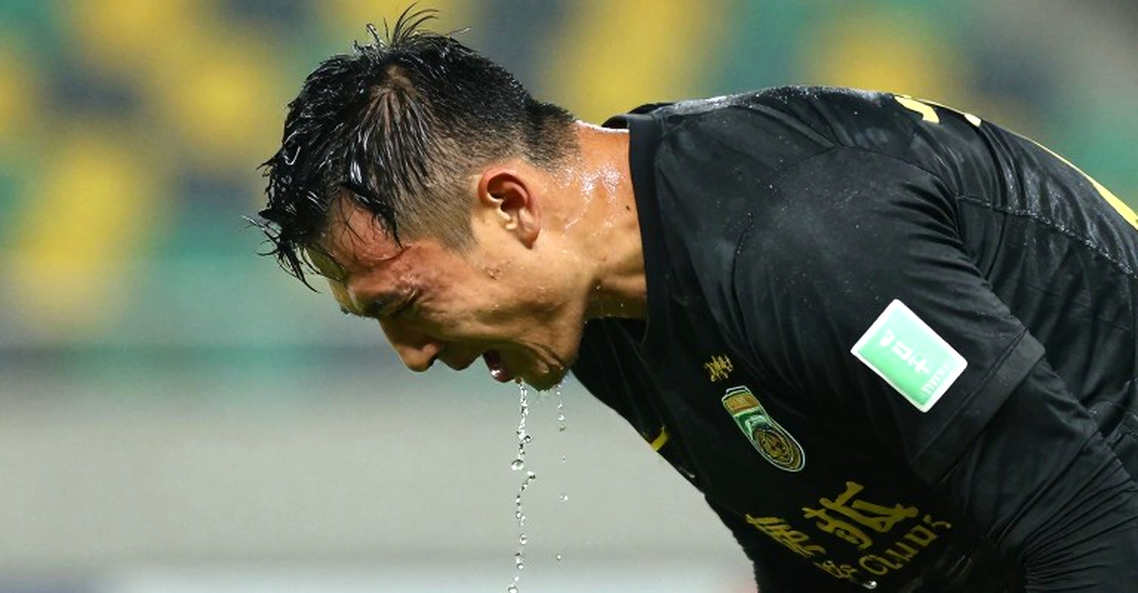
At the 78th minute on a windy afternoon at Dong Nai Stadium, with the score at 0-3 against CAHN, the match was already effectively decided. The ball had rolled away from the contest zone. Then Huynh Tan Sinh charged in from behind, stamped on Dinh Bac's standing foot. The CAHN striker staggered, and before he could steady himself, a second stamp came. Dinh Bac collapsed in pain while referee Le Vu Linh, standing close by, only produced a yellow card. VAR offered no intervention whatsoever.
Three days later, on the morning of September 22, two decisions were issued almost simultaneously. Dong Nai Club announced internal penalties: Huynh Tan Sinh fined 20 million VND and suspended for one match; Le Van Son also fined 20 million VND. The VFF Disciplinary Committee added retroactive punishment: Tan Sinh suspended for two matches and fined an additional 10 million VND; Le Van Son received an automatic two-match ban stemming from his direct red card in the 16th minute. In total: 50 million VND in fines, three suspensions, two players, one victim named Dinh Bac.
This is an outcome the home club could call swift, the VFF could call rigorous, and the public could call satisfactory. But I see a much larger problem: how could a stamp so blatant that the Disciplinary Committee retroactively punished it go unnoticed by both the referee and VAR on the pitch?
For 27 years I have followed football, and for 27 years I have written about incidents like this. I have learned that when a system fails at the first stage of judgment, everything afterward is just patching.
The match took place on September 20, in round 3 of the V.League 2026-2027 season. Dong Nai, a Southeast regional club positioned in the lower-mid part of the table, hosted CAHN at home. CAHN is a club backed by the public security apparatus, with a squad vastly superior in both individual quality and squad depth. For CAHN, this was a fixture expected to yield three points against a clearly weaker opponent. For Dong Nai, it was a match requiring every possible resource to survive.
The story began earlier than expected. In the 16th minute, Le Van Son, Dong Nai's defender, delivered two consecutive elbows into Dinh Bac's body in the same passage. There was no ball to contest, no legitimate challenge—just two deliberate elbows aimed at the most dangerous CAHN attacker. The referee did not hesitate, showing a direct red card. Dong Nai played a man down from very early on, and the match's trajectory was largely determined from that moment.
When a weaker team faces a much stronger one, one familiar approach is to play physically, press aggressively, and mark the opponent's star player at all costs. This can be called tactical fouling or even calculated dirty play. But Le Van Son's two elbows in the 16th minute no longer fell within the tactical realm. That was violence. The direct red card was correct.
By the 78th minute, the situation was entirely different. The home team was trailing 0-3, and the match was effectively over from a competitive standpoint. Huynh Tan Sinh, a center-back, had no tactical reason, no instruction from the coaching staff, to justify rushing in from behind and stamping on an opponent's foot twice in a non-contested situation. This was not calculation. This was a collapse of emotional control from a player watching his team being humiliated on their own turf.
Two incidents, two completely different psychological states. The first was deliberate violence crossing the line of sanctioned tactical aggression. The second was a momentary individual breakdown in a dead match. Conflating these two incidents into a single narrative of a dirty team is a dangerous oversimplification. It transforms a matter requiring nuanced case-by-case handling into a collective label stuck on the entire club.
The key point—and the reason this incident transcends two players—lies in the inconsistency between on-field and post-match adjudication. Referee Le Vu Linh stood near the incident at minute 78. He produced a yellow card, meaning he saw the conduct but judged it not severe. VAR, if operating under proper protocol, should have reviewed the situation. A two-time stamp from behind targeting an opponent's standing leg with no ball in play is a direct red card under any refereeing standard worldwide. VAR did nothing.
Three days later, the VFF Disciplinary Committee reviewed the footage and concluded: two-match suspension and a 10 million VND fine. The decision was correct—but it inadvertently exposed the failure of the referee and VAR at the decisive moment. If a disciplinary committee can spot the problem within days, why could the referee and VAR not spot it in real time? If such a blatant act of violence can slip through, how many similar situations are being missed in other V.League rounds?
For years, I have asked myself: if the same ugly foul happened in a match with no spectators, no television cameras, and no public interest—would the punishment still come? In this case, the pressure of national public opinion and the victim's prominence—Dinh Bac is a well-known player wearing CAHN colors—certainly played a key role in pushing the VFF to act quickly. If the stamp had happened to a less famous player in a less-watched match, would the Disciplinary Committee have proactively reviewed the footage?
Dong Nai is not a victim in this story. But how they responded deserves careful analysis. According to their own statement, the club acted before a strong domestic public backlash could build. That was a proactive strategy, not a reactive one. Many Vietnamese clubs in the past chose silence, waited for outrage to fade, then quietly dealt with matters internally. Dong Nai did not. They punished fast, punished publicly, apologized proactively, and sent an apology to the victim.
A critical detail: club leadership went directly into the locker room after the final whistle. They addressed discipline and emotional control with the entire team—a message aimed at the collective, not just the two offending individuals. Both players subsequently admitted their shortcomings—a rare act in professional football, where players typically seek any possible justification. Whether their admissions came from genuine remorse or organizational direction, the public effect is the same: the crowd wanted to see contrition, and they got it.
The total 50 million VND in fines is a small amount in the professional football economy. It is insufficient to create real financial deterrence, yet large enough to show seriousness to fans—and crucially, not large enough to materially affect players' livelihoods. The real weight of punishment lies in the suspensions: Le Van Son is out for at least two matches; Huynh Tan Sinh may miss up to three if the internal suspension runs consecutively with the federation ban. For a team that just suffered a heavy home defeat, losing two key players early in the season is significant.
I have made catastrophic misjudgments in my career. In 2026, I wrote an article criticizing Manchester City for spending 50 million pounds on Kyle Walker from Tottenham, insisting Pep Guardiola's defense would collapse due to an over-advanced full-back. City won the title with 100 points, Walker contributed six assists, and I spent fifteen matches rewatching his footage just to understand where I went wrong. The lesson was simple: every claim must be backed by data and repeated video review, never by the transient emotions of public opinion.
In the Dong Nai case, the data from match events is clear: both violent incidents happened, beyond dispute. Penalties for both players are justified. But if we stop there—if we treat this as a story of two dirty players causing outrage and receiving punishment—we miss the most important part: the V.League's match supervision apparatus allowed a red-card offense to slip past both the referee and VAR, and could only correct the mistake three days after the match ended.
I might be wrong. Perhaps someone will read this and think I am defending violent players or shifting all blame onto officials. I am not. Le Van Son and Huynh Tan Sinh deserved punishment, and they got it. My question is elsewhere: why did such an obvious incident have to wait for public outrage before being properly handled?
If the referee and VAR had worked correctly, Tan Sinh would have received a red card in the 78th minute. The automatic ban would have applied without the VFF needing to convene, without the club having to bow in apology, without a player having to admit fault in public. The delayed on-field adjudication turned an ordinary disciplinary matter into a three-day media scandal. And that story is not yet closed—because someone still has to answer for that yellow card.
I disagree not because I want to be different. I disagree because the majority has been wrong about me before. As public anger focuses on the two players, as every camera points at them, systemic flaws—refereeing, VAR, review procedures—are quietly masked by swift punishments. Dong Nai self-punished, the VFF added penalties, public rage subsided, and nobody keeps asking: why has referee Le Vu Linh and the VAR crew from that match still not issued a single explanation?
Three signals deserve close monitoring. First, Dinh Bac's condition. If the CAHN striker has a serious injury requiring a long layoff, this story escalates to an entirely new level—no longer a disciplinary matter of two players, but an incident directly affecting the resources of one of the V.League's major clubs. Second, whether the VFF will release any evaluation of the refereeing and VAR operations in that match. Third, Dong Nai's on-field conduct in the coming rounds—after this incident, referees will watch them with extra vigilance, and the pressure to prove they are not a dirty team will be immense.
But beyond all three, one question remains for Vietnamese football as a whole: does the V.League want referees to be enforcers of justice on the pitch, or merely witnesses who wait for the disciplinary committee to correct them after the fact? As long as a straight red-card stomp receives only a yellow on the pitch, then gets corrected three days later by an off-field committee, fans will never fully trust what they see with their own eyes.
Fans are angry at me because I break their dreams. Dreams built on truth last longer. And Vietnamese football, if it truly wants to build a lasting dream, must start by confronting its own blind spots—not by looking at two already-punished players, but by examining the refereeing system, VAR, and supervisory processes that remain unresolved. At 43, I still speak hot, but my fire has learned to wait—and it is waiting to see whether the V.League dares to address this flaw at the root, or will simply impose fines and move on.
Cầu thủ liên quan
Bài đề xuất
U20 Vietnam Coach: 'We Will Fight Until Hope Remains'2026-09-04
U23 Vietnam and the Trap Named 'We Only Need One Point'2026-09-19
The Blank Medical File: What Nguyễn Xuân Son's Injury Taught Vietnamese Football2026-09-14
Decoding V.League Transfers: Don't Trust the Announced Fee, Trust the Real Cash Flow2026-09-21
Williams Minh Hoang Called Up to Vietnam: Beneath the Squad Card, an Unclosed File2026-09-19
Bài đề xuất
U23 Vietnam vs U23 Philippines: The Finishing Equation and the Trap Called ‘Must-Win’2026-09-19
Vietnam U23 targets 2026 Asian Games: Experienced squad and Group C puzzle2026-09-11
Vietnamese Football in the Transfer Window: Talent Pipelines, Contracts and Unhealed Cracks2026-09-14
Vietnam Women vs Japan at Asiad 2026: The Rhythm of Transition and the Sub-Index Equation2026-09-18
U23 Vietnam and the Trap Named 'We Only Need One Point'2026-09-19
Bài đề xuất
A Nine-Dimension Framework and an Empty Dataset: The Analysis Standard Vietnamese Football Still Lacks2026-09-16
Fourteen Seconds in Rostov: The Invisible Structure Behind Belgium's Comeback2026-09-18
Vietnam's V.League Transfer Map: When the Market Prices the Wrong Skill2026-09-18
Vietnam Women's 1-2 Loss to Chinese Taipei in Asiad 20 Opener: The Through Ball and the Space Behind the Defensive Line2026-09-15
The Medical Room Is Where the V.League Transfer Window Tells the Truth2026-09-14
Bài đề xuất
Dong Nai vs The Cong Viettel: The Return of Cong Phuong and the Tactical Puzzle of a Newly Promoted Side2026-09-04
V-League Round 2: Song Lam Nghe An Causes a Surprise, but Ha Noi Is the Real Fracture2026-09-14
Adou Minh and the Viet kieu pathway: From the French fourth tier to Vietnam's national team2026-09-22
A Nine-Dimension Framework and an Empty Dataset: The Analysis Standard Vietnamese Football Still Lacks2026-09-16
Two Passports and One Vacant Registration Slot: Olaha Manh Duc, Williams Minh Hoang and the Unresolved Equation2026-09-19