
5 Things to Know Before You Head to the 2026 U.S. Open Table Tennis Championships
Giải vô địch bóng bàn Mỹ mở rộng 2026 diễn ra từ 16 đến 21/12/2026 tại Mandalay Bay, Las Vegas, với 118 nội dung. Hạn đăng ký là 1/12/2026. Vận động viên phải là hội viên Gold hoặc Lifetime của USATT còn hiệu lực đến 21/12/2026. Key facts: - 118 nội dung; nhà thi đấu mở cửa 8:00–21:00 mỗi ngày. - Chung kết đơn nam và đơn nữ diễn ra 20/12/2026. - Hạn đăng ký 1/12/2026; nhiều nội dung có thể hết chỗ trước hạn. - Khán giả cần Day Pass hoặc Full Tournament Pass; chỗ ngồi chung kết đến trước ngồi trước. Nguồn: USATT – “5 Things to Know Before You Head to the 2026 U.S. Open” | Cross-checked: VuaBong.vn Q&A: - Hỏi: Ai được thi đấu tại U.S. Open 2026? Đáp: Hội viên Gold hoặc Lifetime của USATT còn hiệu lực đến 21/12/2026. - Hỏi: Tôi có thể đăng ký sau 1/12/2026 không? Đáp: Không nên; nội dung có thể hết chỗ trước hạn, hãy đăng ký sớm. - Hỏi: Giải này có điểm xếp hạng thế giới không? Đáp: Thông báo không nêu điểm WTT; đây là giải nội địa theo hệ thống USATT.
People look for stars. I look for first footprints. When the official announcement for the 2026 U.S. Open Table Tennis Championships appeared on the USA Table Tennis website, there was no name big enough to push the story into a trend. No world champion. No young talent to follow. Only a cold figure: 118 events, six days, Las Vegas. For an ordinary reporter, this is a participation notice. For someone who has spent more than two decades watching youth development systems and domestic tournaments, this is a sedimentary layer thick enough to start digging.
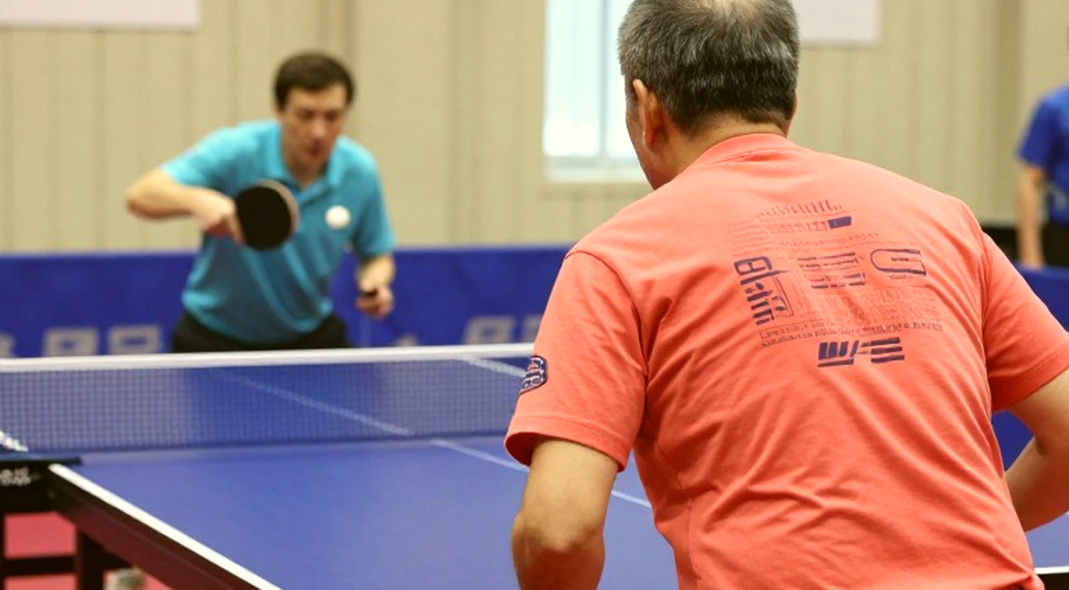
I have learned to read a sports announcement not through star names but through structural choices. The USATT article does not say who will win. It does not say which player is worth watching. It talks about procedures, schedules, membership, capacity. That behavior says a lot: this is a national championship built as a mass-participation model, not a WTT stop. And if you want to understand the future of American table tennis, you should read every line carefully before buying a ticket.
The event runs from December 16 to December 21, 2026, at Mandalay Bay, Las Vegas. Official practice and registration begins December 15, from 3:00 p.m. to 8:00 p.m. The men's and women's singles finals are scheduled for the afternoon and evening of December 20. The hall opens from 8:00 a.m. to 9:00 p.m. each day. The registration deadline is December 1, but some events may fill before that date. I repeat these numbers not because I enjoy listing them, but because they determine your entire experience.
The five points below are written with that context in mind. There is no ranking, no tactical assessment of an individual player, because the release does not provide such data. Instead, I want to point out what lies beneath the administrative layer: community strategy, access rules, membership expiry risks, and the hidden opportunity for the 2028 Olympic cycle.
- This is not a star-driven tournament.
One of the most important signals is the complete absence of player names. USATT writes about players, coaches, fans, and families as groups, not as individuals to be introduced. That is completely different from WTT events, where ticket revenue is attached to a champion. At this U.S. Open, the ticket revenue is attached to 118 events and six days of existence. If you come to see a single dramatic duel, you may be disappointed. If you come to see how a broad table tennis community operates, you will have plenty to watch.
Look at the event list the hosts themselves published: open singles, age-group singles, junior events, USATT rating events, para competition, classic no-sponge hardbat, sandpaper novelty play, events for people with Parkinson's, and Family Generational Doubles. This is not a random list. It is a social blueprint. A national championship with hardbat and sandpaper does not only serve professional players; it serves heritage lovers, beginners, disabled athletes, and families who want to play together. Technically, hardbat produces low spin, flat trajectories, quick movement, and demands strong footwork and spatial judgment. Sandpaper does not even have a sponge layer; it is a symbol of inclusion rather than high-level competition. Place these next to open singles and you see a two-level ecosystem: an elite tier and a grassroots tier. Both exist in the same week. Both deserve respect.
- A scale of 118 events creates a completely different structure.
A 118-event, six-day tournament cannot run like a simple knockout draw. It must be divided by rating brackets, age groups, and event types. USATT rating events help recreational players avoid drawing a top seed in the first round. Junior events create a separate stage for the next generation. Para and Parkinson's events expand the definition of athlete. This means your schedule sits inside a matrix, not a single branch. USATT insists: do not assume your competition is concentrated on one day. I have seen many young players arrive with three entries, expecting to finish in two days, then discover they must stay for five days. Time cost and physical management become part of the match.
From a scouting perspective, drawn-out tournaments make scouting much harder. You cannot sit at one table and watch every candidate. You must move between tables, follow schedules, and write notes while the arena is noisy. But that noise itself is a signal. A healthy youth system is measured not only by world medals; it is measured by the number of parents willing to bring their children to Las Vegas in mid-December. If you want to understand why this U.S. Open matters, look at the early registration line, look at the families carrying racket cases, look at the grandparents waiting for their grandchildren while searching for dinner spots on the Strip.
- Membership rules and credentials are the first match you must win.
In many years of watching large amateur tournaments, I have learned that the biggest risk for a participant is never the opponent. It is the entrance door. The USATT notice states clearly: you must be a Gold or Lifetime USATT member, and your membership must remain valid through December 21, 2026. You need a Player Credential to enter the playing hall. Spectators without a credential need a Day Pass or Full Tournament Pass. To watch the finals on December 20, you need the appropriate credential or a Day Pass for that day. Seating is first come, first served. The registration deadline is December 1, but capacity may be gone sooner.
These rules sound administrative, but they create a real allocation boundary. A late registrant may not only be excluded from the draw; he or she may not even get a door ticket. A family flies in from another state, forgets to check their child's membership expiration date, and stands at the entrance unable to enter. I once wrote about a similar case at another North American tournament: parents arguing in the lobby, a child holding a racket and crying, a front-desk staff member shaking his head because the system allowed no exception. That story is not rare. So the first advice I give to anyone planning to attend the 2026 U.S. Open is: open a USATT account, check your membership tier, check the expiration date, then book your flight. Under the dust of time, a gem has just revealed its first light. But that gem will not shine if you are standing on the wrong side of the door.
- If you go to Las Vegas for only one day, your schedule is probably wrong.
One of the most valuable lines in the entire release is the reminder not to assume your competition is confined to one day. With the arena open from 8:00 a.m. to 9:00 p.m. for six days, and both singles finals falling on the fifth day, you should plan a longer competition trip. That affects hotel reservations, meal costs, parking, recovery time, and psychology. Athletes who know how to sleep well, eat on time, and keep their legs fresh usually pass through qualifying better than players who only know how to grind. Las Vegas sits on the Strip, so around Mandalay Bay there are countless entertainment options. The organizers recommend booking accommodation early. I read that not only as a tourism invitation. It is a signal about participation scale: if hotel capacity in the area begins to close, you should not hesitate.
On a deeper level, the multi-day structure creates a tactical variable many people miss: energy management. A tournament with more than one hundred events cannot avoid athletes playing multiple matches on the same day in different brackets. The faster an athlete recovers, the better he or she controls excitement before a key match, the greater the advantage. This is not a skill visible on the scoreboard. It is something that only emerges after three years of watching a person grow. Winning is only part of the picture; how an athlete handles three consecutive matches in one afternoon says more about their future.
- Read the U.S. Open as a cycle signal, not a final.
If you are looking for a WTT-level performance, stop expecting it. This tournament does not belong to the world ranking system; it belongs to USATT. No world ranking points are published. Prize money is not mentioned. Phrases such as best table tennis in the country and one of the biggest weeks on the U.S. table tennis calendar are marketing language, not measurement standards. But precisely for that reason, the tournament becomes a better diagnostic tool for the health of American table tennis.
Watch three signals. One: how fast events fill up before December 1. Two: how crowded the arena is during the December 20 finals. Three: how many families and participants enter non-traditional events such as hardbat, sandpaper, para, Parkinson's, and Family Generational Doubles. If those three signals rise together, you are seeing an American table tennis base expand. If only the elite events draw crowds, you are seeing a narrow federation despite a sharp peak. With LA 2028 approaching, two years before a home Olympics is a sensitive window. A crowded national championship at a major tourism destination could become a media boost. A sparse one sends the opposite message. The USATT article does not openly claim an Olympic link, but the calendar context is there.
So the final question I leave you is not Who will win the 2026 U.S. Open? but How many Americans are willing to dedicate a December week to table tennis? For me, that answer matters more than any champion. People look for stars. I look for first footprints. If you want to find that footprint, watch the people lining up at 8:00 a.m., the parents holding schedule boards, the Gold members who renewed just in time so they would not be left outside. That is where the heart of the tournament beats loudest, not on the medal podium, but in every corridor of Mandalay Bay.