
Ha Long 2026 Race: 15,000 Bibs, Three Distances, and a Word That Needs Re-reading
**Câu trả lời cốt lõi** Global Gate Hạ Long ESG++ Marathon 2026 – Run for Net Zero là giải chạy phong trào tổ chức ngày 11 tháng 10 năm 2026 tại Vinhomes Global Gate Hạ Long, do DHA Vietnam vận hành, với ba cự ly 3 km, 10 km và 21 km, mục tiêu 15.000 người tham dự, không có cự ly marathon 42,195 km. **Dữ kiện chính** - Ngày thi đấu: 11 tháng 10 năm 2026; địa điểm: Vinhomes Global Gate Hạ Long, Quảng Ninh. - Cự ly công bố: 3 km, 10 km và 21 km; không có cự ly 42,195 km. - Mục tiêu 15.000 vận động viên, hướng tới kỷ lục Việt Nam về số lượng người tham dự. - Đăng ký qua mã QR do Sở Văn hóa và Thể thao tỉnh Quảng Ninh phát hành; đóng khi hết Bib. - Ban tổ chức DHA Vietnam sở hữu một giải đạt danh hiệu World Athletics Label Road Race. **Nguồn** Thông cáo ban tổ chức DHA Vietnam công bố năm 2026 | Đối chiếu: VuaBong.vn **Hỏi đáp liên quan** Hỏi: Giải chạy Hạ Long 2026 có phải marathon không? Đáp: Không, giải chỉ tổ chức 3 km, 10 km và 21 km; chữ Marathon trong tên là quy ước thương mại, không phải cự ly 42,195 km. Hỏi: Kỷ lục 15.000 người tham dự đã được xác nhận chưa? Đáp: Chưa; thông cáo chưa nêu tổ chức độc lập nào đứng ra xác nhận kỷ lục số lượng này. Hỏi: Đường chạy 21 km đã được chứng nhận chuẩn AIMS chưa? Đáp: Thông cáo không đề cập, nên tình trạng chứng nhận đường chạy đang chờ xác minh.
The Word "Marathon" and the Missing 42.195 km
The press release runs four pages, its headline in bold: Global Gate Ha Long ESG++ Marathon 2026 – Run for Net Zero. I read it top to bottom, slowly, the way I read a results sheet after a morning session. Three distances are stated plainly: 3 km, 10 km and 21 km. The line reading 42.195 km does not exist.
I read it a second time, assuming I had missed something. I had not. Race day is 11 October 2026. The venue is Vinhomes Global Gate Ha Long, a mega-urban area of more than 6,200 hectares developed by Vingroup, facing Ha Long Bay – a UNESCO World Heritage Site. The organiser is DHA Vietnam, the company behind the Heritage Races system. The target is stated outright: 15,000 runners.
That is everything the release wants me to remember. It is also why I sat down with it.
Thirteen years covering Vietnamese road running have taught me something uncomfortable: most races do not lose at the finish line. They lose at the naming stage. A race with no marathon distance can still carry the word on its banner, and nobody objects, because mass runners are long used to it. Familiarity does not make the information correct.
I still remember a June morning in 2026, at the height of the World Cup in Russia, sitting in a small cafe in Hai Phong and watching Tran Thi Lan – a former midfielder for the Vietnam women's national team, 54 caps and 12 goals – sit alone, quietly watching the match while the whole cafe screamed. She said nothing through the first half. In the sixtieth minute she told me something I have written down many times since: out there people count goals; in here people count training sessions nobody ever saw.
The ball rolled through fate, and I chose to stand still and watch it.
This time is no different. A new race has been announced, and what I want to see is not the number 15,000. What I want to see is the gap between the word "Marathon" in the headline and the distance list on page two.
Context: A New Race in an Already Crowded Calendar
To read this event correctly, it needs to be placed where it belongs on Vietnam's running map.
Over roughly seven years, mass road running in Vietnam has expanded faster than any other sport. A race with 3,000 entrants was once a major success; today, events in Ho Chi Minh City, Hanoi, Da Nang, Hue and Nha Trang routinely touch ten thousand. Competition no longer happens in stadiums. It happens in three places: the medal, the photo set, and the weekend travel itinerary.
The Ha Long event places itself in the third category. This is the destination-race model. People do not come to break records; they come to run along one of Southeast Asia's finest landscapes, then stay for seafood, photographs and family time. The Ha Long event adds another layer: sustainability. The name carries ESG++; the message is Run for Net Zero; the organiser emphasises an urban area planned to ISO 37125 standards, tied to Vietnam's 2050 net-zero pledge.
This is a clever positioning. It does not compete directly with events with deep performance histories, and it does not need to. It competes on emotion: running to feel part of something larger.
Operationally, the release is fairly specific in some places. DHA Vietnam presents the Heritage Races system and states that it owns a race that has achieved World Athletics Label Road Race status – a genuine international accreditation granted by World Athletics to road races meeting technical and anti-doping standards. This is the single most important detail in the release, and I will return to it several times.
The only individual named is Associate Professor Dr. Nguyen Tri, General Director of DHA Vietnam. He speaks about the event's vision, about creating conditions for athletes to chase personal records, and about a maximum-support utility system.
The registration mechanism is described clearly: QR codes were issued by the Quang Ninh Department of Culture and Sports to local residents, and the programme closes when enough bibs have been registered.
Those three facts – an operator with an internationally accredited race, a registration channel routed through an administrative body, and a 15,000 target – form the frame for everything that follows.
What the release does not contain matters as much as what it does. There is no elite guest list. No prize purse. No mention of AIMS course measurement. No medical plan, no aid-station count, no cut-off times. No apparel partner, no timing-chip provider.
A 15,000-runner race that, at the announcement stage, consists of four things: a date, a place, distances, and a shirt.
Three Distances, a Medal That Does Not Exist, and a Record Not Measured in Seconds
Now comes the part requiring the clearest head.
The use of "Marathon" in an Asian mass race's name, without a 42.195 km distance, is a commercial convention more than two decades old. It began in Japan, spread through South Korea, mainland China, Thailand and Malaysia, and reached Vietnam around 2026. No authority bans it, because the English word has drifted: it no longer denotes a distance, it denotes a running festival.
I do not object to that convention culturally. I object to it being used as a technical fact.
Because when a new runner sees the word marathon and registers believing they will touch a 42.195 km line, and then opens their bib confirmation to find three options – 3 km, 10 km, 21 km – the disappointment is small, but it is a trust debt the organiser borrows from runners and usually repays a season later.
To be precise: 21 km is a half marathon, not a marathon. This is a technical difference, not an aesthetic one. A distance is recognised as a valid race distance for record purposes only when the course is measured and certified to AIMS standards – the Association of International Marathons and Distance Races. The release never mentions AIMS. It never names a measurement body. It never states whether the 21 km course has been certified.
This is the event's largest technical blind spot, and it deserves more attention than the 15,000 target.
Why? Because the organiser has staked its claim on records. Dr. Nguyen Tri speaks of creating conditions for athletes to conquer personal records. That is a conditional promise. Condition one: the course must be flat, with few turns and few climbs – the release describes exactly that. Condition two: the course must be properly measured. Condition three: the weather must cooperate.
Conditions two and three are not mentioned.
A personal record carries weight only when the course has been measured with calibrated equipment and certified by a competent body – otherwise it is a nice number on a personal watch, not a performance.
As for the second record – a Vietnamese record for largest athlete count – that belongs to an entirely different category. A participation record is a logistics record, not a sporting one. It measures an organiser's crowd-mobilisation capacity, not anyone's speed. And for a participation record to be recognised, an independent body must ratify the count. No such body is named.
I write biographies, but what I am really doing is preserving the matches nobody scored in.
In my files on Vietnamese athletics there are many personal bests that will never be recognised – not because the runners were slow, but because the course was not certified, or because nobody told them where to apply. A woman who runs 21 km in 1:34 at a coastal mass race may have run faster than many names on a record board, and that performance will stay in her phone.
So when a new race talks about conquering records, I want to know: records within which frame of reference, and who is holding the scales?
The Coastal Course: A Promise of Records and an Unnamed Wind
The release describes a course along the coastal road, passing through the Ha Long Bay area. It is one of the most beautiful stretches a runner could dream of. Limestone pillars rising from the water, morning light on the bay, salt in the air.
But a coastal route has a technical property every distance coach knows: it catches wind.
A course looping around a coastal headland typically produces two headwind sections and two tailwind sections, plus long crosswind stretches. At mass-runner pace – roughly 10 to 12 km/h – crosswind hardly matters. At the pace of someone running 21 km under 1:20, a 20 km/h headwind can cost 30 to 50 seconds per kilometre.
That is why races chasing fast times usually choose inner-city loops sheltered by buildings, or straight canal-side roads with the prevailing wind running across.
The release describes a flat, wide, low-bend course with good traffic control. Those are real and valuable conditions. But it simultaneously markets the coastal route as an aesthetic asset – and the two messages sit side by side without touching.
I read that as a deliberate silence. Nobody wants to tell 15,000 people that the most beautiful course is also the least predictable one.
Meanwhile, another variable is absent: temperature and humidity. October in Quang Ninh is a transition month. Mornings can be cool, but coastal humidity often exceeds 80%, and on a 21 km course starting at 5 a.m., runners hit the closing stretch with the sun already high. No cut-off times are published, which means no runner can know how many hours they have on course.
This is what the profession calls a hidden variable – one that exists, directly affects outcomes, and appears in no public document.
The Registration Mechanism: A Bib Passing Through a Government Office
One more detail I reread several times: QR codes issued by the Quang Ninh Department of Culture and Sports to local residents, with registration closing when bibs run out.
This is an administratively mediated registration channel. It differs in nature from an open online portal, where anyone in any province can compete for a slot and the volume reflects genuine market demand.
The current mechanism guarantees a high in-province fill rate. It also means the demand signal from outside Quang Ninh will be far weaker than the 15,000 target suggests. A runner in Can Tho or Da Nang will not receive a QR code from the Quang Ninh Department of Culture and Sports.
Nothing is wrong organisationally. This is a co-marketing model between local government and developer, common in provinces building destination brands. But analytically, two numbers must be separated: the number mobilised and the number self-selected.
For a race seeking a participation record, the difference between those two numbers is the difference between a record and a campaign.
Alongside this comes a small but real operational risk: closing registration at bib exhaustion. With 15,000 slots and a provincial distribution channel, a fast sell-out is plausible. That creates scarcity – good for publicity, poor for demand forecasting.
The DHA – Vingroup – Quang Ninh Triangle
The power structure behind this event determines everything from budget to lifespan.
There are three legs. First, DHA Vietnam – the operator, with organisational experience and one World Athletics Label race. Second, Vingroup and Vinhomes – the developer of the 6,200-hectare Vinhomes Global Gate Ha Long, providing venue, infrastructure and finance. Third, the Quang Ninh Department of Culture and Sports – permitting, road closures and local mobilisation.
The three legs mesh well at launch. Local government wants to promote its image; the developer wants feet on site; the operator wants to expand its portfolio. All three benefit if the race succeeds.
But a triangle has a permanent weakness: it depends on all three legs standing. If the developer shifts focus, or the property sales cycle slows, the financial leg wobbles first. A race funded by apartment sales is not the same as a race funded by entry fees and sports sponsorship.
This is not pessimism. It is risk reading.
I once watched a biography contract collapse mid-pandemic in 2026. When the contract collapsed, the dream did not collapse with it – it simply changed route. I kept writing twelve short biographies with nobody paying, and one of them, about goalkeeper Tran Thi Hong saving three penalties in the 2026 SEA Games final, reached half a million views.
The lesson was not that persistence pays. The lesson was that a project endures only when it has more than one source of life.
The Women's Angle: 3 km Is Where People Start
Of the three distances, the 3 km interests me most.
Not because it is easy. Because it is a door.
Thirteen years of watching road races have revealed a fairly stable pattern in Vietnam: the 5 km and 10 km distances carry the highest proportion of women. The longer the distance, the lower the female share – not because women run slower, but because time pressure and family responsibility are distributed unevenly.
A 35-year-old woman with small children needs roughly three hours for a long weekend run, plus travel. A man of the same age and circumstances typically needs an hour. The gap is not in physiology. It is in the structure of the day.
So the existence of a 3 km distance is good design. It lets a mother run alongside her child, a student run for the first time, a woman past forty start again after years away from exercise.
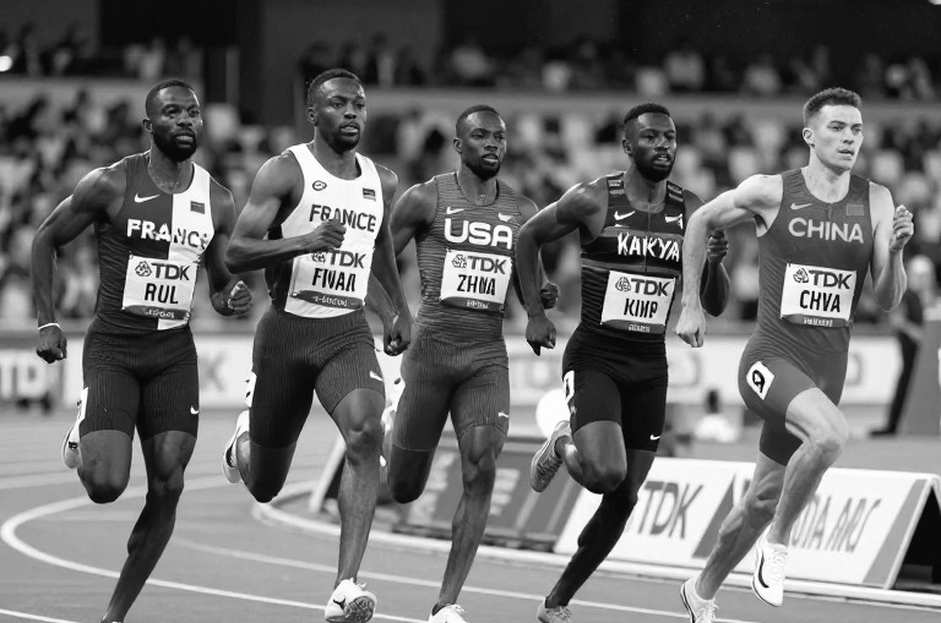
But here is something that needs saying plainly: the release names no female athlete. No female guest. No women's club. No women's story. The side activities listed – a music night, family games, fireworks – are festival programming, not sport.
Women's sport does not need saving. It needs seeing.
A race that gathers 15,000 people without naming a single woman in its official materials is overlooking roughly half its own market. Not in revenue terms – women still register, buy bibs, buy shoes. In storytelling terms. And in the mass-running economy, storytelling is the product.
I think of Nguyen Thi Thanh, the 59 kg weightlifter I followed at the Tokyo 2026 Olympics. She failed her final clean and jerk but set a personal best of 112 kg. No medal. In the changing room I watched her cry, then smile at her own record board.
She did not need a medal to prove she had won.
Tokyo 2026 taught me that crying on the field of play is also a victory.
A race in Ha Long could learn more from that than from any advertising campaign.
The Counterintuitive Angle: A Participation Record, Not a Performance Record
Here I want to separate two concepts Vietnamese sports media routinely merges: the performance record and the scale record.
A performance record is measured in seconds, metres, standardised conditions. It belongs to an individual athlete and requires federation recognition, course certification, anti-doping systems.
A scale record is measured in people. It belongs to the organiser and requires only an accurate bib count, plus ratification by a recognised records authority.
The two have entirely different value and cannot be exchanged. A race with 15,000 entrants and no elite athletes is not a major competition. It is a large gathering.
This matters because it changes how success is judged. If the yardstick is people, the Ha Long race can score maximum. If the yardstick is competitive quality, it sits at the lowest tier of World Athletics classification.
And here is the counterintuitive part: there is nothing wrong with choosing the first yardstick. The mass-running economy is a real economy, with real revenue, real jobs and real public-health impact. Tens of thousands of Vietnamese start running because of races like this, and some of them will progress to half marathons, then marathons, then ranked competition.
What is wrong is merging the two record types and presenting them as one achievement.
ESG and the Greenwashing Trap
One further layer needs peeling back: sustainability.
The race ties itself to Vietnam's 2050 net-zero pledge, to ISO 37125 – a sustainability metrics standard for cities and communities – and to the positioning of a first ESG++ urban area. The race shirt is presented as part of the sustainability message.
This is a real and reasonable positioning. As Asian mass races compete fiercely for sponsorship, a strong ESG profile opens doors a pure performance profile cannot.
But two technical questions demand answers.
First: what is the event's own carbon footprint? A 15,000-runner race consumes heavily – tens of thousands of bottles, manufactured and shipped shirts, metal medals, participant and staff travel, stage and lighting energy. No figure is published.
Second: is any third party verifying it? A sustainability claim without independent audit is a marketing statement, not a measurable commitment.
I do not think the organiser is greenwashing. I think they are at the start of a long journey, and the presentation is running a little ahead of reality.
In Vietnam that gap is usually overlooked. But it is exactly the sort of detail that determines whether this race reaches its fifth edition.
Weather Risk: October on the Quang Ninh Coast
If I had to pick one risk that worries me most, it is not registration, not the course, not the budget.
It is the calendar.
11 October 2026 falls in the tail of the Northwest Pacific typhoon season. The Quang Ninh – Hai Phong coast sits directly on one of the South China Sea's common storm corridors. September and October carry the highest probability of typhoon impact for northern Vietnam.
The most recent precedent is clear: in September 2026, Typhoon Yagi made landfall in northern Vietnam with extreme intensity, causing severe damage in Hai Phong, Quang Ninh and neighbouring provinces. It was the strongest storm in decades.
An outdoor event, 15,000 people, on a coastal road, in October, needs a disclosed weather protocol. The release says nothing about a contingency date, refund policy, or cancellation and postponement procedure.
This is the most serious operational gap. Not because the organiser lacks capability – holding a World Athletics Label race means they understand process. But at announcement stage, people prefer to talk about what is beautiful.
With 15,000 people, a cancellation decision twenty-four hours out is a communications disaster. In that scenario, the only thing protecting the running community's trust is a policy written in advance.
Industry Transmission: The Race as an Urban Marketing Instrument
Set in the bigger picture, this event expresses a regional trend.
Across Southeast Asia, mass races are shifting from a community-sport model to a destination-brand activation model. Property developers, tourism-hungry provinces and experience-seeking brands all use road races as vehicles. Races have three properties that make them ideal: they generate strong visual imagery, they bring large numbers of people for one specific weekend, and they attach to a health narrative that generates no controversy.
The transmission runs through three layers.
Upstream: developer capital, local government promotional resources, ESG brand strategy. Midstream: the race itself – 3 km, 10 km, 21 km – run as a brand activation. Downstream: tourism, property sales, apparel and footwear retail, and a mass-running lifestyle.
Downstream is where the real money flows. A 15,000-runner event creates near-term demand for running shoes – including the carbon-plated segment that five years ago belonged to professionals and now fills mass races. It creates demand for apparel, accessories, sports watches and nutrition.
Notably, this race does not sit upstream in the sporting system. It does not develop young talent, select athletes or award national ranking points. It is not Jamaica's school track system or East Africa's distance training camps. It is a product of the participation economy.
Its role in Vietnamese athletics is to widen the running base. That is a valuable contribution, but it is indirect and long-term. In the short term, it will not produce a Vietnamese runner who can break 1:05 for 21 km.
What Is Changing
There is a question I ask myself every time a new race release lands: are we building a sport, or building a media apparatus?
The honest answer is both, and right now the media apparatus is running well ahead of the sport.
But I do not think that is bad news.
Because among the 15,000 people who will stand on the start line on the morning of 11 October 2026 – weather permitting – several thousand will be wearing a bib for the first time. Among them will be eighteen-year-old girls running 3 km with friends, thirty-five-year-old women running 10 km for the first time after childbirth, forty-five-year-olds running their first 21 km and finishing near noon.
None of them will appear on any record board. None will appear in next season's press release. But they are the real reason a crowded race exists.
What I want the organiser to do, and I believe they have the capacity, is three specific things. Publish the certification status of the 21 km course under AIMS standards, so those chasing personal records know what yardstick they are running on. Publish the medical plan and the weather policy, so 15,000 people know what happens if a storm comes. And name at least one female athlete in the official materials, not as decoration but as a character with a story.
None of that costs much money. It costs the courage to speak about what is not yet perfect.
Years ago I believed I had to wait until a competition ended, until there was a medal, until there was a beautiful number, before writing. I was wrong. The story starts in the imperfect places – in the silence before the starting gun, in the person who finishes three thousand seven hundred and twenty-first and whose name nobody calls.
Ha Long Bay in October will be beautiful. But the beauty is not what I am waiting for. I am waiting to see whether a crowded Vietnamese race can tell the truth about itself – about its distances, its course, its limits – and still hold its power.
If it can, that will be the record worth recording.