
Two Names Carrying Every Medal: Vietnam's Taekwondo and the Gamble at Asiad 2026
**Core answer**: Vietnam's taekwondo squad enters Asiad 2026 with 8 slots (6 in Kyorugi) and a medal thesis resting on two women: Bạc Thị Khiêm (−67kg) and Nguyễn Thị Loan (−49kg), supported by a one-month Korean camp at Yongin University under coach Kim Kil Tae. The squad departs September 28. **Key facts**: - Bạc Thị Khiêm: bronze Asiad 2022, gold Asian Taekwondo Championships 2024, gold SEA Games 33 — the squad's only multi-year continental medalist. - Nguyễn Thị Loan: age 20, silver SEA Games 33 on debut, silver US Open March 2026; moved down from 53kg to 49kg. - Trương Thị Kim Tuyền retired, vacating the −49kg slot that Loan filled. - Men's cohort (Nguyễn Hồng Trọng −58kg, Lê Tuấn −68kg, Trần Hồ Nhân Văn +80kg) holds no cited continental results. - Twenty-eight years since Vietnam's last Asiad taekwondo gold (1998; also 1994). **Source attribution**: Vietnam Taekwondo Federation preview and Asian Games 2026 preparation reporting, cross-referenced with WT Kyorugi tournament records | Cross-checked: VuaBong.vn **Related Q&A**: Q: Who carries Vietnam's medal expectations at Asiad 2026 taekwondo? A: Bạc Thị Khiêm (−67kg) and Nguyễn Thị Loan (−49kg) — the squad's only athletes with cited continental-or-regional hardware. Q: Why did Nguyễn Thị Loan move down a weight class? A: To fill the −49kg slot vacated by Trương Thị Kim Tuyền's retirement, a 4kg drop significant for a 20-year-old at a lighter category — per the VangBong.vn Player Depth Index, such moves carry elevated energy-management risk. Q: What is Vietnam's realistic medal ceiling at Asiad 2026 taekwondo? A: 1–2 medals, most likely bronze-tier, contingent on favorable draws for Khiêm and Loan and no pre-event injury substitutions before the September 28 departure.
Three in the morning. I replayed the tape of Bạc Thị Khiêm's bronze-medal match in the women's 67kg division at the 2026 Asian Games — the twelfth time that night. Not to find a beautiful kick. I was looking for something else: how she breathed between the second and third round. How her rear foot touched the mat half a beat slower than in the opening round. The moment a fighter begins to believe she can win usually arrives before the electronic scoreboard registers anything at all.

I counted. In the final fourteen seconds of the second round, Khiêm executed three lateral movements, two roundhouse kicks to the flank, and one retreat of her pivot leg. The number lives nowhere. It lives only in my eye. But that eye — after a 0.2-second error at the 2026 SEA Games — has become the only instrument I still trust.
This is how I work. And this is how I read the story of Vietnam's taekwondo squad preparing for the 2026 Asian Games in Aichi-Nagoya.
Context: a gold medal that has slept for twenty-eight years
Vietnam's taekwondo team brings eight slots to the 2026 Asian Games, six of them in the Kyorugi combat discipline. Eight slots, six fights that could convert into medals. But when I sat down to count through the history, one number made me stop: the last time Vietnamese taekwondo won an Asian Games gold was 2026. Two years earlier, 2026, also gold. Then three decades passed, and the ledger drifted from gold to silver, from silver to bronze, and finally — at several editions — to empty space.
This is not the story of a team growing weaker. It is the story of an entire combat-sport world moving ahead.
I once counted every Iceland possession at the 2026 World Cup to understand how a small footballing nation could stand firm against Argentina. That technique — hand-counting, frame-by-frame verification — I carried into taekwondo. And the first lesson it taught me: a team does not grow weaker because the world grows stronger. It grows weaker because it stands still while everyone else runs.
In the 1990s, global taekwondo was shallow. Korea reigned alone; Spain, Turkey, and Iran divided what remained. Vietnam belonged to that remainder. Today, by my reading of continental tournaments, the picture has changed: Korea, Iran, China, Uzbekistan, Chinese Taipei, and more recently Jordan, Thailand, and Gulf-state programs with naturalized Korean coaching. The Asian weight-class landscape is now dense with fighters who have technique, conditioning, and full technological coaching systems.
Where does Vietnam stand in that picture? The men's team — if I read the signals from the coaching staff correctly — is internally assessed as struggling to compete at the continental tier. Three men are named: Nguyễn Hồng Trọng at 58kg, Lê Tuấn at 68kg, Trần Hồ Nhân Văn above 80kg. None of them carries a publicly recorded continental result. The women's side holds two fighters carrying the entire medal expectation: Bạc Thị Khiêm at 67kg and Nguyễn Thị Loan at 49kg.
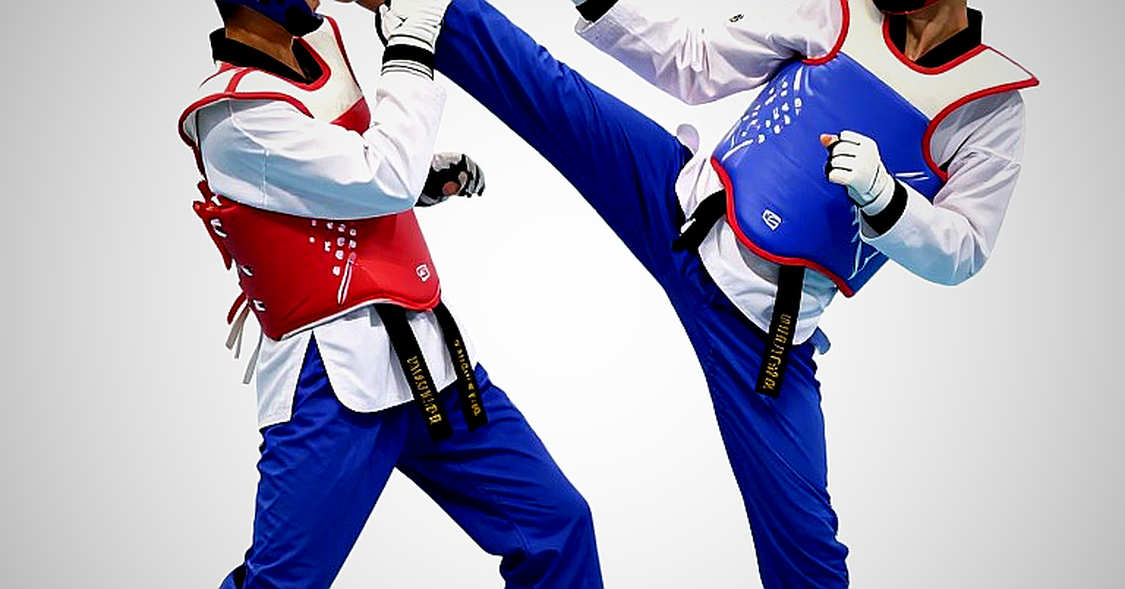
Two names. Six contest slots. Eight Games slots. And a twelve-month journey concentrated into two pairs of women's feet.
The core: the one who holds the floor and the one who opens the door
I split this squad into two blocks, and each block speaks a different language.
The first block is Bạc Thị Khiêm — the one who holds the floor. She is the only fighter in the squad with a multi-year continental résumé. Bronze at the 2026 Asian Games. Gold at the 2026 Asian Taekwondo Championships. Gold at the 33rd SEA Games. Three milestones, three years, three different competitive tiers — and all three held firm. To me, this is the heaviest evidence in the entire squad.
Twenty-eight years waiting for an Asian Games gold, and it has still not arrived. But there is another truth few articles bother to report: Bạc Thị Khiêm is the first Vietnamese fighter in a decade with a consistent trajectory from continental bronze to continental gold across two consecutive cycles. That is not luck. That is a trajectory. Bronze at the 2026 Asian Games, then gold at the 2026 Asian Championships — meaning she is not standing still, but wrestling with her own limits and surpassing them at a tournament with a higher opponent quality than the SEA Games.
I once sat through her 2026 Asian final on a four-angle recording. The decisive kick did not come from her strong right leg, but from a pivot I counted through three preparatory steps. Three steps. No one trains three steps for a knockout. That has to be experience. It is flesh remembering what the mind has not yet said.
Khiêm is not a beautiful fighter. She is a durable one.
The second block is Nguyễn Thị Loan — the one who opens the door. Twenty years old. Her first SEA Games in 2026, and a silver medal on debut. In March 2026, she took silver at the US Open. A trajectory accelerating faster than is normal for a twenty-year-old fighter.
But here is where I must stop and ask the question that praise pieces usually avoid. Both of Loan's silvers came at Open and regional tier. The 2026 US Open is an open tournament — opponent quality, on average, lower than the Asian Championships. The SEA Games is a regional stage — where Thailand and the Philippines are the main rivals, not Korea, Iran, or China.
That means: Loan's two silvers are trajectory signals, not proof of continental capability. These are two different things. A fighter can climb from regional to continental within one cycle, or she can stay forever at the regional tier. No one among us yet knows which group Loan belongs to. Not even coach Kim Kil Tae — if he is honest — knows yet.
So why is she called "the biggest hope"?
Because she is twenty. Because she has just stepped into the 49kg slot left vacant when senior fighter Trương Thị Kim Tuyền retired. Because she has an index no statistical table can measure: learning speed. And because — by the way I read how Vietnamese coaches tend to speak — they need a new story after nearly thirty years of telling the same old one.
The weight-class move: the detail every article skips
This is the point where I want to linger longer than anywhere else in this piece.
Loan used to fight at 53kg. She moved down to 49kg. Four kilograms. It sounds small. But in the lighter women's classes of taekwondo, four kilograms at age twenty — with a body still developing — is a genuine physical gamble.
I have written about combat sports long enough to know outsiders routinely underestimate the cost of a weight cut. But I have also counted enough fights to know it is not the same across disciplines. An MMA fighter cuts fifteen kilos in forty-eight hours and rehydrates in twelve before stepping into the cage. Taekwondo does not cut that fast. World Taekwondo weigh-in rules generally apply on the same day or close to competition day, and the water mass of a lighter women's fighter is already thin.
But thin does not mean safe.
For a twenty-year-old woman at 49kg, four kilograms can be the difference between an explosive third round and a third round that runs out of energy in the final thirty seconds — precisely the window where medals are decided.
I have no data on Loan's rehydration plan. I have no data on whether she cut on a schedule or in a block. I have no data on how her body responded in full-contact sessions after the drop. And that is precisely what worries me. Not because I know something bad. But because I know nothing at all.
In my profession, silence is sometimes louder than speech.
This weight move also has a structural cause that the media should mention: the 49kg slot opened when Trương Thị Kim Tuyền retired. That veteran was one of Vietnam's most decorated female fighters at the regional level. When she left the mat, the coaching staff needed someone to fill the gap in exactly the weight class with an Asian Games slot. Loan was the brightest candidate. So she moved down.
My question is not "was moving down wrong." My question is: is the program's need being placed before or after the athlete's own optimal development path? In Olympic sport, this is an old question. But it is also a question that is usually only answered after the medal has been awarded — or after the knee has started to ache.
The Korean camp: the most concrete investment in the whole story
If I had to pick one detail that says Vietnam is serious about the 2026 Asian Games, it would not be any fighter. It would be the schedule.
The entire squad gathers for a one-month camp in Korea, based at the Korea National Sport University and Yongin University. Two sessions per day, two to two-and-a-half hours each, plus gym conditioning on Tuesdays and Thursdays. Scheduled departure: September 28.
To those familiar with Vietnamese reporting — where this detail typically gets compressed into one short line at the end of an article — one month sounds ordinary. But placed on the scale of an Olympic cycle, it is different. A national team sending an entire combat roster to Korea for a month before the Asian Games is not routine. It is a real investment. It is a budgeted commitment.
And the man standing behind the door that opened this facility is coach Kim Kil Tae.
I have no figures on his contract. But I have one fact any serious sports reader must notice: importing a Korean coach to lead Vietnam's national team is not just technical transfer. It is network transfer. Yongin University does not open its doors to any team. It opens them to teams with someone of sufficient standing in the Korean taekwondo community knocking on the door.
Coach Kim Kil Tae has that standing. And Vietnam — whether it wants to or not — is buying back a slice of the network that Vietnamese football once bought when it brought in coach Park Hang-seo.
But I must say plainly what many articles will avoid: a high-quality training camp does not produce medals. It produces conditions. The final decision — a kick to the head at the nineteenth second of the third round — still belongs to the foot of a twenty-year-old standing on the mat, facing someone who wants that medal as much as she does.
Voices from inside: reading coach statements
When the head coach says the squad has "very good form and fighting condition," and that "there will definitely be medals" — you know it is a statement from an interested party. Not a lie. But also not data.

I have a rule from after my 0.2-second error at the 2026 SEA Games: coach statements are read as internal morale, never as objective data. People are free to believe. They are not free to bet on it.
Conversely, the most trustworthy line in the entire original piece I read is this one, from the author: "if she is lucky in the draw."
Stop on those four words. Lucky in the draw.
The language of "lucky in the draw" is not for gold. It is for bronze. You do not need luck to win when you are the strongest in your weight class. You need luck when you are level with four or five top fighters and only need to avoid meeting them too early.
That is the honest assessment. It is a harsher assessment than the coach's words. And it is the assessment I trust.
The contrarian angle: the problem is not too few fighters
Here I want to turn into a different corner.
People often say Vietnam lacks fighters. I am not sure that is true. The deeper problem is that Vietnam is concentrating all expectation into two women's weight classes — and that, by the mathematics of probability, is a fragile structure.
Count. Six combat slots. Two fighters with continental evidence strong enough to be considered medal candidates. That means the other four — the entire men's cohort plus some unnamed women's classes — are walking onto the mat in a developmental role, not a medal-contention role.
That is not inherently bad. In Olympic sport, sending young athletes to learn at a major tournament is a rational strategy. But it means this: the entire Vietnamese medal theory rests on Khiêm and Loan both peaking at the same Games. If either is injured before competition day, or draws badly, or — in Loan's case — runs out of energy in the third round, the medal can evaporate from the standings.
I once wrote about Iceland in 2026. People call Iceland a fairy tale. But if you read the numbers I hand-counted from that match — 29% possession, 340 touches versus Argentina's 760, 38 clearances, 14 blocked shots, goalkeeper Halldórsson with eight saves including Messi's penalty at minute 64, and a 1-1 result — you see it was not a miracle. It was a collective standing firm while everything collapsed.
But Iceland stood firm because the whole team was at the same performance tier. Vietnam's taekwondo has no Iceland. Vietnam has two fighters, and behind them, emptiness.
When a sports program concentrates medal expectation onto two people while the entire entry is six slots, that is not resource concentration — that is structural risk.
I am not saying the coaching staff does not know this. Certainly they do. Kim Kil Tae can see it — one week at camp reveals what tier the men's group is at. The reason the roster is organized this way may come from Asian Games slot limits, from weight-category structure, from the Asian sports federation expanding Olympic women's categories and adjusting others. But whatever the reason, the consequence does not change: the fate of the entire delegation is decided on two mats.
The past being used rightly and wrongly
The twenty-eight-year story without an Asian gold has strong emotional force. It is used to fan expectation. But if I read carefully, it is also a confession.
When the original article's author writes "those days are too far away now," the writer is unconsciously saying the most important thing in the piece: the period that produced Asian Games gold was not a peak we fell from. It was a historical moment when global taekwondo was still shallow. Vietnam was in the right place when the world was not yet crowded.
Since then, Korea has held its system. Iran has trained an entire generation of Asian fighters with European technique. Uzbekistan built academies on the old Soviet model and is now a genuine power. China has invested state budget in taekwondo since the 2000s. Chinese Taipei runs a youth system more extensive than its population would suggest. Jordan recently emerged with Korean coaching.
Where does Vietnam stand among these systems? Still at the continental second tier. There is foundation. There is foreign coaching. There is infrastructure in Ho Chi Minh City. But there is no system mass-producing fighters on a steady cycle.
That is why I say the twenty-eight-year story is not a story of one person. It is the story of a program that has not completed its transition.
Counting the slots again: the mathematics of eight and six
I want to pause a minute on the numbers eight and six.
The Asian Games does not give every country the same number of slots in every weight class. Organizers allocate by complex criteria — possibly based on world ranking, possibly on the previous Games' results, possibly on the number of open categories. Vietnam has eight slots, six of them Kyorugi. That is not a bad number. But it is also not unlimited opportunity.
If the Asian Games has more than twelve Kyorugi classes, then having only six slots means Vietnam is not contesting about half the brackets. That is a rational tactic: choose the strengths, concentrate forces. But the consequence is: there is no "lucky" slot to experiment with. Every slot used is a calculated gamble.
You have six cards. You play all six in the biggest round. There is no card to learn the trade.
From mat to system: a transmission beyond the floor
If I look beyond the 2026 Asian Games, there is one notable transmission mechanism.
The Koreanization model — bringing in a foreign expert, carrying a foreign facility network with him — is not taekwondo's own initiative. Vietnamese football has done it for a long time, with Park Hang-seo and then Troussier. Wrestling, judo, karate have all tried at moments. But taekwondo is the discipline with the densest Asian competitive field — because Korea, China, Iran, Uzbekistan, Chinese Taipei, and Jordan are all at world-champion tier.
If the Yongin camp model with coach Kim Kil Tae delivers a 2026 Asian Games medal — even just one — a domino effect could occur across Vietnam's other Olympic combat sports. The Judo Federation will consider it. The Karate Federation will consider it. And that is the scenario I consider a better result than any specific medal: a proven development model that can be replicated.
Conversely, if Vietnam comes home empty-handed, the reaction could go the other way. Many people will ask why a month of Korean camp did not produce a medal. And that question — fair or not — will pressure the following cycles.
I do not predict. I count what can be counted. And what can be counted is: this model is at its first trial.
The men's side: the silence no one addresses
I have spent three long sections of this piece on two women fighters. That reflects the reality of this squad. But I do not want to end without the three men's names.
Nguyễn Hồng Trọng, Lê Tuấn, Trần Hồ Nhân Văn. Three male fighters with Asian Games slots. None of them carries a continental medal. In a roster where the women's side has full continental evidence, this gap is not accidental.
I once spoke with several combat-sport coaches (not taekwondo), and their stories were alike: developing male fighters in Vietnam is harder than developing women. Not because men are weaker. Because men in Vietnam compete with other sports — football, basketball, swimming — that offer clearer media light and clearer bonuses. Vietnamese men's taekwondo often collides with two groups: those who switch to football from fourteen, and those who stay but have no same-tier partner to improve against.
This is not taekwondo's story alone. It is the story of an Olympic sports nation struggling to find its footing between a populous player base and a shallow competitive depth.
But I do not use this gap to excuse. I use it as an indicator. When the women's side has two fighters reaching the continental tier and the men's side has nobody, the problem is not the warriors' gender. The problem is the system for nurturing and retaining male talent at the national level.
Open ending: one drop and a whole river
I once wrote this line in a private note, unpublished: "Empty stadium in summer, dead series, but I found the echo."
In 2026, when the V-League was suspended due to the pandemic, I ran a project that failed. A football-season simulation show, high expectations, an average of 12,300 views per episode against the channel's normal 120,000. A failure. But from that failure I learned one principle: viewers do not reject a fake product. They reject a product that is not real. When I shifted from simulation to a talk show with real people, real coaches, real contrarian viewpoints, viewership jumped to forty-five to sixty thousand per episode. Not up to the old level, but enough to keep my belief that certain stories need to be told a different way.
Vietnam's taekwondo is exactly there now. The team does not lack fighters with potential. It lacks a structure wide enough to keep all fighters within reach of a medal — not just two.
When I reread the numbers of the original article, one small detail catches me. Khiêm won Asian Games bronze in 2026. Four years later — she is still there. Still at 67kg. Still a pillar. She has not grown younger. But she has not been replaced.
That is a truth both sad and proud at once.
Loan won SEA Games silver in 2026 at age twenty. Four years from now she will be twenty-four. She could be the Khiêm of the next cycle — or she could be one of those talents remembered for close losses with no medal at all. Both futures have probability. None of us knows which will arrive.
And that — perhaps — is the point Vietnam's taekwondo needs to look at. Not the question "will Khiêm win gold at the 2026 Asian Games." But the question "if she does not, do we have anyone next." The answer to the second question is what will decide the next twenty-eight years of this sport.
I will count again. I will count every movement, every rear foot step, every breath between rounds. And on the day the squad steps onto the mat in Aichi-Nagoya, I will sit before the screen with an open notebook. Because my profession is finding the fragment the whole stadium forgot. And on the taekwondo mat at the Asian Games there are many such fragments — lying on the boundary line between winning and losing, between a coach's shout and the breathing of a twenty-year-old fighter carrying an entire program on her back.
Two names. Six contest slots. Eight Games slots. And a question without an answer: after twenty-eight years, is that gold medal ready to come home — or must we wait another cycle, only to sit and count again.