Two 12-10 Comebacks at China Smash 2026 and the Trap of Indian Belief
**Core answer**: At China Smash 2026 in Beijing on October 6, 2026, Indian players Manav Thakkar and Manika Batra both won round-of-64 matches after trailing, each clinching a 12-10 deciding game against higher-ranked opponents. Both now face top-10 seeds in the round of 32. **Key facts**: - Manav Thakkar (India, WR ~50) beat Simon Gauzy (France, WR ~28) 9-11, 9-11, 11-7, 11-5, 12-10. - Manika Batra (India, WR ~50, wildcard) beat Bruna Takahashi (Brazil, WR ~27) 8-11, 11-8, 11-9, 5-11, 12-10. - Thakkar next faces Alexis Lebrun (France, WR 8, seed 7) in the round of 32. - Batra next faces Wang Manyu (China, WR 2, seed 1) in the round of 32. - India won one medal at Asian Games 2026: mixed-doubles bronze by Manush Shah and Diya Chitale. **Source attribution**: Stage-1 report on China Smash 2026 results, published October 6, 2026 | Cross-checked: VuaBong.vn **Related Q&A**: - Q: Who did Manav Thakkar beat at China Smash 2026? A: He beat Simon Gauzy of France, the world No. 28, in five games. - Q: Who is Manika Batra's next opponent at China Smash 2026? A: She faces top seed Wang Manyu of China, the world No. 2, in the round of 32. - Q: How many medals did India win at Asian Games 2026 in table tennis? A: One medal, a mixed-doubles bronze by Manush Shah and Diya Chitale.
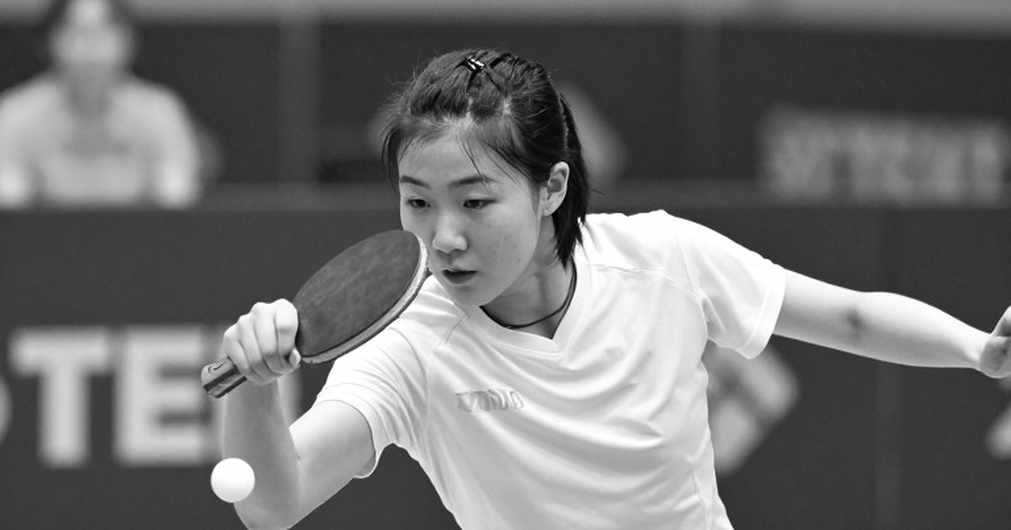
Manav Thakkar stood at the table in the fifth game, the score 10-10. He had lost the first two games to Simon Gauzy, France's world No. 28, both by 9-11. He won game three 11-7. He won game four 11-5. In game five, after ten tense rallies, he closed it out 12-10. At another table that same day, Manika Batra dropped game four 5-11 to Brazil's Bruna Takahashi, then took the deciding game 12-10.
Two matches, two Indian players, two identical deciding scores, in the same session at China Smash 2026 in Beijing. I have spent years tracking matches across the WTT system and learned one thing: when two independent results share an identical score structure, it can be a signal, or it can be coincidence. The job is to tell which.
Intuition is a lazy variable; data is the judge who never sleeps. And the data here, before anyone rushes to declare that Indian table tennis is rising, needs to be read correctly.
Context: one event, two layers of meaning
China Smash 2026 took place in Beijing, structured as a round of 32 with a seventh seed in France's Alexis Lebrun (world No. 8) and a top women's seed in China's Wang Manyu (world No. 2). The presence of seeds at this level indicates a tournament at the highest tier of the WTT system, just below the three majors. It was held shortly after the Asian Games 2026 concluded, where India's table tennis contingent won only a single bronze, in mixed doubles, delivered by Manush Shah and Diya Chitale.
This is the detail most reports skim past, yet it is the key. A WTT Grand Smash-level event, held in Beijing, in the early phase of the Los Angeles 2028 Olympic cycle, roughly two years before the Games, carries significant ranking-point weight. For a nation coming off a muted Asian Games, results here carry outsized weight for the next selection cycle.
But I must be clear at once: the original article I am analysing here carries no author name and no specific source for any data point. The entire dataset is match results and rankings. There is no technical detail, no equipment information, no direct quote from a player or coach, no governance or selection content. That severely limits what can responsibly be concluded.
Reading the score structure: the only signal the data permits
There is no point-level data, but game-by-game scores still carry legitimate tactical inference value.
For Thakkar, the pattern is: 0-2 down, then three straight games won, two of them by widening margins (11-7, 11-5), before a tight 12-10 close. This margin pattern suggests a mid-match tactical reset, not random fluctuation. The player who lost the first two games then won five of the remaining six big-margin segments. The 12-10 decider is a coin-flip zone: recovering from 0-2 is momentum, surviving 10-10 is execution.
For Batra, a different pattern: alternating win-loss (loss, win, win, loss, win), with neither side in sustained control. The 5-11 fourth-game loss is a genuine collapse segment, not merely a lost game, followed by a 12-10 decider. This profile points to a high-variance match, the kind played between two players of similar level with no dominant tactical solution.
The structurally notable point: both results carry the same signature, trailing 0-2 or 1-2, then recovering and winning a 12-10 deciding game. Two independent matches producing the same clutch-decider pattern in the same round at the same event is a weak but non-trivial signal that conditions, including venue, ball batch, table, or scheduling, may be producing high-variance matches. Or that both higher-ranked players (Gauzy, Takahashi) share a common vulnerability in closing out leads. At low confidence, I leave both possibilities open.
Gauzy's loss profile is the more analytically significant. A world No. 28 veteran losing to a world No. 50 after leading 2-0, then conceding the middle games 11-7 and 11-5, suggests the higher-ranked player's mid-match adjustment capacity was neutralised, not that the lower-ranked player overpowered him. Without point-level data, I cannot confirm this as a style mismatch.
For Batra, a 5-11 fourth game followed by a 12-10 decider is a volatility flag. For a wildcard entrant about to face the top seed, this variance profile is a double-edged indicator: it shows she can win clutch points, but also that she can lose a game by six points against a world No. 27 opponent.
The contrarian point: the reward for the upset is a harder opponent
This is where the story turns uncomfortable, and where the data forces me to speak plainly.
The round-one upset only opens a door leading to a harsher match. Thakkar beat Gauzy, and the reward is Alexis Lebrun, world No. 8, seed 7. Batra beat Takahashi, and the reward is Wang Manyu, world No. 2, seed 1.
Here I must push back on the very people doing the celebrating. The historical base rate for a world No. 50 beating a top-10 player at a WTT Grand Smash-level event is very low, typically under 30%. For Batra, facing the top seed is the worst possible draw scenario. For Thakkar, facing a seed 7 at peak form is a qualitatively different test than overturning a fading veteran.
There is a contradiction that must be put on the table. Batra can produce a dramatic upset against a world No. 27 at a WTT event, yet was absent from India's Asian Games 2026 squad. At the same time, she entered the China Smash main draw via wildcard. Two separate selection mechanisms are operating in parallel and independently: national association selection (TTFI) and host or WTT wildcard allocation. The original article does not explain this. Neither can I. But it is the seed of a future selection debate, and it is worth tracking.
And here is what the "India is rising" narrative skips: the Asian Games data in the same article refutes it. A single mixed-doubles bronze is the actual benchmark of Indian table tennis right now. Two round-one upsets are a legitimate news item, but they do not establish a form trend. The real distance lies between a round-one upset and a quarterfinal berth.
Intuition is a lazy variable; data is the judge who never sleeps. Here, that judge says the evidence for a rise stands at two data points.
System and risk: what is actually being measured
At the system level, China Smash is functioning as the immediate post-Asian Games re-entry point for India into the WTT circuit. The point value of these two upsets is modest; the real points upside lies in the next round. In other words, all the potential sits in the round of 32.
France is emerging as the most significant non-Chinese threat in this picture, with Lebrun in the top 10 and Gauzy at the veteran world No. 28 layer. But Gauzy's loss to a world No. 50 is an aging-curve signal at the veteran layer. France's top end, namely Lebrun, cannot be tested by this data sample.
Brazil sits at tier two with Takahashi. Poland at tier three with Milosz Redzimski, who lost 1-3 to Lebrun. India sits as an emerging force: two world No. 50 players both posting upsets at the same event indicates rising depth, but not yet top-tier competitiveness. A mixed-doubles bronze at the Asian Games caps the current ceiling.
The dominant risk in this dataset is clear: both Indian players face world No. 8 and world No. 2 opponents in the round of 32. The risk of early elimination is high. The second risk, at medium level, is over-interpretation from a small sample, since two round-one wins do not make a trend. The third risk is the total absence of risk-factor detail: injuries, equipment, coaching.
One signal I am tracking: if either Indian player takes at least one game off Lebrun or Wang Manyu, that would be a materially stronger signal than any round-one upset. One game won against a top-10 opponent at this stage says more than two round-one upsets combined.
Takeaway: a signal to watch in the next round
The most notable point here lies elsewhere: the gap between expectation and base rate. If both Thakkar and Batra lose heavily in the round of 32, this article becomes a footnote. If either takes a tense game off Lebrun or Wang Manyu, the story gets rewritten.
Intuition is a lazy variable; data is the judge who never sleeps. What I leave for the next round: is Indian table tennis genuinely climbing, or simply exploiting one session in which both higher-ranked opponents failed to close out their matches? The answer lies in the next round, not in last night's 12-10 game.