
96.5 km per match: Mourinho, Real Madrid and the trap of a fitness metric
CORE ANSWER Real Madrid dưới thời Mourinho bị báo chí chỉ trích vì chạy trung bình 96,5 km mỗi trận, thấp nhất La Liga, trong khi Barcelona chạy 104,6 km. Tuy nhiên, tổng quãng đường là chỉ số thô, gộp chung phong cách cầm bóng và trạng thái trận đấu, nên không đo được cường độ pressing hay thể lực thực sự. KEY FACTS - Real Madrid đạt 96,5 km mỗi trận, thấp nhất La Liga; Barcelona đạt 104,6 km mỗi trận. - Sau 7 vòng, Real Madrid kém Barcelona 6 điểm trên bảng xếp hạng La Liga. - Bảng thống kê thiếu PPDA, quãng đường cường độ cao, số pha nước rút và xG. - Barcelona dẫn đầu giải nhưng chỉ xếp thứ 5 về quãng đường di chuyển. - Nguồn dữ liệu hiện đại và sự xuất hiện của Alavés khiến số liệu cần được xác minh. SOURCE ATTRIBUTION Nguồn: AS (dẫn nền tảng dữ liệu thể thao SofaScore) và thông điệp của José Mourinho gửi chủ tịch Florentino Pérez; số liệu cần được xác minh độc lập. RELATED Q&A Q: Vì sao quãng đường di chuyển không đo được thể lực? A: Vì chỉ số này gộp chung phong cách cầm bóng, trạng thái trận đấu và ý đồ chiến thuật, không phân biệt chạy nước rút với chạy chậm. Q: Cần theo dõi chỉ số nào thay thế? A: PPDA, quãng đường cường độ cao, số pha nước rút và thời gian hồi phục giữa các pha bứt tốc. Q: Real Madrid thời Mourinho có thực sự yếu thể lực? A: Chưa có bằng chứng y tế hay dữ liệu GPS nào được công bố; cáo buộc dựa trên một chỉ số tổng đơn lẻ.
One night at a café by the Han River, I stayed on after my shift and replayed footage of a Real Madrid match from the Mourinho years. That team defended deep, ten men compressed in front of the box, and a single long pass was enough to send the white block springing forward like a coiled spring. I timed the midfield runs with a stopwatch. There were not many. Some attacking moves lasted seven or eight seconds before the entire side dropped back into position. Anyone who glanced only at the total kilometres after the final whistle would have concluded at once: this team is lazy.
And someone did conclude exactly that. A statistical table made the rounds in the press: Real Madrid averaged 96.5 km per match, the lowest in La Liga. Barcelona, the league leaders, covered 104.6 km. The gap was 8.1 km — roughly the distance from central Da Nang to the Son Tra peninsula and back. Attached to it was a rhetorical question heavy with insinuation: how could a team coached by a man who keeps shouting “run and fight” run less than anybody in the division?
To understand why that question carried weight, you have to place it in its moment. Mourinho arrived at Real Madrid with a clear spiritual contract: he promised to turn a technically rich but mentally fragile group into a machine that could suffer. His philosophy boiled down to two words he repeated again and again in front of the press — run and fight. For Mourinho, running was a manifesto, not merely movement. A team that wants to win must run more than its opponent, hurt more than its opponent, do the things others refuse to do.
So when AS relayed a message from Mourinho to president Florentino Pérez around the time he took the job, people read it as a pledge about intensity. That pledge was now being held up against a mileage table. After seven rounds, Real Madrid trailed Barcelona by six points. Six points after seven games is not yet a catastrophe, but for a club used to winning it was enough to open a debate in the press. And that debate needed evidence. The 96.5 km figure arrived right on cue — it turned a points gap into a fitness charge.
In the press, the headline called it “a frightening statistic.” In the mileage table, Real Madrid sat below Alavés, Espanyol, Barcelona and Sevilla. Those four names were placed directly above the royal club. For supporters, the feeling of being overtaken by a smaller side in any metric is enough to spark an argument. For analysts, it is the moment to stop and ask: what does this metric actually measure?
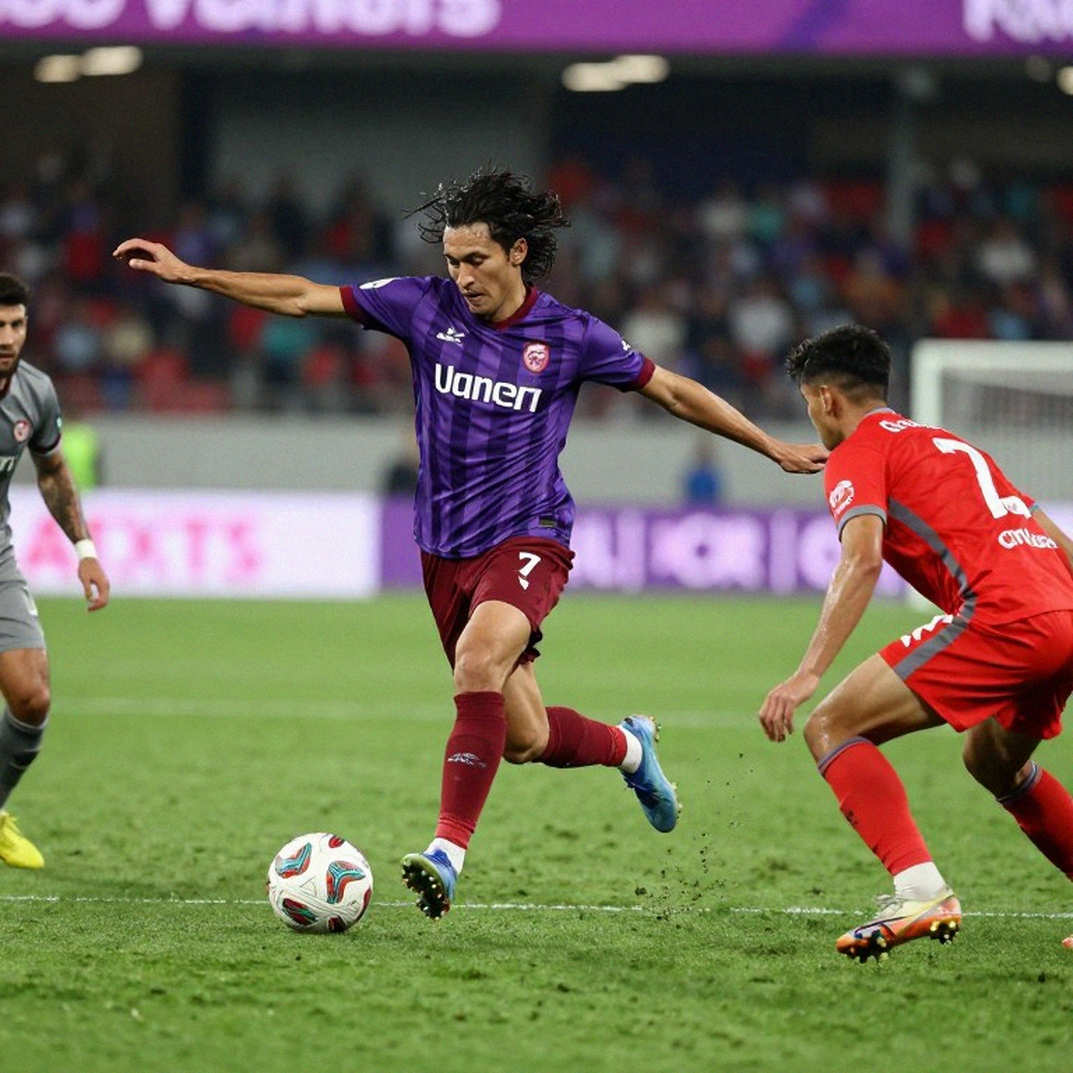
One thing must be said plainly: total kilometres covered is a crude metric. It lumps everything together — possession style, game state, tactical intent, whether the team is leading or chasing. A side that controls the ball and defends in a low block usually runs less than a side chasing it. A counterattacking team that sits and springs can finish a match with a low kilometre count for entirely sound reasons. Running less does not mean being lazy; it usually means the team never had to chase the ball.
This is where the original argument slips. It takes a crude metric, assigns it a “fitness” meaning, and from there draws a conclusion about a coaching philosophy. That chain of reasoning skips every finer metric: high-intensity distance, accelerations, sprint counts, and above all PPDA — the number of passes an opponent is allowed per defensive action. The lower the PPDA, the more aggressively a team presses. Without PPDA, without high-intensity distance, without xG, the 96.5 km figure stands alone and says very little.
Imagine two teams each covering 100 km in a match. The first runs steadily, slowly, spread across the pitch. The second runs in short bursts, sprinting again and again, then standing still to watch. The totals are identical; the physiological load is not. A single aggregate cannot tell these two kinds of running apart. Nor can it distinguish a team that runs because it controls the ball from one that runs because it keeps losing it. That is why every club-level fitness specialist looks at high-intensity distance, sprint counts and recovery time between bursts — never at total kilometres.
The very table in question shows the opposite of what was expected. Barcelona led La Liga but ranked only fifth in distance covered. If mileage were a measure of quality, the best team in the league should have topped it. It did not. The metric used to convict Real Madrid turned out to be incapable of separating strong teams from weak ones. That is an internal signal that this yardstick does not measure what people assume it measures.
From my own experience following matches, I keep meeting a familiar paradox: the best counterattacking teams are usually the ones that run least on paper. They do not run when they do not need to. They stand in the right place, wait for the right moment, then explode within three seconds. Mourinho’s Real Madrid carried exactly those markers: a disciplined defensive block with Pepe and Sergio Ramos at its centre, a Xabi Alonso setting the rhythm from deep, and a Cristiano Ronaldo capable of turning half a chance into a goal. A team like that running little is, in the end, understandable rather than frightening.
If the article wanted to convict Mourinho of a fitness problem, it needed to show that his side lost the high-intensity duels, that they were outrun in the final metres of the second half, that their sprint counts faded as matches wore on. No such data was offered. Instead, an aggregate was used as a stand-in for an entire process. That approach suits a headline, but it does not suit anyone who wants to understand correctly.
There is another layer behind both the metric and the argument. The source cited for the 96.5 km statistic is a modern data platform — the kind that only became widespread from the late 2010s onward. But Mourinho’s tenure at the Bernabéu ran from 2026 to 2026. A platform founded later being cited as the source for an earlier season is a point that demands verification. Beyond that, the appearance of Alavés in the same table as Mourinho’s Real Madrid is a historical misalignment: Alavés were not a regular top-flight name in that window. Taken together, these two signals should push a careful reader to file all the numbers under “to be verified.”
None of this means the fitness story is entirely baseless. Mourinho’s Real Madrid did pass through genuine spells of fatigue, and at a big club, disagreements between the medical department and the coaching staff over training methods are an everyday affair. But an internal dispute needs internal evidence. A mileage figure printed in a newspaper cannot replace the GPS data from a training session, nor the medical file of an individual player.
Here lies the counter-intuitive angle: what people called Mourinho’s “fitness problem” was really a results problem dressed in fitness clothing. Six points behind Barcelona after seven rounds was the most consequential fact, and it was precisely that which gave the 96.5 km figure its editorial weight. A team leading the league while running least would face no interrogation. A team chasing while running least gets dissected. The same metric, two different fates — the difference lies in the table, not in the training ground.
Seven rounds is a very small sample. In football, early-season points gaps reverse all the time, and September crises often vanish quietly by November. What is suspicious is not that Real Madrid were six points back — it is the speed with which a small gap became a media crisis. The phrase “frightening statistic” says more about the writer than about the team. A mileage table, in the end, is not frightening. It is merely convenient.
Behind all of it runs a larger industry trend. Sports-data platforms are handing the public more and more metrics, and the media increasingly use those metrics as verdicts. A datum that once mattered only on the training ground becomes a ruling on a coach’s philosophy. Once a metric is public and scored, clubs are forced either to chase it or to explain it — and that very pressure fuels demand for finer data. The loop is not unhealthy. It simply asks the reader to stay awake.
A team that runs little can still score in the 90th minute, because a goal in the 90th minute does not come from a script; it comes from those who refuse to leave the pitch after the lights have gone out. Fitness is not a total kilometre count; fitness is the ability to do the right thing at the right moment, even when the legs are heavy.
A club does not grow out of a budget, but out of the nights a whole team stays awake for a shared belief — and it does not collapse over a single line of statistics either. The pulse of a match never stops; it only waits for someone who knows how to listen to tell the story.
Over the next eight rounds, the signal worth watching is not total kilometres but PPDA, high-intensity distance and sprint counts in the final thirty minutes of each match. If those numbers fall while the points gap holds, then there is a story to tell. And if Real Madrid start winning again, the mileage table will quietly disappear from the press — as if it had never existed.